Content
Recycled content has stopped being a marketing slide and become a purchase specification. Ask three die casters to quote an ADC12 motor housing and you will get, next to the price, a recycled-content percentage, a description of where the scrap comes from, and a question about whether your customer accepts a pre-consumer or a post-consumer definition.
The short answer: recycled aluminum changes very little about how a well-designed casting is tooled, cast and machined. It changes the raw material supply chain, the discipline required in melt chemistry control, and the paperwork that travels with every shipment.
Below we cover the practical side of the trend - the energy gap between primary and recycled feedstock, what belongs in a recycled aluminum RFQ, how tooling decides the recycled share that reaches the finished part, and where demand is arriving first.
Recycled aluminum is not a better metal. It became popular because producing it takes roughly one tenth of the energy needed to smelt primary aluminum from bauxite, and energy is the largest single line in the footprint of an aluminum part.
Primary smelting typically consumes 14 to 16 kWh per kilogram. Remelting clean, sorted scrap usually lands between 0.6 and 1.5 kWh per kilogram. That gap is where most of the environmental claim in a recycled die casting actually comes from.
Two figures should be requested separately: recycled content by mass, measured at the ingot or at the furnace, and the melting energy the die caster spends in-house, since holding furnaces run continuously and are often the biggest consumer on the floor. The two savings stack.
The most common purchasing mistake is buying a percentage instead of an alloy. A supplier can quote 70% recycled content and still ship a melt that misses the elongation requirement, because recycled ingot is only as clean as the scrap stream behind it.
| Criterion | Primary (smelter) aluminum | Recycled (secondary) aluminum |
|---|---|---|
| Melting energy | About 14 to 16 kWh per kg | About 0.6 to 1.5 kWh per kg from sorted scrap |
| Trace elements | Set by the smelter, consistent batch to batch | Depends on sorting; iron, zinc and copper can build up |
| Price behaviour | LME plus a smelting energy premium | LME plus a scrap availability premium or discount |
| Lead time | Tied to smelter schedules | Tied to collection and sorting capacity |
| Documentation | Mill certificate | Mill certificate plus recycled content statement and chain of custody |
Ask for the alloy by standard - EN 1706 or ASTM B85 - with chemistry ranges rather than a trade name alone. If recycled content is a requirement, define it under a recognised claim standard such as ISO 14021, state whether the figure is pre-consumer or post-consumer, and state whether it is measured at the ingot or at the furnace. Those two definitions can differ by twenty points on the same shipment.
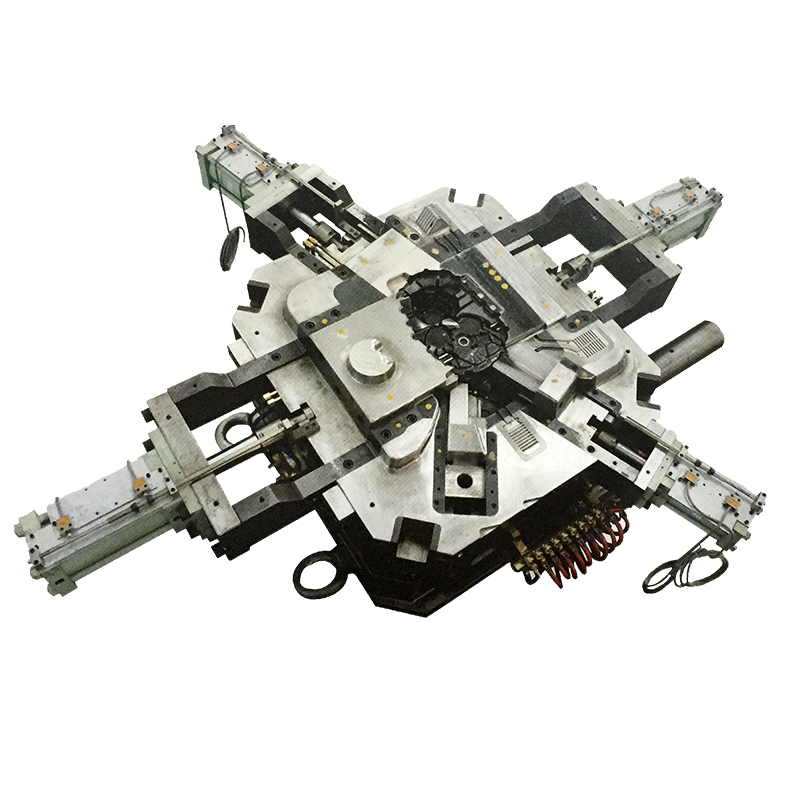
Recycled content is a material decision. The share that survives to the finished component is a tooling decision, and it is usually made long before the first quote is signed.
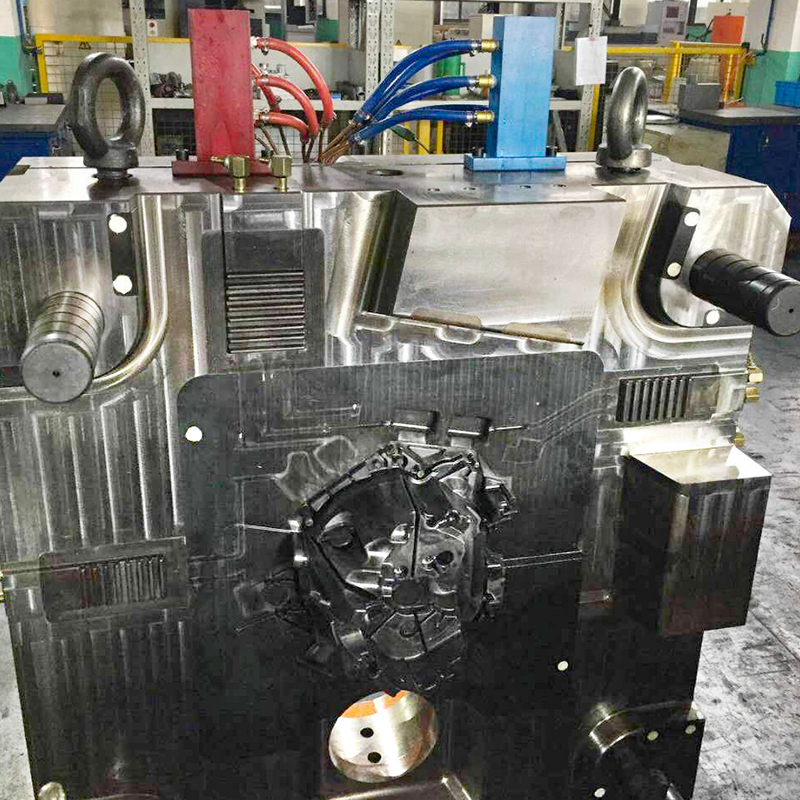 Aluminum Die Casting Molds Customized High-pressureAluminum Die Casting Molds Customized High-pressureView Product →
Designing for end of life counts as well. A housing that can be stripped of inserts, seals and fasteners returns cleaner scrap to the loop than one that has to be shredded whole.
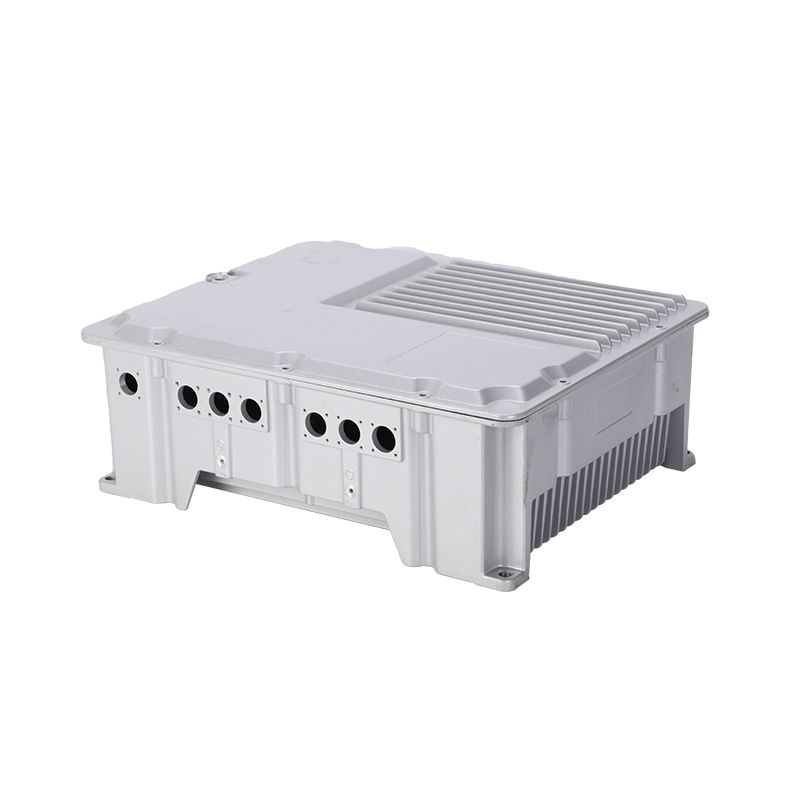
Automotive is the demand engine behind recycled aluminum die casting. Life cycle studies in the field put die casting at roughly 60% of automotive aluminum component production, and those parts are exactly what electrification needs: battery housings and covers, motor housings, control box housings and brackets.
In Europe the feedstock question is already settled. Around 80% of the aluminum used in European die casting comes from recycling, which means recycled content is no longer a differentiator there - it is the baseline, and the differentiator is how well a supplier can control and document it.
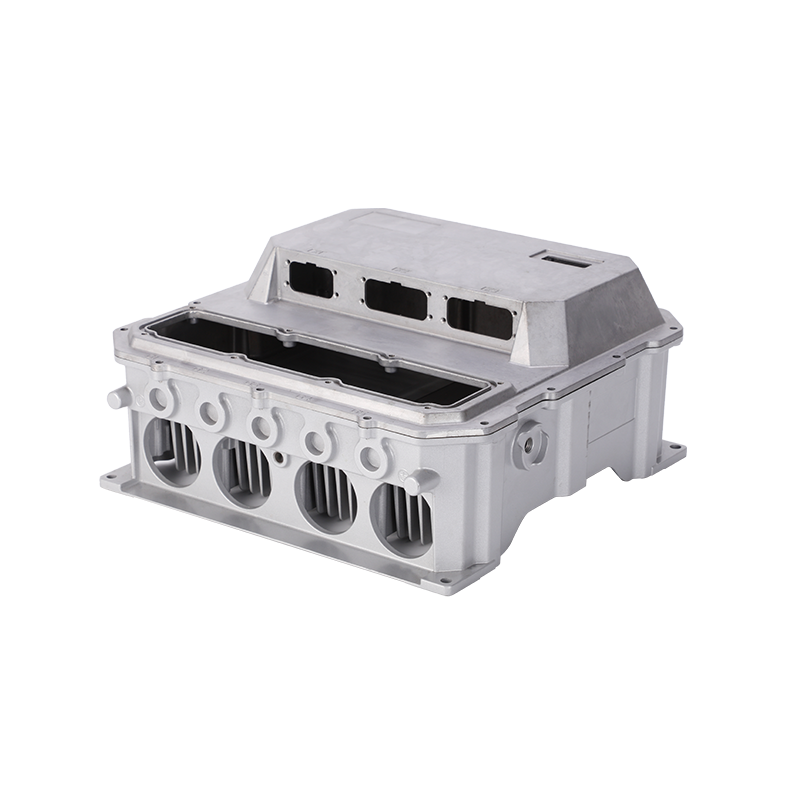
For EV programs the argument is simple: every kilogram removed from the body, chassis or powertrain buys back range, and die casting delivers complex geometry in one shot instead of several welded steel parts. Battery enclosures add a second requirement on top of weight - crash and sealing performance - which is why the design of battery housing and covers is now a topic in its own right.
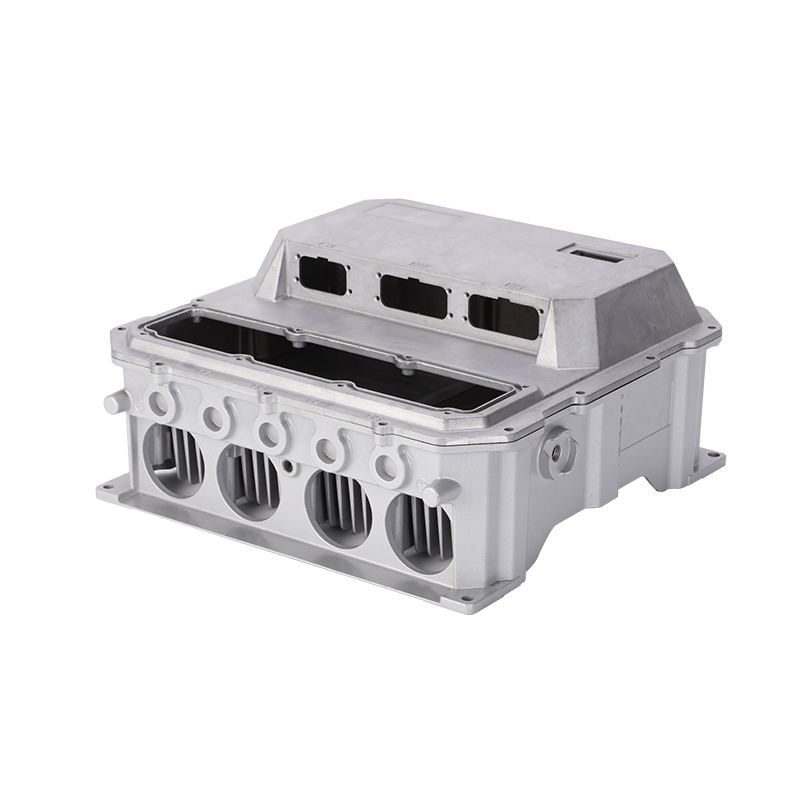 Battery Housing and Cover for New Energy/Electric AutomobileBattery Housing and Cover for New Energy/Electric AutomobileView Product →
Recycled alloy works here as long as the enclosure passes the same leak and mechanical validation as a primary-metal part.
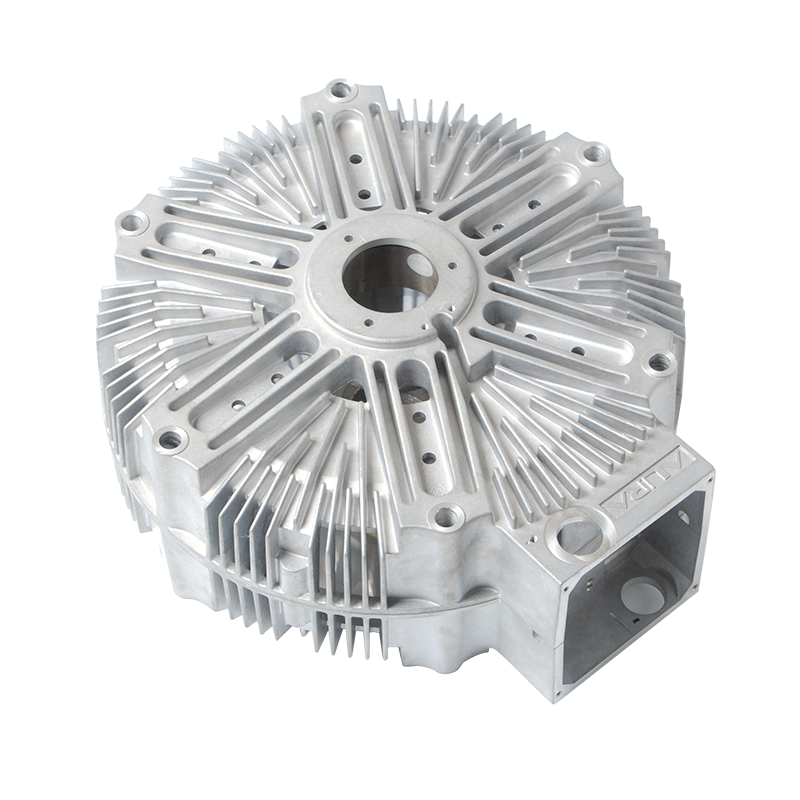
Heat sinks, LED street light housings and power electronics cases carry most of their sustainability value in service life, not in the feedstock percentage. A die-cast heat sink with a well-designed fin pattern runs cooler, and a cooler part usually lasts longer.
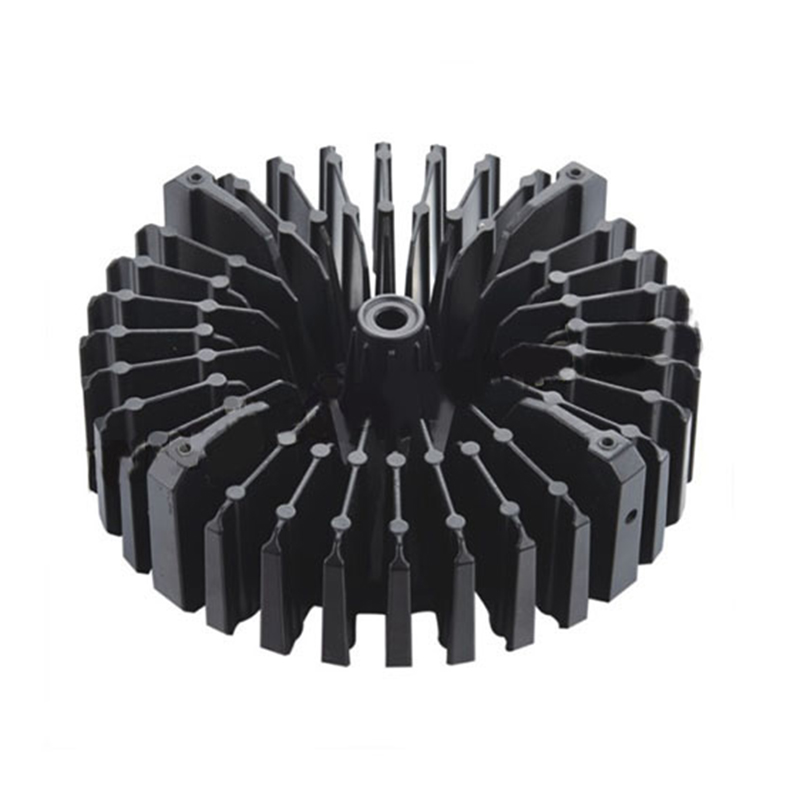 Die Casting Heat Sink for Electric Devices, Autos and Industrial EquipmentDie Casting Heat Sink for Electric Devices, Autos and Industrial EquipmentView Product →
Where a part is meant to last ten years or more, finish and wall thickness distribution usually outweigh anything a buyer can still chase in the recycled content figure. Extending service life is often the cheapest carbon reduction available.
A quote is only comparable when every supplier prices the same scope. For a recycled aluminum program, these items belong in the package:
The last item is the one most buyers forget, and it often decides whether the recycled content figure on the certificate is real.
Not on its own. A controlled recycled melt that meets the chemistry range of the grade delivers the same tensile strength and hardness as primary metal. The risk is trace element build-up: iron reduces ductility and thermal conductivity, and zinc and copper accumulate when scrap streams are mixed.
Sometimes, but not reliably. Secondary ingot prices follow scrap availability, and certified, segregated streams can carry a premium when demand is high. The predictable savings sit in energy and carbon accounting rather than in the metal price.
For ADC12 and A380 class housings, covers and heat sinks, 40% to 70% post-consumer content is a normal working range today. Closed-loop operations with dedicated scrap streams can go higher, but the ceiling is set by chemistry control, not by ambition.
It affects service life, which usually matters more. A coated part that survives fifteen years in the field has a lower annual impact than an untreated part replaced twice in the same period.
The recycled aluminum die casting trend is not really about a new alloy. It is about four unglamorous capabilities: segregated scrap streams, per-heat chemistry control, tooling that keeps scrap ratios low, and documentation a procurement team can audit without a follow-up email chain.
Ningbo Jieda Molding and Machine has been building aluminum die casting molds and precision castings in Ningbo's die casting cluster since 1987, combining in-house tool making with casting, CNC machining and finishing under one IATF 16949 certified operation. If your next program carries a recycled content target, the tooling and the melting discipline need to be planned together, and that conversation is easier to start early.
ARE YOU READY TO COOPERATE WITH jieda?
* Your email is safe with us, we don’t spam.

PRODUCTS
CONTACT INFO
nbjd011@126.com
+86-574-86115705
No. 58 Mould Road, Daqi Technology Industrial Zone, Beilun District, Ningbo

 English
 Español
 italiano