Content
A control valve body that holds its pressure test at the die caster and then drags on the actuator bench 2,000 cycles later is usually not one defect. It is a disagreement about datums: the casting was measured from a parting-line surface the machinist never touched, and the seat ended up 0.15 mm off the axis the flow model assumed.
The short answer is to buy the aluminum die casting and the CNC machining as one package, and to freeze the machining datums before the die is cut. Anything you cannot hold in a fixture should be designed into the casting instead. What follows is how that plays out in practice for valve bodies: alloy choice, die layout, the machining operations that actually set seat geometry, and the acceptance criteria worth writing into a purchase order.
Aluminum is the default for control valve bodies because the same envelope is roughly 60% lighter than cast iron and about 65% lighter than brass, and it does not need plating to survive a normal water, glycol or pneumatic duty. High pressure die casting also lets you core the inlet and outlet passages and the actuator mounting pad in one shot, removing drilling, brazing or a second assembly step.
The limitation is pressure tightness. Gas entrapment during high pressure die casting leaves micro-porosity that a 1–2 bar air test will not find but a 16 bar water hammer will. For a body that must seal, the sensible specification is vacuum-assisted filling, generous overflow volume, 0.5 mm of stock left on every sealing face, and a 100% pressure test before the first cut. Alloy choice matters too: ADC12 and A380 pour well and machine clean, A360 is tougher and more corrosion-resistant, and no conventional high pressure casting should be sold as T6 heat treated.
Where aluminum stops is live steam, aggressive chemical trims, and high-cycle duty where the seat takes the full closing force. In those cases the aluminum body stays and the trim — seat ring, disc, stem guide — is inserted in stainless or bronze. That is a design decision rather than a casting one, and it belongs in the DFM meeting, not in the claims department.
Datum targets belong on the casting drawing, not in the machine shop's fixture design. The workable arrangement is two machined pads on the parting-line side, one boss end face and two cored holes, marked A, B and C, with the die cut so those features are stable and reachable in the first operation. This single decision moves more valves from "seals leak on 3% of units" to a normal Pareto than any machining upgrade.
Gate and overflow layout controls the porosity that the seat cut will later expose. Keep the biscuit and runners away from the seat ring boss, balance cooling around the bore so the casting does not cool into an oval, and allow extra wall around the stem bore if that bore will be sleeved. Ejector pins must not land on a sealing face or a gasket land — a 0.05 mm proud ejector mark is a leak path once coating is applied over it.
Soldering is the other tooling risk. Pulled aluminum on a valve body is a cooling and die-surface problem far more often than a casting-machine problem, and mold design can prevent most metal soldering long before the first sample is poured.
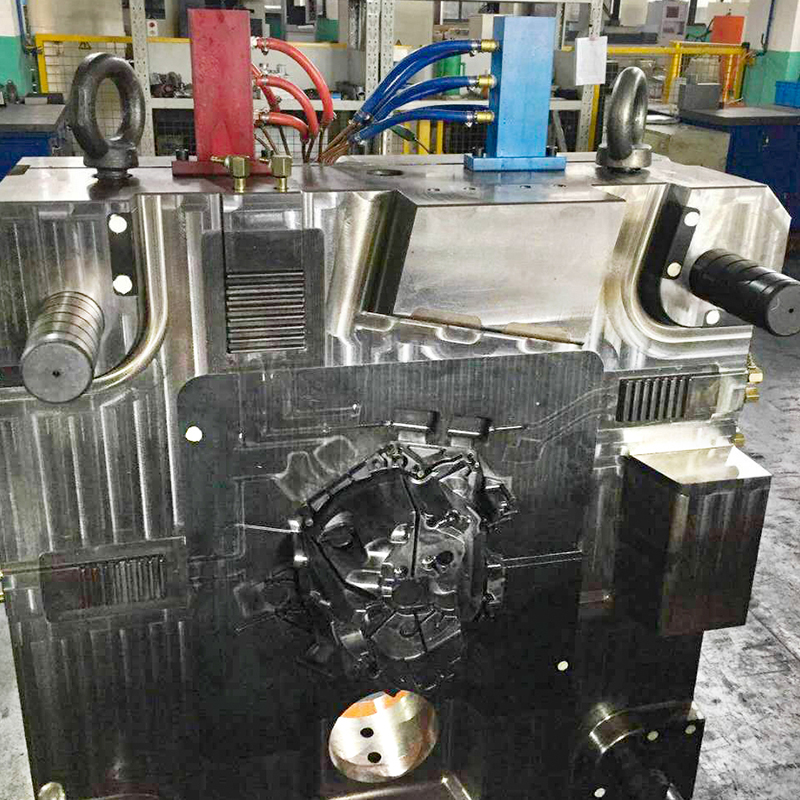 Custom Aluminum Die Casting Molds for High-Pressure ProductionWhere die design must prevent soldering and support stable machining datums, these custom molds include alloy selection and flow simulation.View Product →
Operation one should machine the datum pads and the flange face from as-cast bosses; operation two should locate on those machined surfaces only. If both operations locate on raw casting surfaces, the casting tolerance is added to the machining tolerance twice and the bore-to-seat relationship drifts from sample to sample.
Where geometry allows, the seat, the bore and the stem guide should be finished without re-chucking. Boring on a CNC machining centre holds 0.02–0.03 mm total runout between seat and stem bore; splitting the seat into a second fixture typically doubles that. Seat flatness of 0.02 mm with Ra 1.6 µm on the contact band is what allows assembly without hand lapping.
Thread the ports after facing so the thread stays square to the gasket face, and gauge thread class 6H with a plug rather than by eye. Flatness of 0.05 mm and Ra 3.2 µm on a flange face seals a standard gasket. When powder coating follows machining, plug the threads, mask the seat and the flange land, and control cure temperature so coating does not creep into the bore.
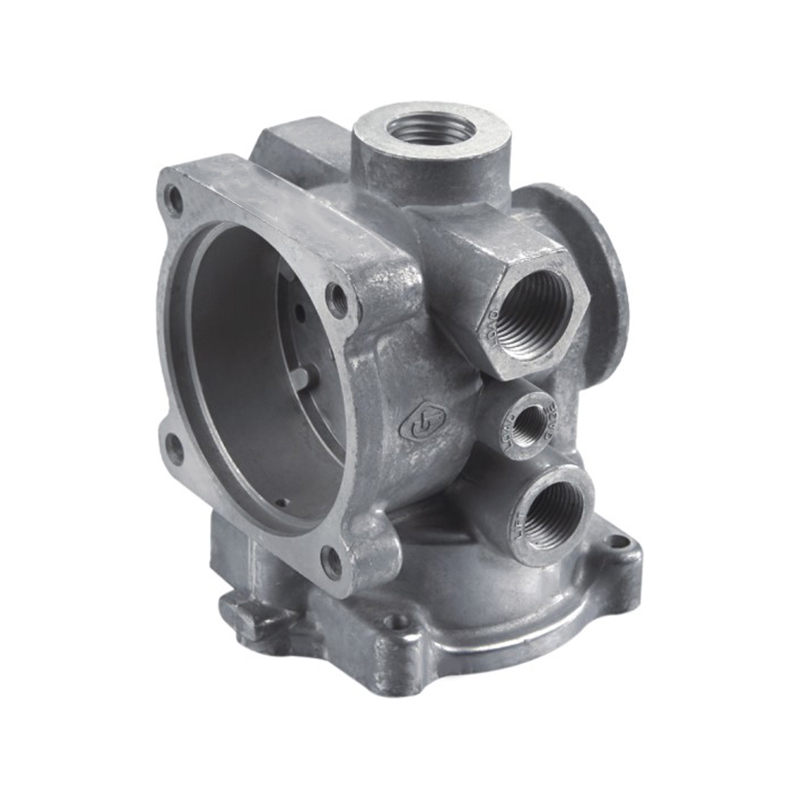 Aluminum Die-Cast Control Valves with Machining and Powder CoatingFor flow-control assemblies needing square port threads, sealed flange faces, and masked powder coating, these aluminum die-cast valves are made to drawing.View Product →
| Feature | As-cast condition | After CNC machining | Why it matters |
|---|---|---|---|
| Valve bore diameter | ±0.25–0.40 mm | IT7, ±0.015–0.025 mm | Sets flow coefficient and stem clearance |
| Seat / disc contact face | Not formed | Flatness 0.02 mm, Ra 1.6 µm | Shuts off without hand lapping |
| Seat-to-stem-bore runout | Not applicable | 0.03 mm TIR | Prevents side load and early seat wear |
| Port thread | Cored hole | M thread, class 6H | Leak path at the fitting |
| Flange sealing face | 0.3–0.5 mm stock | Flatness 0.05 mm, Ra 3.2 µm | Gasket seal at rated pressure |
| Wall at pressure cavity | 3.0 mm nominal minimum | Unchanged | Burst margin and pressure tightness |
Two notes on reading this. Anything in the last column should be measurable at final inspection — if a value cannot be gauged with a tool the inspector actually owns, it does not belong on the drawing. And stock allowance is a machining cost: cutting 0.5 mm off every sealing face takes time, so specify it where it earns its place.
Yes, with vacuum-assisted casting, a 3 mm minimum wall in the pressure cavity, and a 100% pressure test at 24 bar before machining. Above that rating, or under rapid cycling, a sleeved bore and an inserted seat ring are the safer route.
Because the raw surface carries the die's tolerance and its wear. Locating on machined datums first stops the seat from inheriting 0.3 mm of draft and shrinkage variation, which is exactly the error that shows up as a dragging actuator.
Only when masking is loose. Threads, the seat and the flange land must be plugged or taped; a coated seat face will not seal, and re-cutting it usually breaks the bore relationship you paid to establish.
Jieda keeps the die shop, the 200–1600 t casting cells, the CNC machining centres and the powder coating line in Beilun, Ningbo, under IATF 16949. For a valve body that matters, because the datum call, the seat cut and the coating mask all sit within one quality system instead of being negotiated between three suppliers when a leak shows up.
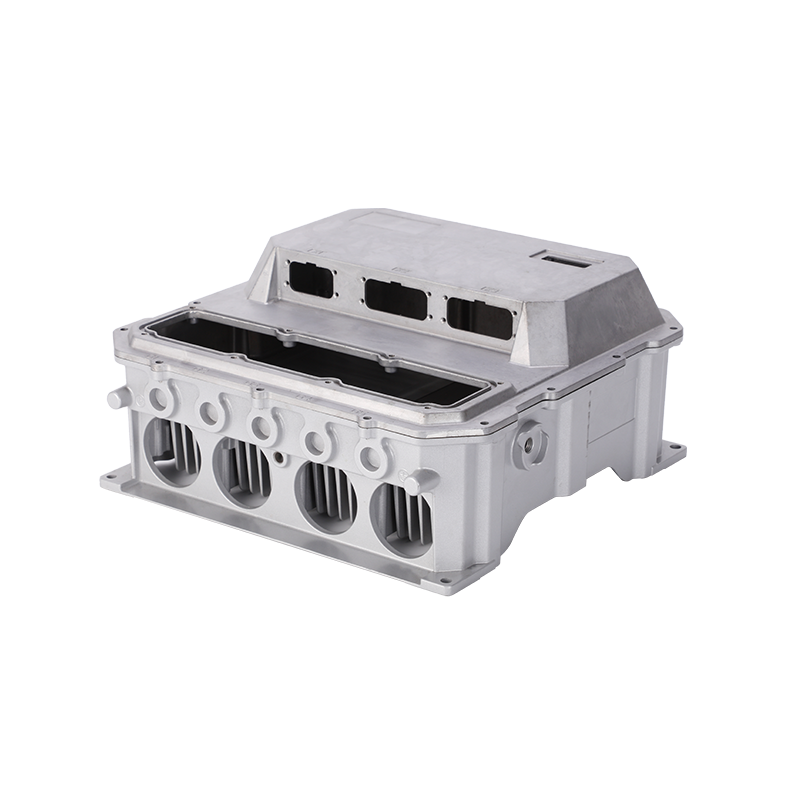
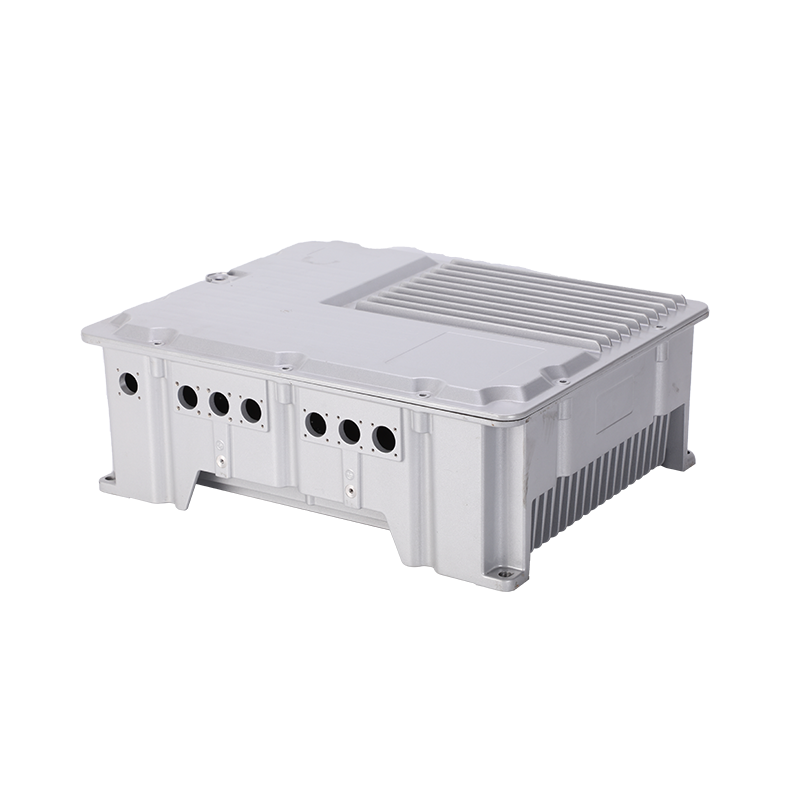
If you are sourcing a valve body or another machined casting, the aluminum die casting parts range shows the geometries already in production. Send the drawing, the pressure rating and the medium, and ask for a datum scheme with the quotation — a quote without one is a price, not a plan.
ARE YOU READY TO COOPERATE WITH jieda?
* Your email is safe with us, we don’t spam.

PRODUCTS
CONTACT INFO
nbjd011@126.com
+86-574-86115705
No. 58 Mould Road, Daqi Technology Industrial Zone, Beilun District, Ningbo

 English
 Español
 italiano