Content
Powder coating survives on an aluminum die casting when three things line up: a dense skin without exposed porosity, a conversion coating that actually bonds, and a cure schedule matched to the alloy and wall thickness. Get all three and a 70 µm polyester film will hold through 1,000 hours of neutral salt spray. Miss one, usually pretreatment on a part with surface porosity, and the same powder blisters off within a few hundred hours.
That is the short answer. The longer version matters more for buyers, because powder coating is often quoted as a single line item, "black, matte, 60 to 80 µm," with none of the variables that decide whether a finish survives three winters or three weeks. What follows is what the caster controls, what the coater controls, and where the two meet in a purchase order.
Powder coating is a dry process. A gun charges polyester or epoxy-polyester particles, the grounded part pulls them in, and an oven melts them into a continuous film. Adhesion comes from two mechanisms at once: a mechanical key from the blasted surface profile, and a chemical bridge from the pretreatment layer. Castings can achieve both, but they earn them differently than extruded profile or sheet.
A die casting arrives with a thin, fine-grained skin over a rougher and more porous interior. Blasting has to cut through casting skin without opening the pores underneath, which is why media, pressure and dwell time deserve a place in the specification rather than a shrug. A380 and ADC12 both respond well to aluminum oxide in the 120 to 180 grit range at moderate pressure; too coarse a media on a thin-wall housing rounds edges and opens porosity in a single pass.
Silicon content is the other reason powder is the default finish on cast aluminum. High-silicon die casting alloys anodize unevenly, with the silicon phase turning dark or refusing to take the anodic layer at all. Powder covers the same part uniformly, in any colour, at a film build that hides casting texture.
A powder line is a chain of decisions, and every one of them shows up later as an inspection result. These move the needle most.
Blast to a profile, then clean. Alkaline or acid cleaning followed by a conversion coating, chromate-free zirconium or titanium for most export work and chromate where the salt spray target is severe, gives the powder a surface it can grip chemically. Rinsing discipline matters as much as the chemistry: dried rinse residue under a powder film is one of the most common causes of blistering that only appears after humidity cycling.
Film build on die cast parts typically lands between 60 and 90 µm. Below 50 µm, coverage over casting texture thins out at the high points and salt spray performance falls away quickly. Above roughly 120 µm, impact cracking and thread interference become real risks. Cure usually runs 10 to 25 minutes at 163 to 204 °C metal temperature, and it is metal temperature, not the oven display, that counts.
Decide masking before coating, never after. Threads, mating faces, bearing bores, ground pads and any feature held tighter than about ±0.1 mm should be masked. Re-tapping after cure works, but it strips coating from the thread flanks and leaves a raw edge that becomes the first corrosion site on the part.
| Step | Typical setting | What goes wrong if it is skipped |
|---|---|---|
| Blast media | Aluminum oxide, 120 to 180 grit, moderate pressure | Weak mechanical key; coating lifts at edges and corners |
| Pretreatment | Conversion coating, full and even coverage | Blisters and creep-back from scribe lines during salt spray |
| Film build | 60 to 90 µm, measured on a named face | Thin zones over casting texture corrode first |
| Cure | 163 to 204 °C metal temperature, 10 to 25 minutes | Under-cure gives a soft film with poor impact and solvent resistance |
| Masking | Threads, bores, mating faces, tolerances under ±0.1 mm | Assembly interference and rework after the fact |
| Inspection | Cross-hatch adhesion, thickness, salt spray per lot | Failures discovered by the end user instead of the line |
The most expensive powder coating problems on die castings are not coating problems at all. They are casting problems: interconnected porosity near the surface, gas trapped in the metal, or moisture sitting in pores that expands during cure. The result is a pinhole, a blister or a small crater that appears minutes after the parts leave the oven, by which point the powder is consumed and the parts are scrap until they are stripped.
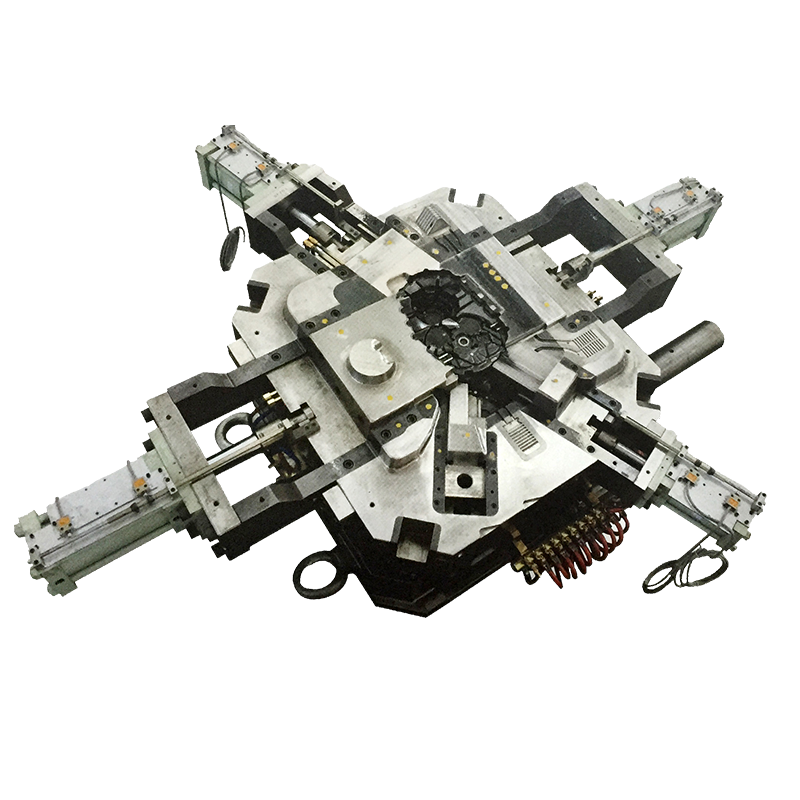
The coater's defence is a preheat pass. Run the parts to a temperature above the cure peak once, let trapped gas and moisture escape, cool, then coat. That adds an oven cycle, and on high-porosity parts it may need to happen twice. The caster's defence sits upstream: vacuum-assisted high pressure casting, controlled die temperature, adequate venting and clean, degassed melt. Mold design choices that prevent soldering and turbulent fill also, not coincidentally, reduce the porosity that ruins finishes.
Where porosity cannot be eliminated, around thick-to-thin transitions or at the end of fill, the drawing should say so. A 0.3 to 0.5 mm machining allowance on a cosmetic face frequently removes the porous skin entirely and hands the coater a solid surface, at a small cost in stock removal.
Buyers ask for this comparison constantly, so here it is in one place.
| Finish | Best fit on die castings | Limits to plan around |
|---|---|---|
| Powder coating (polyester) | Cosmetic and protective housings, covers, brackets; wide colour and gloss range | Cure at 163 to 204 °C; masking required; film adds 60 to 90 µm |
| Anodizing | Wrought or low-silicon parts needing a metallic look and wear resistance | High-silicon die casting alloys anodize unevenly and darken; limited colours |
| Wet paint | Fast colour changes, low-volume runs, field touch-up | Lower film durability; solvent handling; usually needs a primer |
| E-coating | Complex geometry needing full coverage before a topcoat | Thin films only; typically a base layer under powder |
For most cast housings the decision narrows to powder versus wet paint, and volume plus colour count usually settles it. One colour at production volume favours powder; a dozen colours at fifty pieces each favours paint.
The finish is rarely the point in itself. It protects a part that has another job to do, and the application decides how much of the specification is really about corrosion and how much is about appearance.
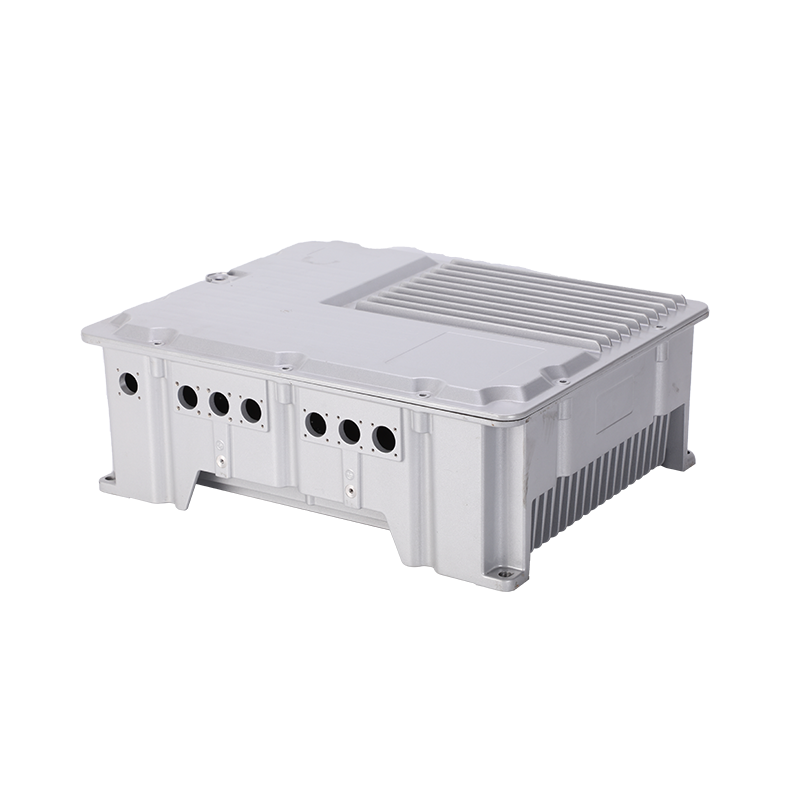
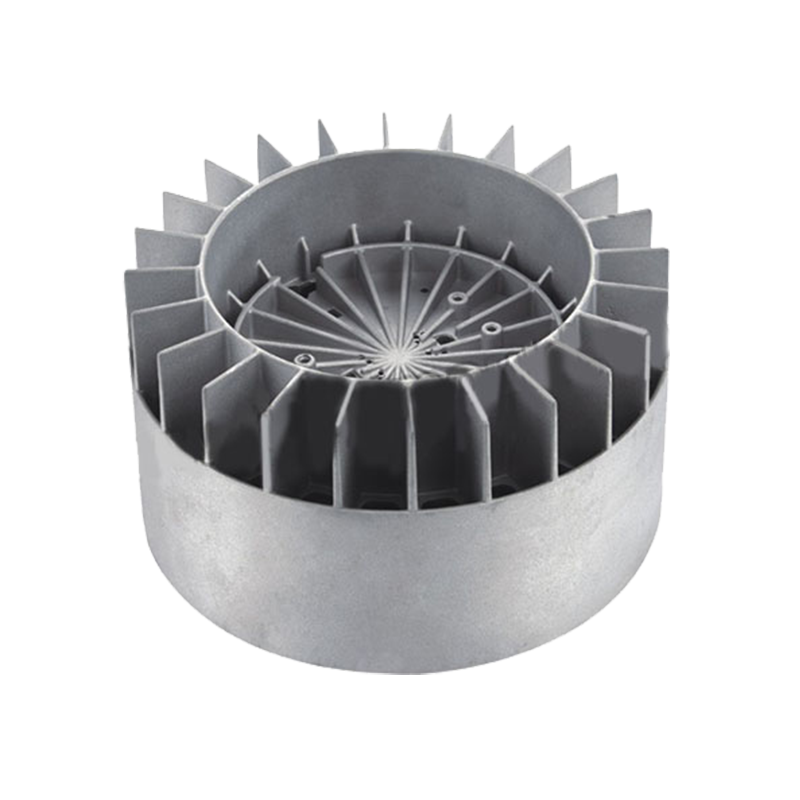
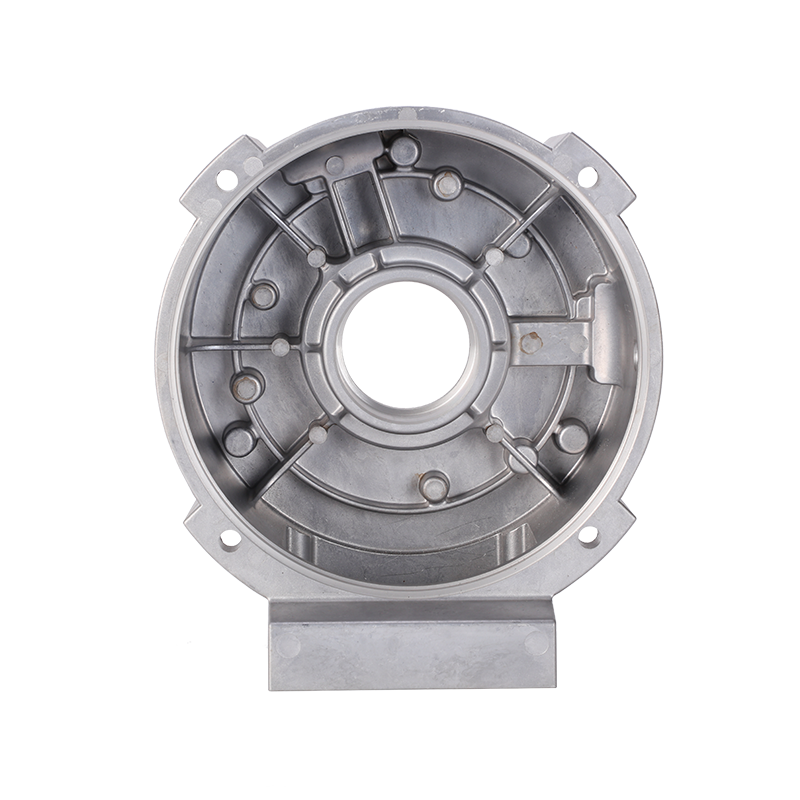
Motor and stator housings need outside corrosion protection, stable bearing seats, and a film that does not chip when laminations are pressed in. Powder works well because masking the bore and mating face is straightforward and the cure temperature suits as-cast A380.
 Aluminum Die-Cast Motor End Shield with Powder CoatingAluminum die-cast end shield for synchronous and NEMA motors, supporting the stator housing with CNC machining and powder coating for corrosion resistance.View Product →
Control valve bodies combine machining and coating on one part: seal bores and threaded ports are machined after casting, then masked, then powder coated. The advantage over paint is film integrity at the machined-to-cast transition, which is exactly where thin paint films break down first.
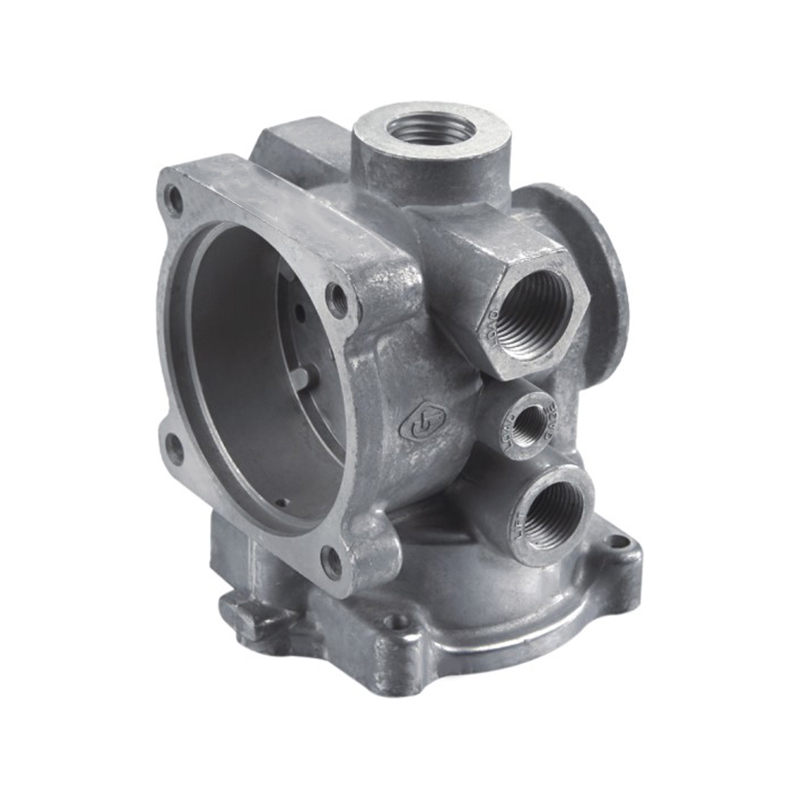 Aluminum Die-Cast Control Valve with Machining and Powder CoatingHigh-pressure die-cast aluminum control valve for flow, pressure, and direction control, with machining and powder coating for industrial flow systems.View Product →
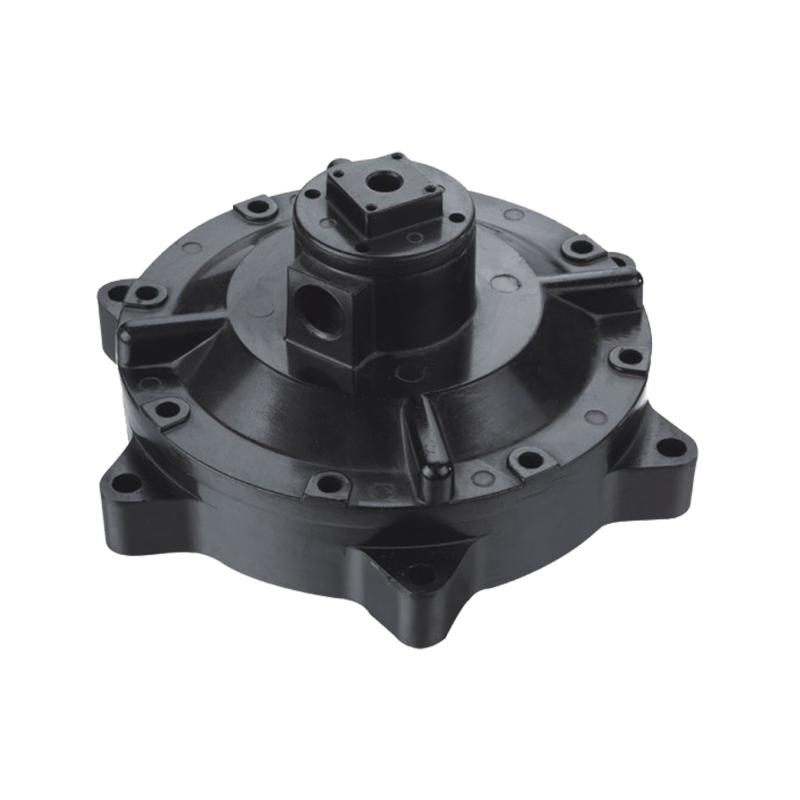
Textile machine components often carry both a precision machining step and a powder coat, and the coating has to survive oil, lint and constant vibration without cracking at machined edges. There is a useful discussion of why surface treatment carries so much of the part's service life in this application.
Vague coating specifications produce arguments later. These items remove most of the ambiguity before the first part is cast:
One note on inspection timing. Measure adhesion after the parts have rested for 24 hours rather than straight off the line. Powder films keep building their properties as they cool and settle, and a cross-hatch test run too early reads worse than the coating actually is.
Almost all can, but not all will pass a severe salt spray specification without extra work. Parts with heavy surface porosity need a preheat pass, a thicker build or a machining allowance that removes the porous skin.
At 163 to 204 °C metal temperature, as-cast A380 and ADC12 parts are generally unaffected in strength. Thin walls, long slender parts and tight flatness tolerances are worth checking after the oven pass, because stress relief and fixturing both move dimensions slightly.
For most cast housings, 60 to 90 µm is the practical window. Thinner films follow casting texture and corrode at high points; thicker films crack under impact and interfere with assembly.
Porosity and casting skin. Sheet is homogeneous and easy to pretreat, while a casting brings subsurface gas, different surface chemistry and often residual die lubricant. The failure is nearly always in preparation rather than in the powder itself.
Powder coating a die casting is a two-party process. The caster owns density, surface and geometry; the coater owns profile, pretreatment and cure. When a finish fails, the useful question is not whose fault it is but which of those six variables moved.
If you are specifying coated aluminum castings and would rather have the casting, machining and finishing steps quoted together, with masking and inspection defined up front, that is how we work: die casting, machining and powder coating under one roof, one IATF 16949 quality system, one conversation.
ARE YOU READY TO COOPERATE WITH jieda?
* Your email is safe with us, we don’t spam.

PRODUCTS
CONTACT INFO
nbjd011@126.com
+86-574-86115705
No. 58 Mould Road, Daqi Technology Industrial Zone, Beilun District, Ningbo

 English
 Español
 italiano