Content
A purchasing engineer sends 5,000 die-cast motor housings out for black anodizing. The samples looked fine. The production lot comes back mottled gray, with white specks around the ejector pin marks and a visible tone break where the machined face meets the as-cast surface. Nothing changed at the anodizing line. What changed was the casting lot.
Short answer first: aluminum die castings can be anodized, and a service that understands die casting can hold a repeatable Type II or Type III finish. But the result is decided before the parts reach the tank. Three inputs control almost everything you see on the finished surface — the alloy the casting is poured in, the soundness of the as-cast skin, and how the part is designed and masked. Get those right and anodizing becomes a stable production process. Get them wrong and no amount of racking skill will rescue the cosmetic result.
Anodizing grows an oxide layer out of the metal itself. Whatever is not aluminum stays where it is, and the oxide forms around it. Die-casting alloys carry a lot of non-aluminum content, so the coating inherits the structure underneath.
Forming method matters too. Die casting, sand casting and investment casting leave different surface skins and different porosity patterns, so the same alloy can anodize very differently depending on how the part was made.
If a drawing says ADC12 and the customer expects a bright clear anodize matching a 6061 extrusion, that requirement is not achievable — not with a better anodizer, and not with more polishing. The alloy has to be selected for the finish, and that selection belongs at the die and casting stage.
| Alloy | Silicon content | Anodizing behavior | Best fit |
|---|---|---|---|
| A383 / ADC12 (secondary) | ~9.5–11.5% | Dark gray to near black, satin, smut-prone; color consistency is hardest to hold | Housings, brackets and covers where the color is dark and cosmetic demand is moderate |
| A360 | ~9–10%, lower copper | Gray, better corrosion performance and more stable color than A383 | Motor housings and covers needing corrosion resistance |
| AlSi10MnMg (primary, e.g. Silafont-36) | ~10%, low iron, manganese added | Most consistent anodizing response among die-cast alloys; light gray and dyeable | Structural and EV parts, battery housings, thin-wall safety components |
| 6061 (wrought) | under 1% | Bright, uniform and easy to dye | Machined parts only — it cannot be high-pressure die cast |
Most programs land on one of two paths. If the finish is a dark decorative anodize on a general-purpose casting, A383 is workable and cost-effective, and the appearance spec is written around a satin gray-black. If the anodize is functional or must be colored, moving to a primary alloy such as AlSi10MnMg costs more per kilogram but removes most of the color risk.
Machining changes the picture as well. A part anodized as-cast reads darker and more mottled than the same part with its visible faces machined. Where a uniform tone is required, the cosmetic faces get machined and the rest stays as-cast.
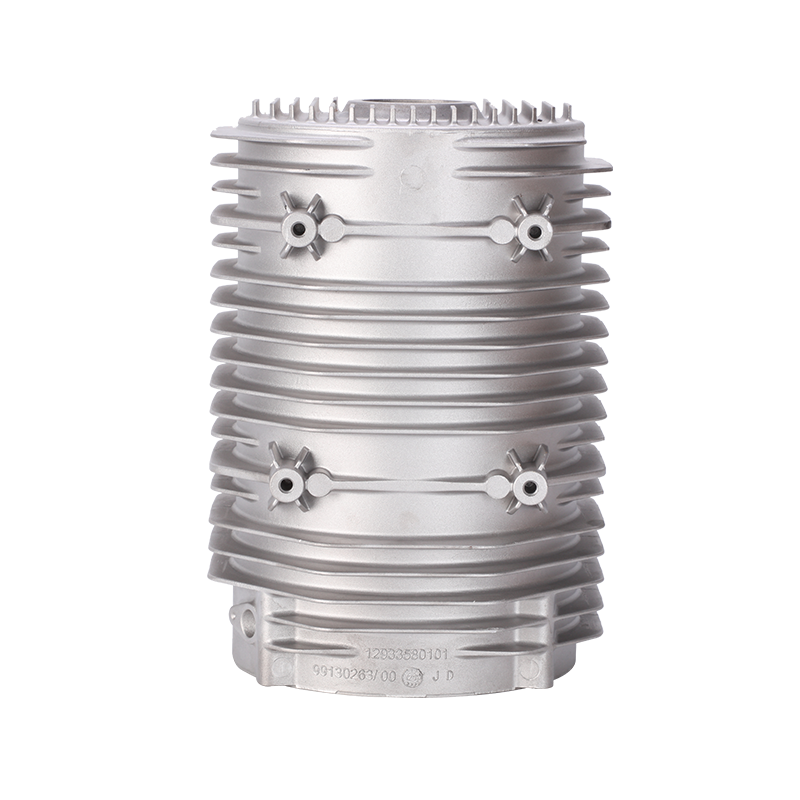
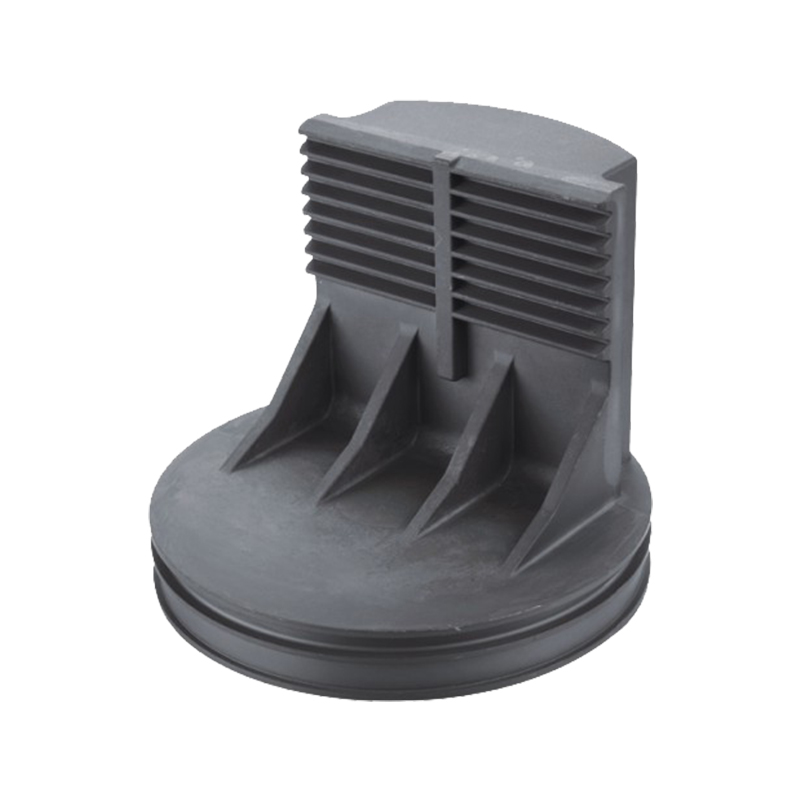 Anodized Aluminum Die-Cast Pistons for Engines and CompressorsView this product for anodized aluminum die-cast pistons, including alloy options and surface treatment details relevant to machining and coating decisions.View Product →
Choose the coating class from the function, not from the finish name. The three common options behave quite differently on a die casting.
Decorative and corrosion-resistant. It accepts dye across a wide color range, keeps a satin surface, and suits visible covers, end caps and housings. On high-silicon alloys expect gray-to-black rather than bright tones.
Wear resistance first, appearance second. Hardness typically lands around 350–500 HV depending on alloy. Colors are limited to dark gray, bronze and black, dimensional change is larger, and high-silicon castings are more likely to show patchiness. Use it for sliding surfaces, valve bodies and wear plates.
Under a micron thick, conductive and inexpensive. If the requirement is corrosion resistance plus electrical grounding, conversion coating is usually correct and anodizing is wrong — anodizing is dielectric and will insulate the part.
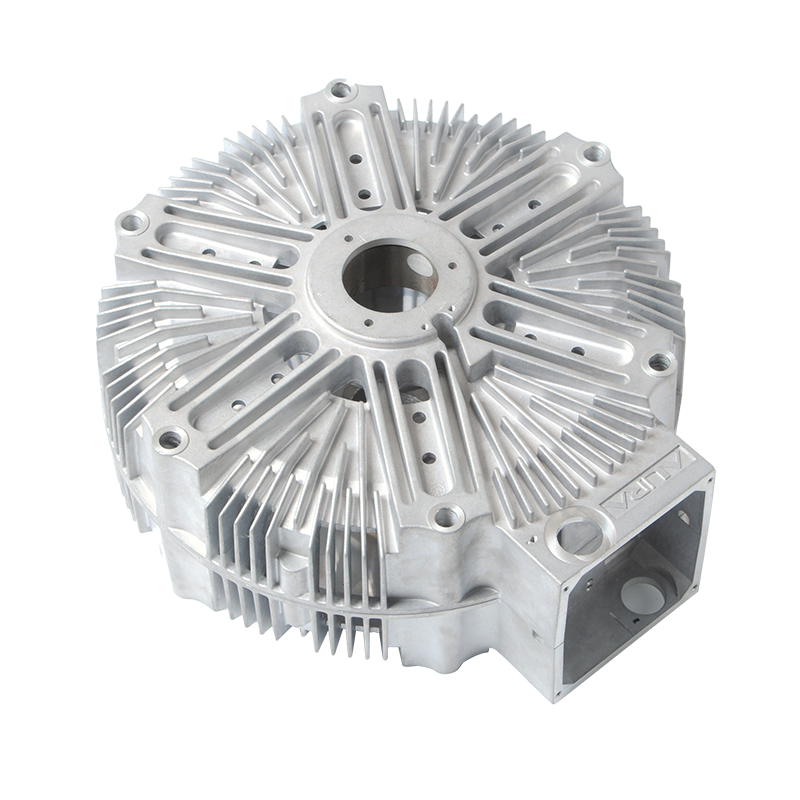
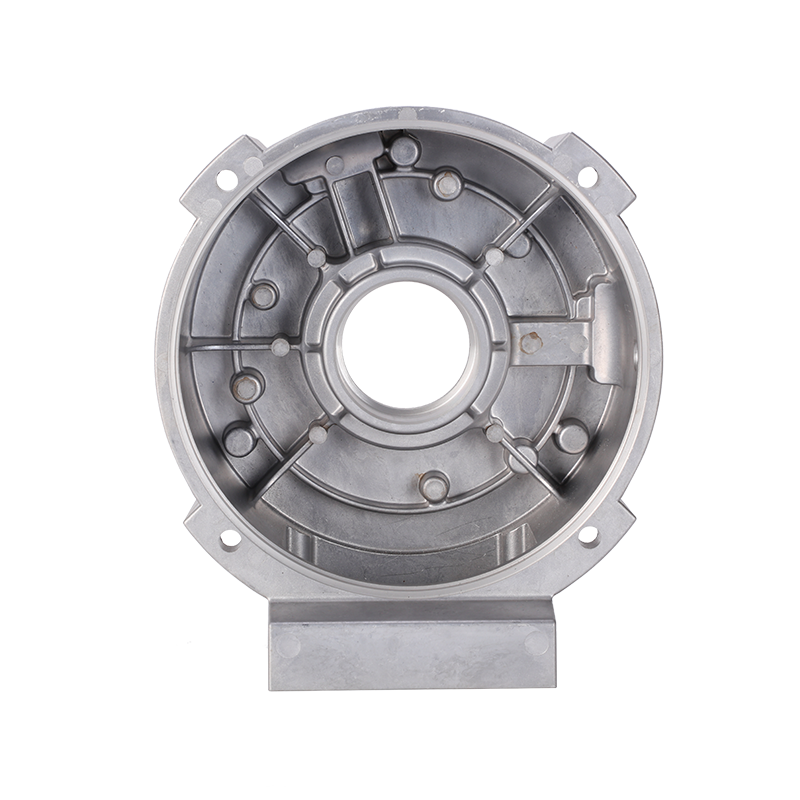
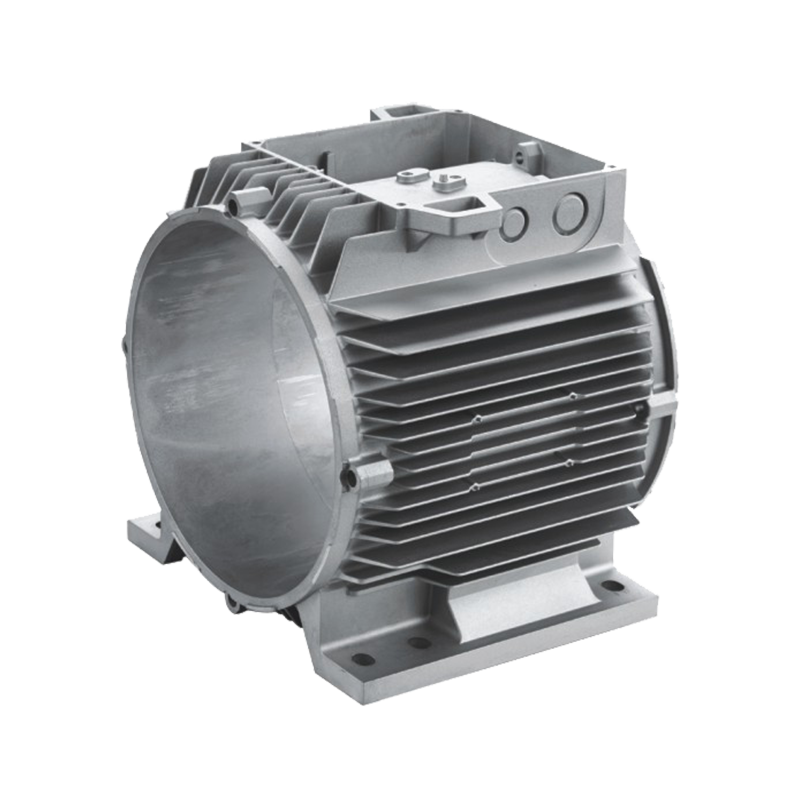
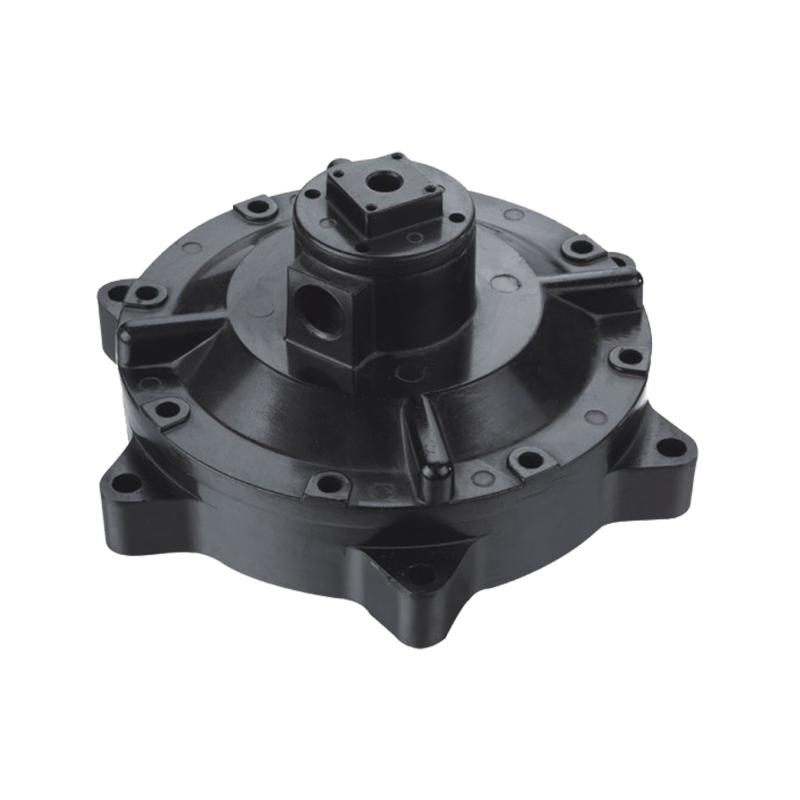
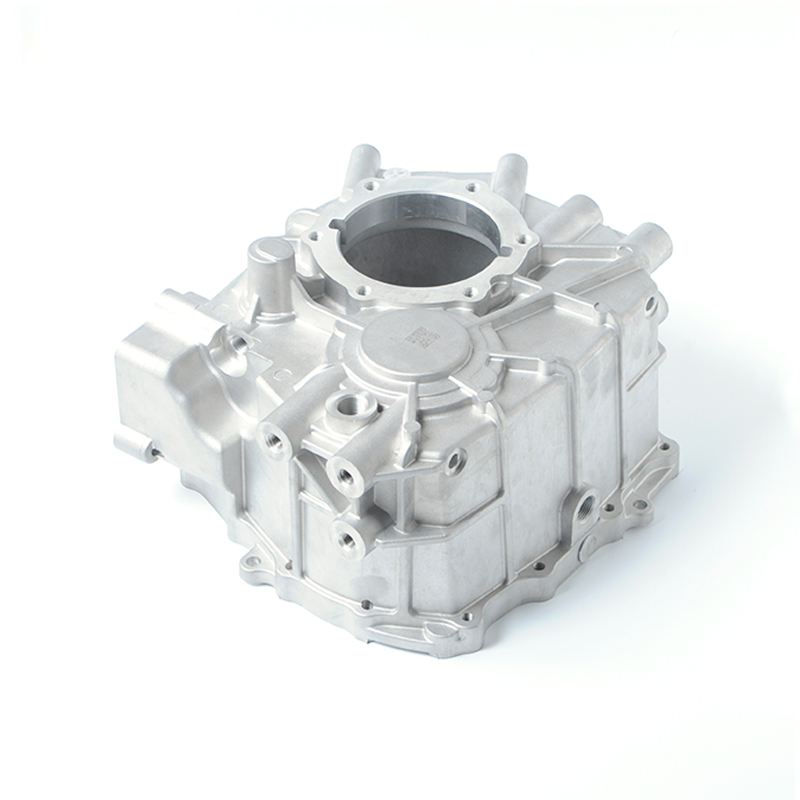 High-Pressure Aluminum Die-Cast Automobile Motor HousingReview this custom motor housing for automobile use, with aluminum alloy options, surface treatments, testing, and dimensional tolerance details tied to anodizing choices.View Product →
Anodizing consumes roughly half its thickness from the substrate and adds the other half outward. A 20 µm Type II coating grows about 10 µm per side; a 50 µm Type III coating grows about 25 µm per side. On a part held to ±0.05 mm, that is not a rounding error.
Finish quality on die castings is verifiable. Put the tests in the purchase order and it stops being a matter of opinion.
One control point matters more than most buyers expect: casting variables shift anodized color. Recycled-content ratio, alloy lot chemistry, die thermal balance and gate changes all move the silicon morphology, and the finished tone moves with them. If appearance is critical, freeze the alloy source and re-qualify after any die or process change.
Anodizing is not always the answer, and on some die castings it is the wrong one.
Thermal parts sit in a category of their own. Anodizing raises emissivity on a heat sink and adds corrosion protection for outdoor and industrial use, which is why anodized heat sinks are standard in LED lighting and electrical enclosures.
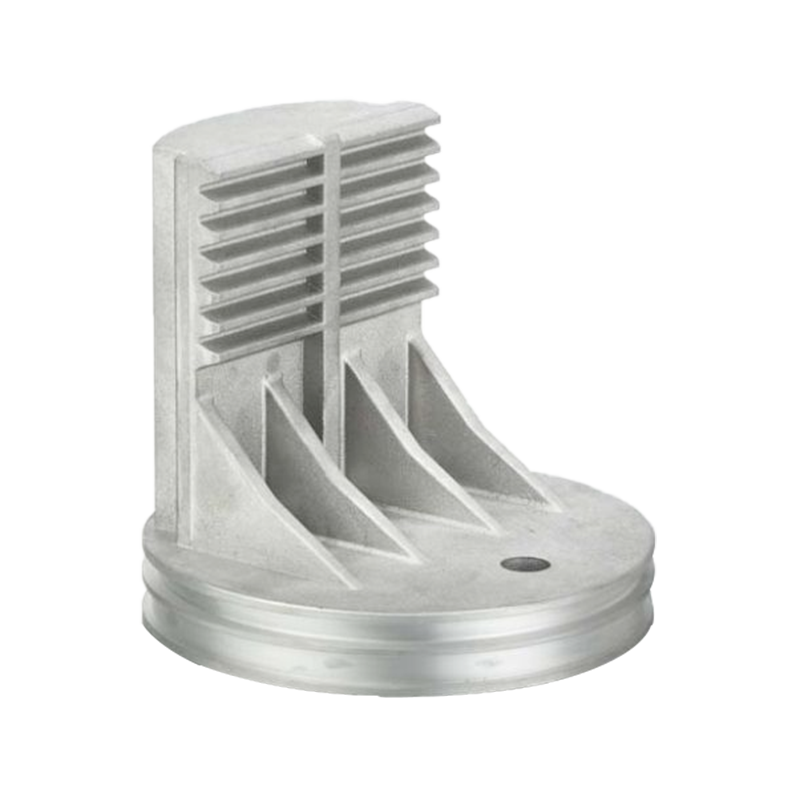
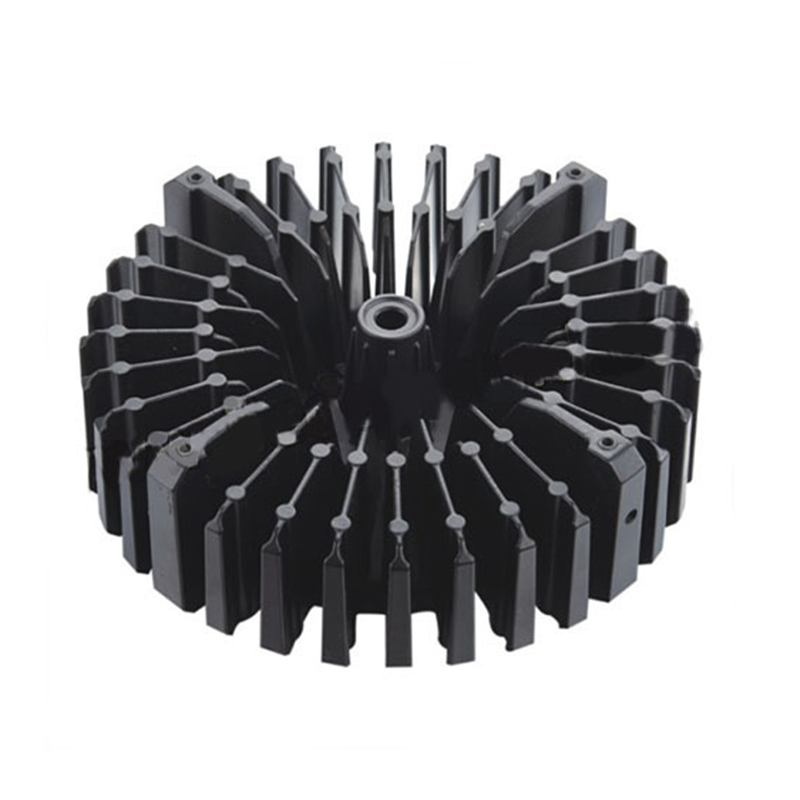 Die-Cast Aluminum Heat Sinks for Electronics and Industrial EquipmentThis heat sink product covers aluminum die-cast options, anodizing and other finishes, and specifications useful when preparing an RFQ for thermal parts.View Product →
An RFQ written this way usually saves a full sample round, because the supplier can say up front whether the alloy supports the color, whether the masking plan is manufacturable, and what a realistic yield looks like — instead of discovering it on the first production lot.
Yes, but expect a dark gray to black satin result with limited color consistency. It works well for dark decorative finishes and functional corrosion protection. It does not work for bright clear or pastel colors.
Yes. Roughly half the coating thickness grows outward per side — about 10 µm for a 20 µm Type II coating and about 25 µm for a 50 µm Type III coating. Threads, bores and sealing faces normally need masking.
Usually one of three causes: porosity holding electrolyte through the seal step, mixed as-cast and machined surfaces on the same part, or an alloy lot change. The fix is upstream — sounder castings, consistent machining and a frozen alloy source.
It is possible, with limits. Thickness above roughly 50 µm on a high-silicon alloy tends to crack or look patchy. Keep hard anodizing in the 25–40 µm range and confirm it with a production-intent trial.
Anodizing a die casting is a chain rather than a single step: alloy choice, mold and casting soundness, machining strategy, masking, then the anodizing line. When a finish problem appears, the cause is usually two or three links back from the tank.
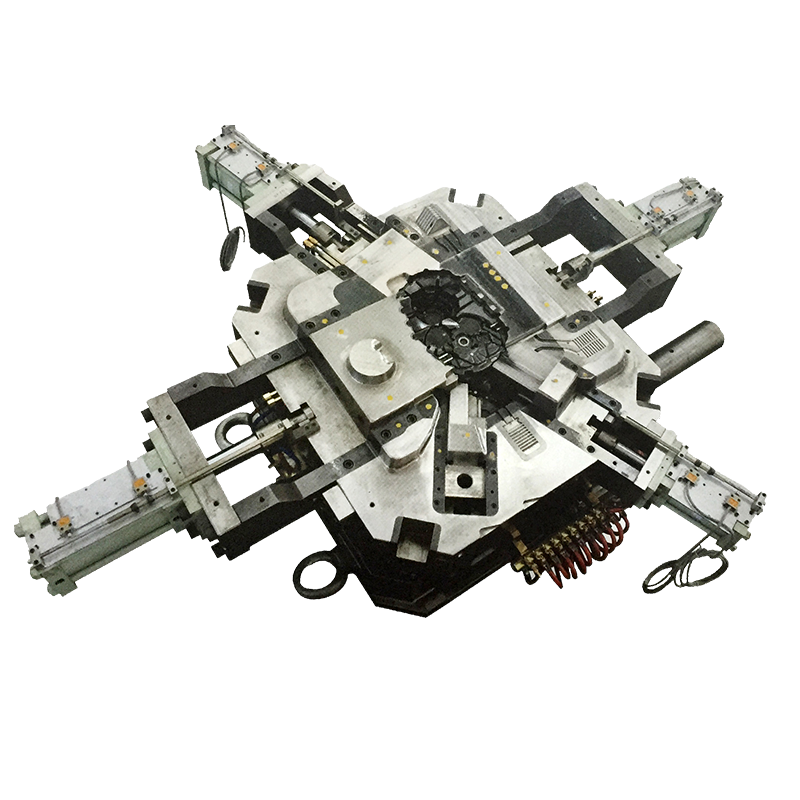
Our own work covers the front of that chain. We design and build the dies, run high-pressure die casting from 1600T down to 200T, machine in-house on CNC centers, and coordinate surface treatment including anodizing and powder coating under an IATF 16949 quality system. If a program needs an anodized die-cast part with a defined color and a defined corrosion target, the practical starting point is to settle the alloy and the cosmetic surfaces before the die is cut. You can review our aluminum die casting and machining capabilities or send a drawing with the finish requirements attached — the earlier those two decisions are made, the fewer surprises end up on the finished surface.
ARE YOU READY TO COOPERATE WITH jieda?
* Your email is safe with us, we don’t spam.

PRODUCTS
CONTACT INFO
nbjd011@126.com
+86-574-86115705
No. 58 Mould Road, Daqi Technology Industrial Zone, Beilun District, Ningbo

 English
 Español
 italiano