Content
A housing that measures clean on the CMM can still fail a 0.5 bar leak test — and that contradiction is usually locked in months earlier, in an alloy callout, a gate position, or a tolerance nobody questioned at RFQ stage. Aluminum die casting for automotive parts is a process where part design, tooling and machine tonnage have to agree before the first shot is fired; correcting any one of them after the die is cut costs an order of magnitude more than getting it right on paper.
The short version: three decisions carry most of the risk — alloy grade, tool thermal design, and how tolerances and machining allowance are specified. Get those right and coating, sealing and packaging become routine. Get them wrong and every downstream inspection turns into an argument. What follows is how each decision plays out on real automotive programs, with the numbers we normally work to at our plant in Beilun, Ningbo.
ADC12 (A383) is the correct answer for most brackets, covers and small housings, and the wrong answer for a crash-adjacent battery enclosure or any part that has to absorb energy or be bent after casting. The datasheet will not tell you that — the assembly requirement will. So we always ask what the part must do first: hold pressure, carry load, dissipate heat, or simply look right after powder coating.
| Alloy family | Typical automotive use | Why it is chosen | Where it bites |
|---|---|---|---|
| ADC12 / A383 | Covers, brackets, small housings | Best fluidity, fills thin walls, lowest cost per kilo | Low elongation; hard iron-rich phases wear tools and complicate machining |
| A380 | Motor housings, pump bodies, structural covers | Good balance of strength and castability | Average corrosion resistance; depends heavily on coating quality |
| A360 | Thin-wall, pressure-tight parts | Better ductility and corrosion behaviour than ADC12 | Narrower process window; scrap climbs quickly if thermal balance is poor |
| Low-iron, high-elongation grades | Battery housings, crash-relevant structures | Higher elongation and thermal conductivity | Needs vacuum-assisted filling and tight iron control in the melt |
The practical consequence is that chemistry control belongs in the purchase order, not just the material certificate. Iron, copper and zinc levels drift with recycling ratio, and a 0.2% swing in iron can change both ductility and machining behaviour on the same tool. Ask for chemistry per heat, not per shipment, and check it against the drawing rather than against the last batch.
Four failure modes account for most of the rework we see on automotive castings, and all four are predictable from the drawing:
The first is the most expensive because it is invisible until the leak test. It is also the easiest to fix — a modified overflow, a local die insert, or a small rib on the part is often enough. Doing that in simulation before steel is cut costs a fraction of doing it after the first 500 parts.
A die is a thermal machine, not just a cavity. Two tools cut to the same drawing can produce completely different parts if the heat balance is different, which is why tool design should be reviewed together with the foundry team rather than in isolation.
Gate position sets fill time, and fill time sets both surface quality and porosity. For thin-wall automotive housings we typically target 30 to 60 milliseconds for the fill, with gate velocity kept in a range that keeps the metal from atomising. Overflow placement then controls where the cold slug and the gas end up. On parts with a leak requirement, we model the flow first and lay out cooling lines so the die reaches a stable thermal map within the first 20 to 30 shots — not after an hour of tweaking.
Our own tooling work starts from CAD/CAM/CAE simulation, with customised high-pressure aluminum die casting molds built around the machine tonnage the part will actually run on, rather than around a generic die base. That single alignment removes most of the early-life inconsistency that shows up as intermittent scrap.
H13-class hot work steel at 44 to 48 HRC, nitrided in the gate area, is a reasonable baseline for automotive tooling. Where a boss or a heavy section concentrates heat, we would rather put a replaceable insert in at build stage than repair a cavity later. Tool life depends on alloy, cycle time and cooling, but with a proper maintenance cycle most automotive dies reach several hundred thousand shots before a major refurbishment — and the die records should tell you exactly when that point is coming.
Ask for what the assembly needs, not for the tightest number a supplier is willing to sign. Over-tightened as-cast tolerances drive tool cost and inspection time without improving fit, while a loose callout on a bearing bore will cost you a day of machining per batch. These are the values we normally hold:
Where a wall thickness is critical, specify it with a tolerance and a reference point rather than a nominal only. Cast wall thickness drifts with die wear, and a nominal 2.5 mm wall that is allowed to creep to 3.2 mm changes the weight, the cooling behaviour and the leak risk at the same time.
Most automotive castings ship machined, and the secondary operations are where fit and leak problems usually appear. The casting can be perfect and still cause a line stop if the bearing bore and the mounting face are machined in two setups.
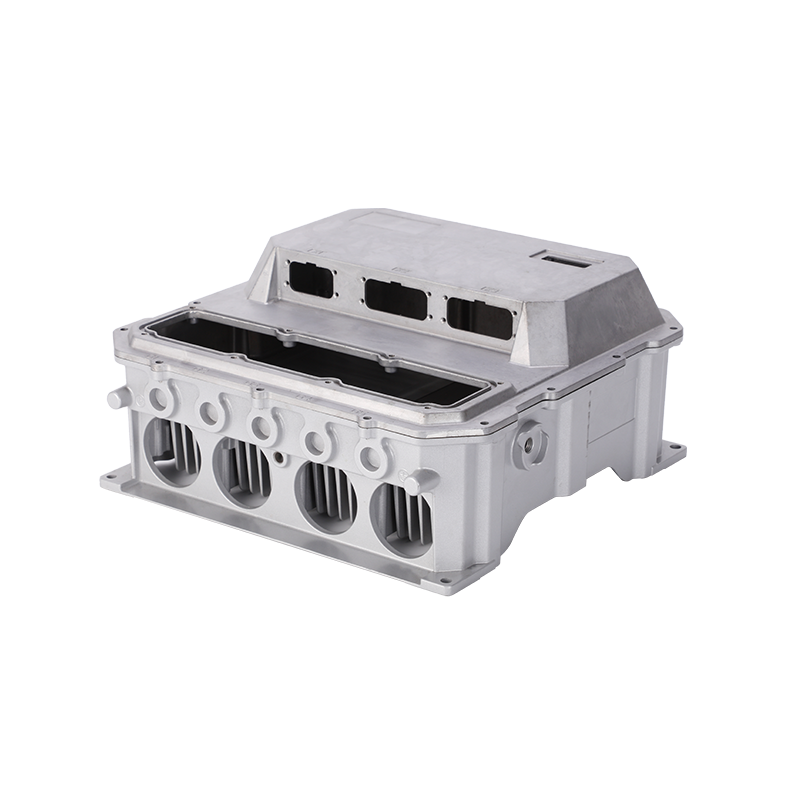
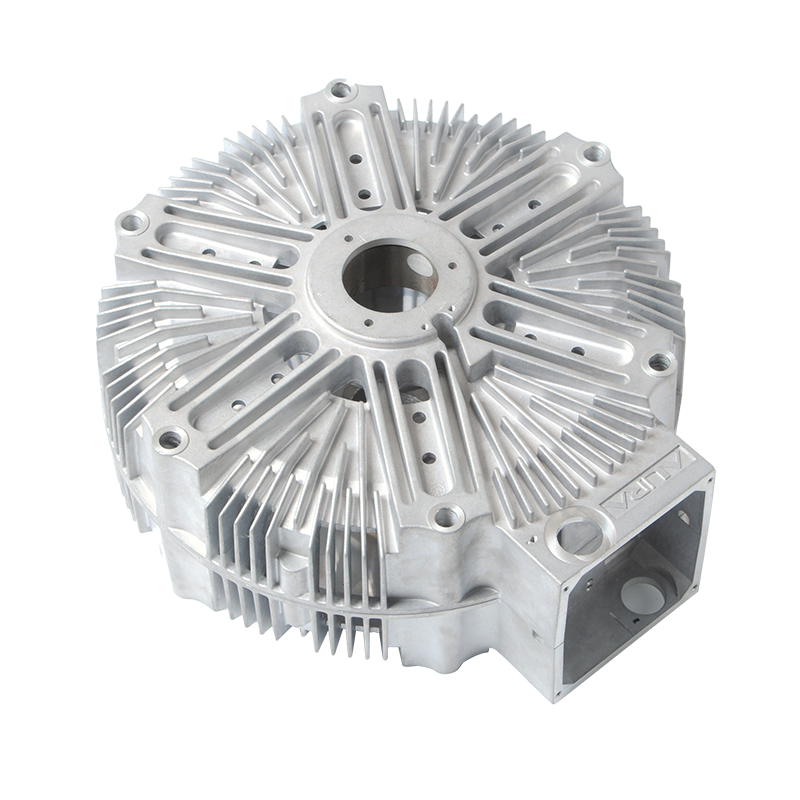
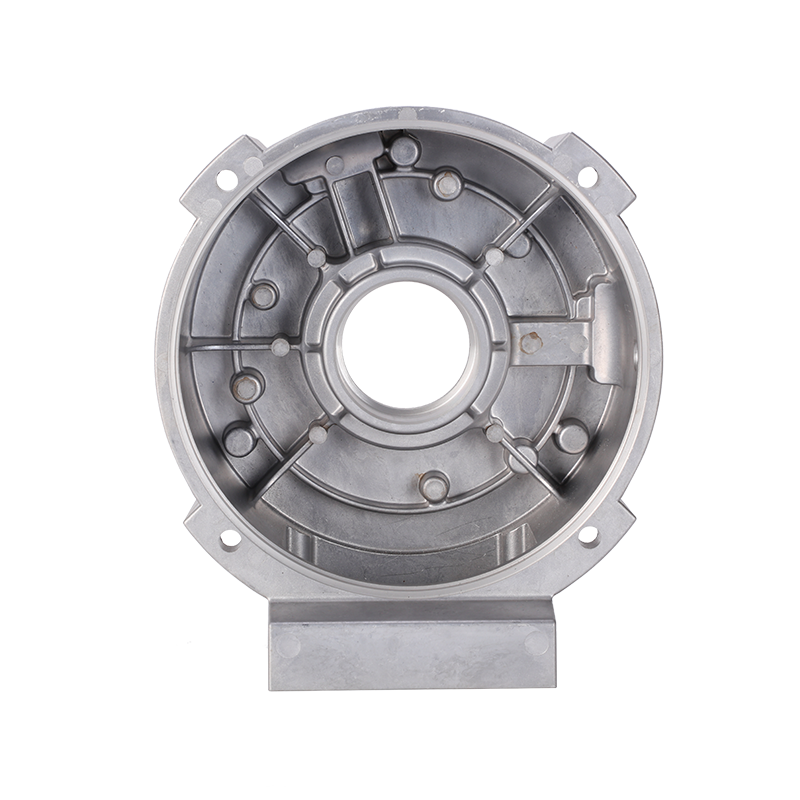
For e-motor and stator housings, the stator seat, bearing bore and mounting faces are best machined in a single fixturing so concentricity is held by the process rather than by inspection. Powder coating then goes on after masking, so threads and sealing surfaces stay clean.
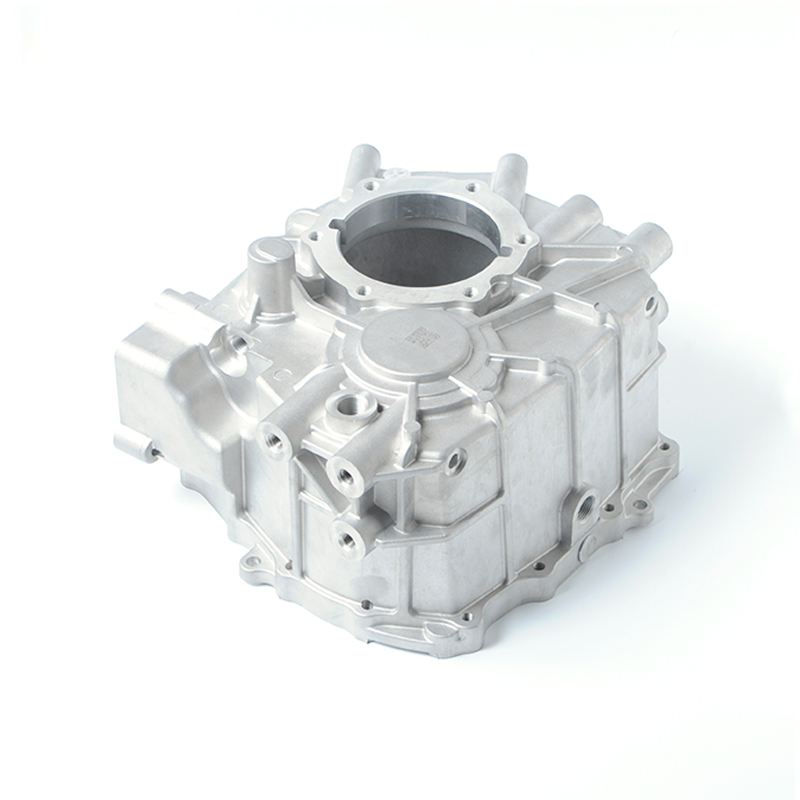 Automobile Motor Housing in High-Pressure Aluminum Die CastingDie-cast motor housing for automotive e-motor applications, with aluminum alloy options, leakage and X-ray testing, and powder coating after masking.View Product →
Oil pans and sumps add a different constraint: the sealing flange has to stay flat through the bolted joint and the gasket groove has to be machined, not cast. Leak testing at 0.3 to 0.5 bar with a pressure decay check is a sensible gate before the part ever reaches the engine line.
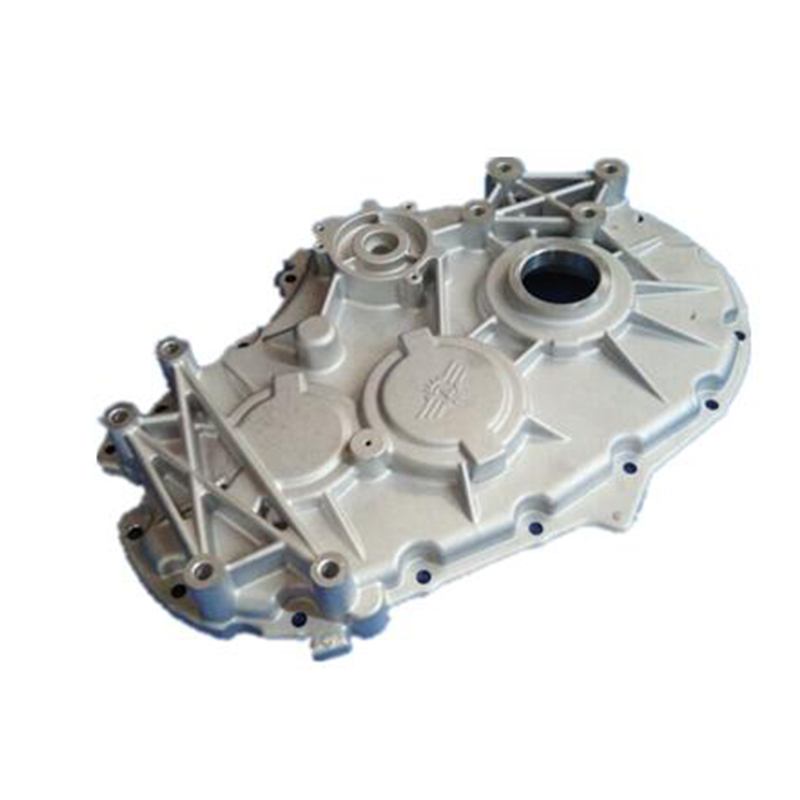 Oil Pan and Sump with Sealing for VehiclesAluminum die-cast oil pan and sump for cars, vehicles and motorcycles, focused on leak-free sealing, porosity control, X-ray checks and heat dissipation.View Product →
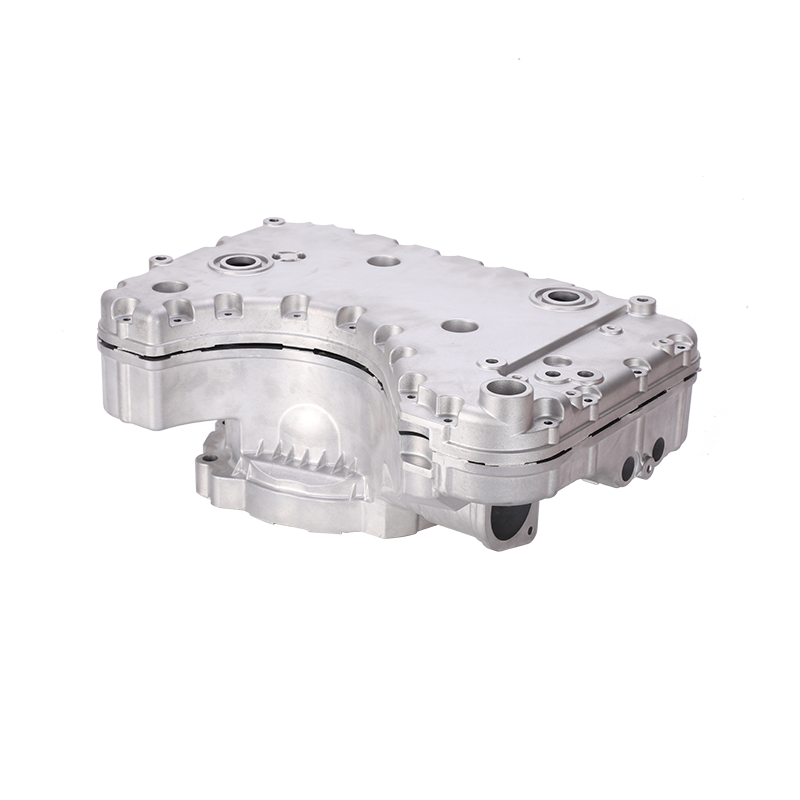
Battery housings are the least forgiving of the group. The enclosure carries crash loads, seals against water and dust, and often doubles as a cooling interface, so elongation and thermal conductivity both matter — which is exactly why low-iron alloys and vacuum-assisted filling are used. If you are still weighing the sealing strategy, this overview of how battery housings contribute to new energy vehicle safety is a useful starting point for the design review.
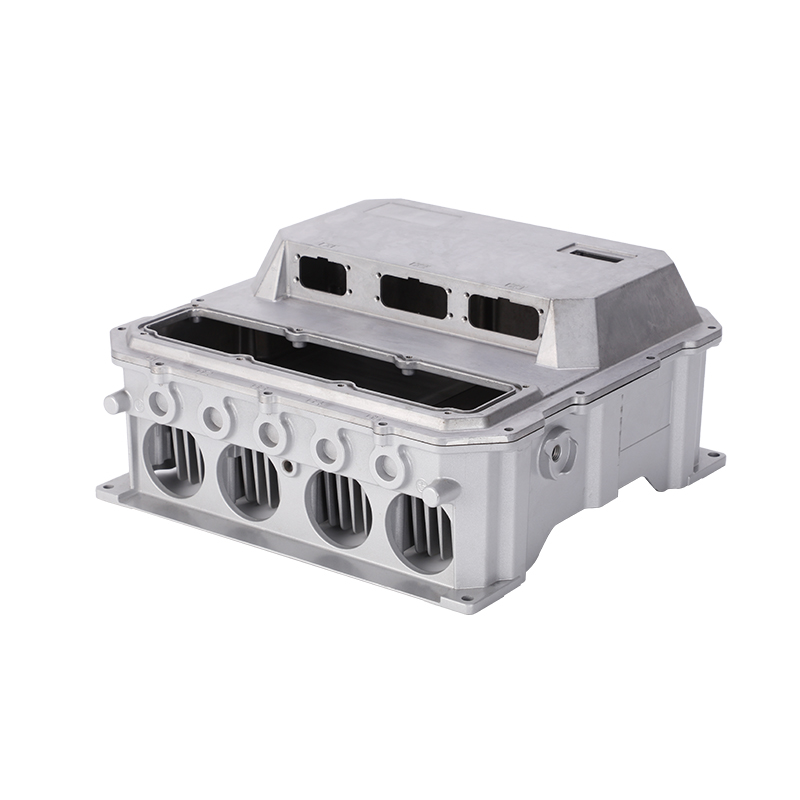 Battery Housing and Cover for New Energy VehiclesAluminum die-cast battery housing and cover for electric vehicles, with sealing, heat dissipation, strength for battery protection and IATF16949 quality-system support.View Product →
For automotive work the question is not whether a supplier has a certificate, but whether the evidence behind it exists per program. A short audit list:
Our own operation is set up around those expectations: IATF 16949 certification, roughly 130 staff including about 28 engineers and technical staff, more than 80 machines spanning 1,600 t down to 200 t cold-chamber presses plus CNC machining centres, EDM and wire cutting, in a 12,000 m² building in Beilun — the district usually described as China's die casting mould capital. Parts ship to customers in the US, Germany, Italy, the UK, France, Poland, Finland, India and Australia.
Price differences between quotes for the same drawing usually trace back to four variables, and it is worth asking about each one explicitly:
1.0 to 1.5 mm is routine for covers and housings with a well-balanced die. Below 1.0 mm, filling becomes sensitive to gate design and die temperature, and simulation plus vacuum assistance is strongly recommended before committing to tooling.
Yes, and for automotive programs it usually shortens the loop when a dimensional issue appears — the fix can be made in the die rather than negotiated between three companies. It also keeps the datum scheme consistent from casting drawing to finished part.
For a mid-complexity housing, design and simulation take one to two weeks, die build typically six to ten weeks depending on size and insert count, then sampling and correction. Plan on a first-article submission after two or three trial rounds rather than one.
They can. Zinc is often the better choice for small, thin, high-detail brackets where aluminium would need a much larger gate. Keeping both processes under one quality system avoids splitting the PPAP across suppliers.
The useful takeaway is that most automotive casting problems are decided on paper: the alloy chosen against the assembly requirement, the die designed around a thermal map, and the tolerances written to what the part must actually do. If you are at the RFQ stage and want a second opinion on wall thickness, alloy grade or sealing strategy before tooling is cut, send the drawing and the functional requirements — the review usually costs less than one trial round.
ARE YOU READY TO COOPERATE WITH jieda?
* Your email is safe with us, we don’t spam.

PRODUCTS
CONTACT INFO
nbjd011@126.com
+86-574-86115705
No. 58 Mould Road, Daqi Technology Industrial Zone, Beilun District, Ningbo

 English
 Español
 italiano