Content
When a purchasing engineer brings a new aluminum part to a mold shop, the first practical question is not which casting process is “better” in theory. It is whether high pressure die casting or low pressure die casting can hit the part’s target cost, wall thickness, and porosity limits at the required annual volume. The short answer: the right process is the one that matches the order book. High pressure die casting dominates where cycle time and dimensional repeatability drive cost down at scale. Low pressure die casting wins where gas-tightness, heat treatability, and mechanical integrity matter more than speed.
In high pressure die casting, molten aluminum is injected into a hardened steel die at pressures far higher than low pressure systems. The injection speed is extremely fast, which fills the cavity almost instantly. That speed creates two effects.
First, it produces excellent surface finish and tight dimensional tolerances. Second, it allows very thin walls, often down to 0.5 mm, which is a major advantage for lightweight automotive and electronics parts. Cycle time can be as short as 30 to 90 seconds, making the process highly productive for runs measured in tens of thousands of parts per year.
The trade-off is porosity. The fast injection traps air and gas inside the casting. This can impair mechanical properties and gas-tightness. For that reason, many high pressure die castings require impregnation or other sealing steps before they can be used in fluid or pressure applications.
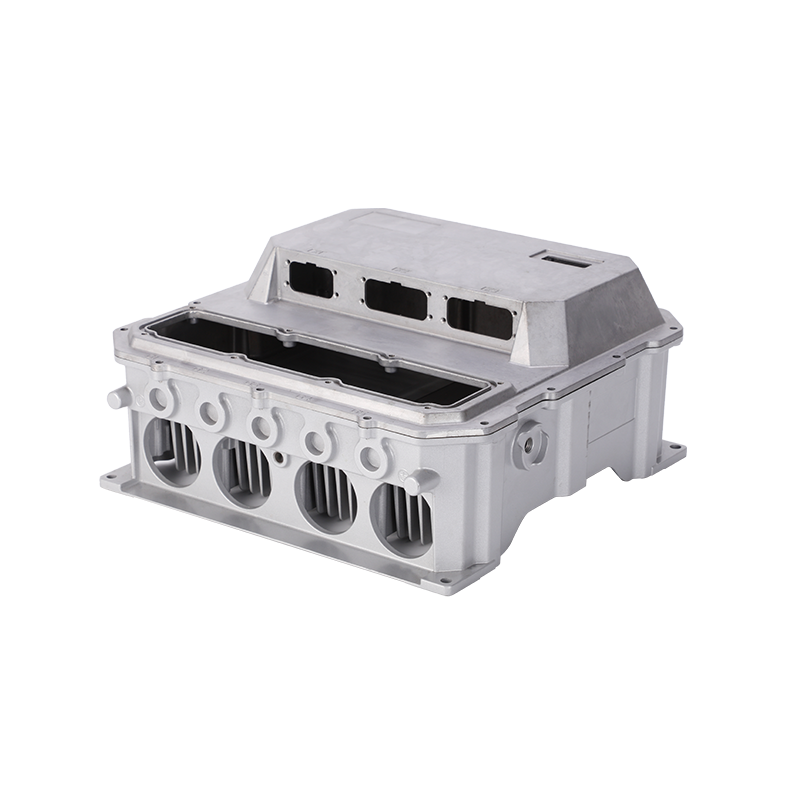
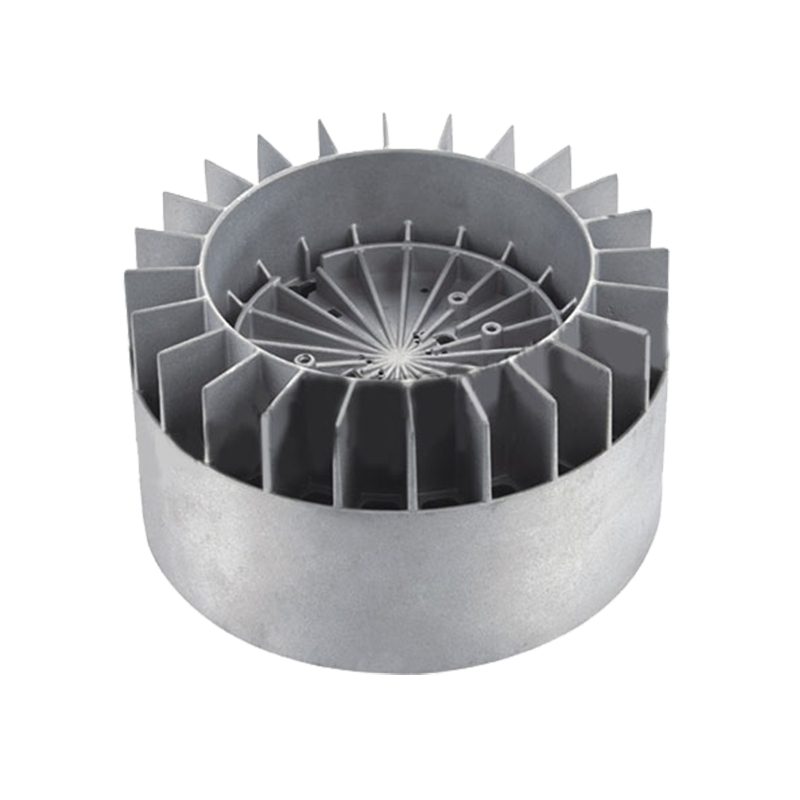
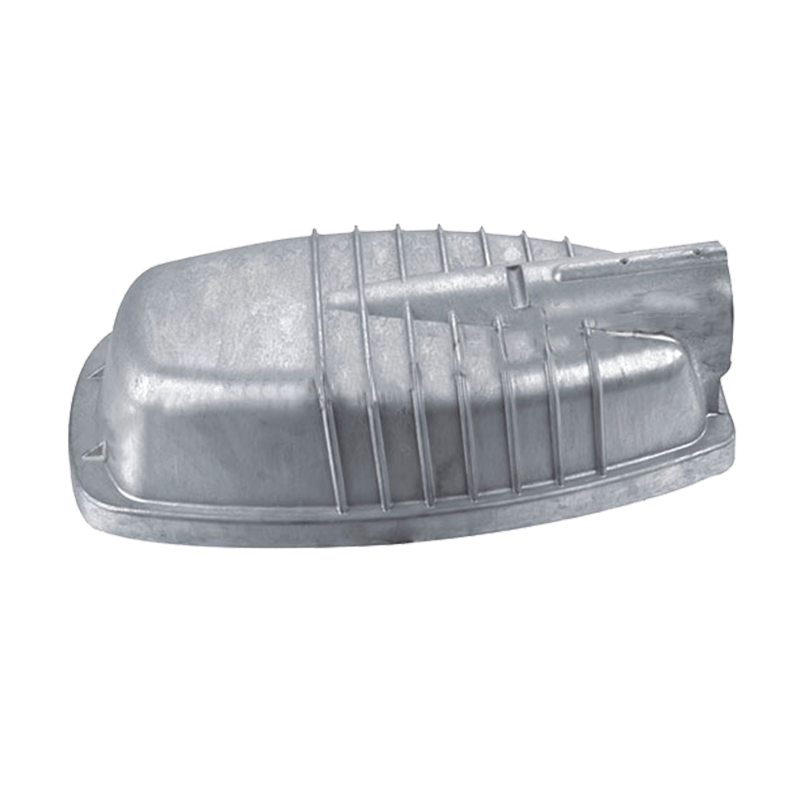
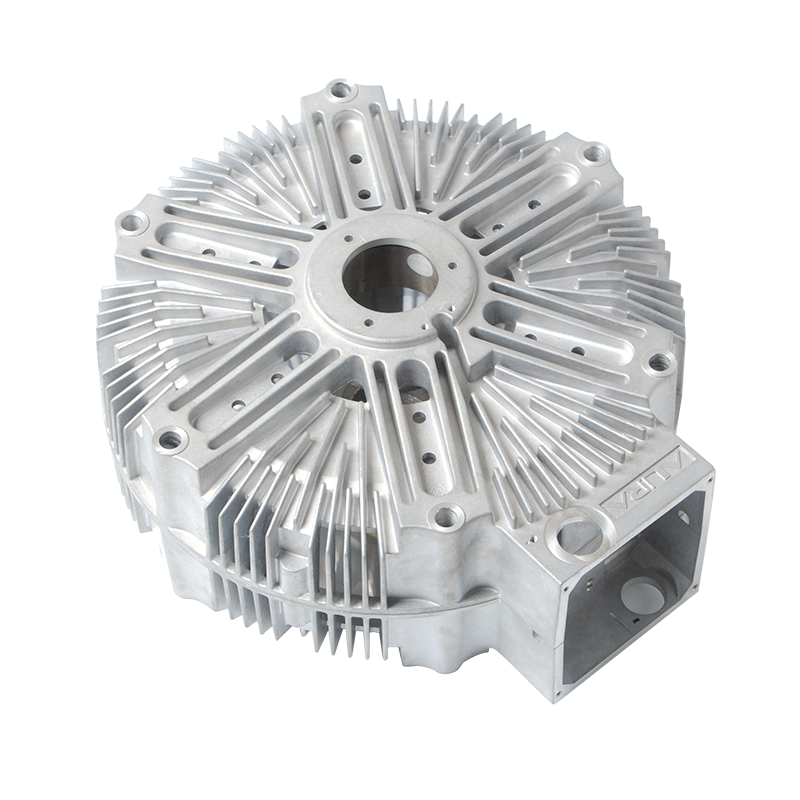
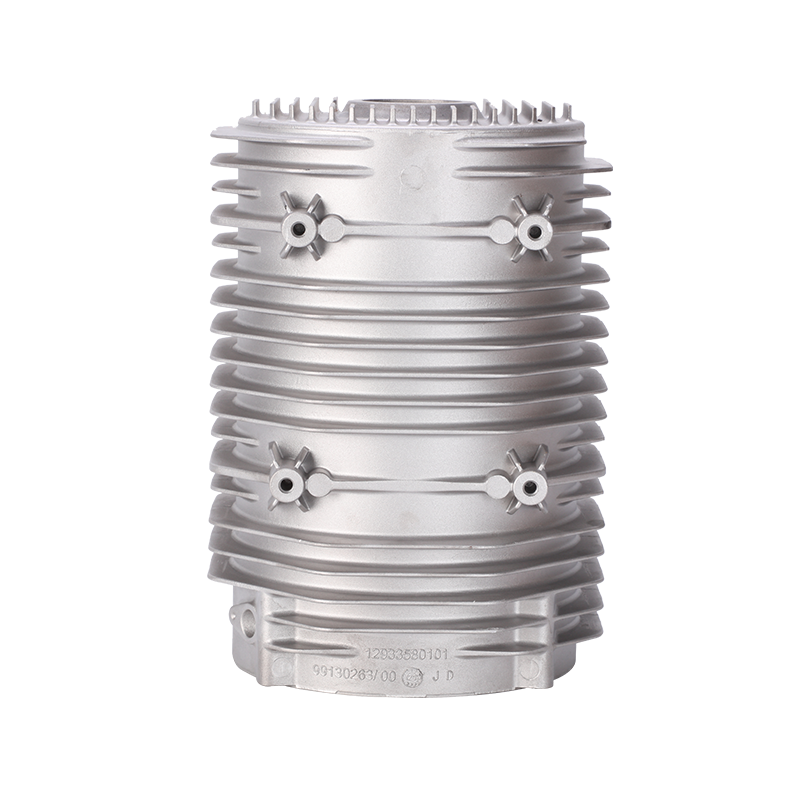
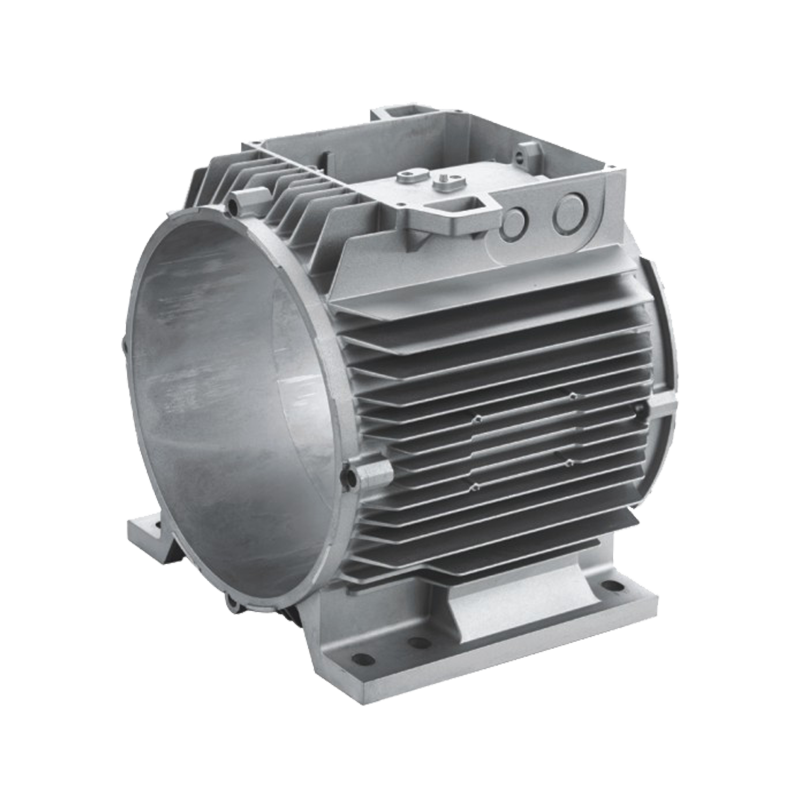
Automotive motor housings, battery enclosures, and LED lamp housings are classic examples of parts where high pressure die casting earns its keep.
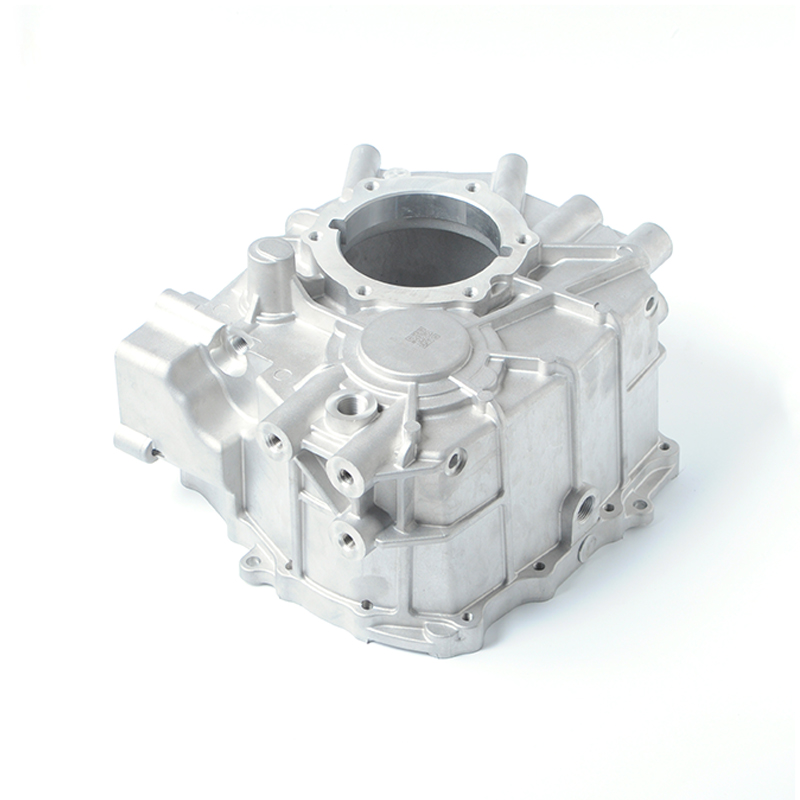 High-Pressure Aluminum Die-Cast Automobile Motor HousingThis motor housing suits applications needing protection and support for internal motor components. Its aluminum alloy construction helps improve motor efficiency and service life, making it a reliable choice for automotive use.View Product →
Low pressure die casting uses a much gentler filling force. Compressed air at 0.3 to 1.5 bar pushes molten metal from a sealed crucible up through a riser into the die. The metal rises slowly, which keeps the flow stable and the turbulence low.
This stable fill is what gives low pressure castings their reputation for structural reliability. Because the metal is pushed from below, the die fills from the bottom up, and solidification happens in a way that allows shrinkage to be fed continuously. Porosity is significantly lower. Mechanical properties, especially elongation and fatigue strength, are better than typical high pressure castings.
Low pressure is also the natural choice when the part must be heat treated. Because the casting has fewer gas pockets, the aluminum can respond to T6 tempering without blistering or internal damage. The downside is speed: cycle times run from 5 to 15 minutes, and dies do not survive as many shots as high pressure dies.
This is why low pressure casting is selected for large, thick-walled parts, structural suspension components, and wheels, where strength and soundness outweigh throughput.
The following table summarizes the operational differences that matter most during quoting and tooling decisions.
| Parameter | High Pressure Die Casting | Low Pressure Die Casting |
|---|---|---|
| Filling pressure | 14–70 MPa | 0.3–1.5 bar |
| Typical cycle time | 30–90 s | 5–15 min |
| Die life | 50,000–100,000 shots | 20,000–50,000 shots |
| Minimum wall thickness | 0.5–1.0 mm | 2.0–3.0 mm |
| Porosity level | Higher | Low |
| Gas-tightness | Often needs impregnation | Naturally better |
| Heat treatment | Limited | T6 compatible |
| Equipment investment | Approximately 4× low pressure | Lower initial cost |
Annual volume is the first filter. When the forecast reaches about 50,000 to 100,000 pieces per year, high pressure die casting usually delivers the lowest unit cost. The die amortizes quickly, and the fast cycle keeps labor and machine hours down. Below that threshold, the expense of a high pressure die may not pay off.
Wall thickness is the second filter. Thin-walled, uniform sections are a high pressure die casting’s home turf. Parts with thick sections, deep ribs, or uneven wall distribution are better suited to low pressure because the slower fill lets the metal feed shrinkage uniformly.
Tolerance is the third filter. High pressure die casting holds tight dimensional repeatability across the whole casting. Low pressure produces less residual stress but the dimensional stability depends more on thermal control of the die.
Battery housings for electric vehicles illustrate these choices. They need thin walls to save weight, high dimensional repeatability for assembly, and enough mechanical strength to protect cells. In practice, they are produced by high pressure die casting in large volumes.
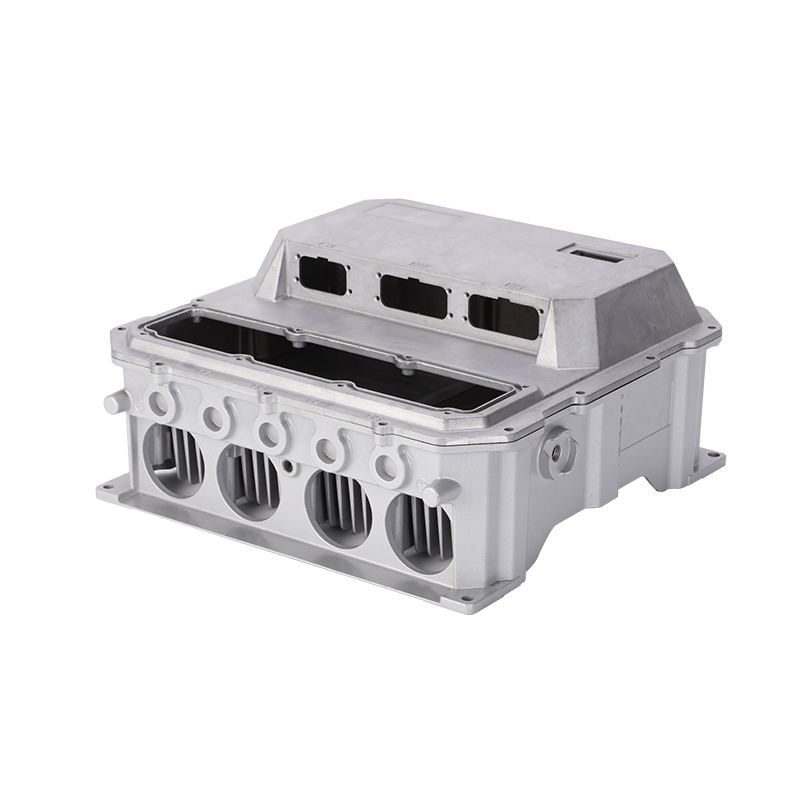 Aluminum Die-Cast Battery Housing and Cover for Electric VehiclesThis battery housing offers high strength, sealing, and heat dissipation, crucial for protecting cells. Its lightweight design and easy installation support efficient EV assembly and maintenance.View Product →
For a deeper look at how aluminum casting methods compare, see our explanation of sand casting, die casting, and investment casting.
It is easy to compare the price tags of two machines, but the total cost of the cast part is what decides the project. A high pressure die casting machine can cost around four times as much as a low pressure system, yet this difference evaporates when it is spread over hundreds of thousands of shots.
Die cost follows a similar curve. High pressure dies are made from hardened tool steel and have a shorter service life at scale. Low pressure dies are lighter and cheaper, which makes them attractive for pilot runs or product development. If the part design is still changing, a low pressure die trial gives more room to iterate without committing to a full expensive tool.
Secondary operations also tip the scale. Parts with gas porosity can reject more during machining or leak during pressure tests. Low pressure castings tend to machine cleaner and need less impregnation. For components that are later powder coated or anodized, surface quality starts in the casting process, not in the finishing line.
Not without changing the economics. The same geometry can often be produced by both processes, but the cycle time, porosity level, and wall thickness profile will be different. Low pressure can replace high pressure when the part volume drops and the design focuses on strength and leak-proofness instead of throughput.
High pressure die casting is the stronger candidate. The high injection velocity fills thin sections quickly before the metal solidifies. Low pressure would struggle to reach very thin, long ribs without using higher pressures or adding gate runners.
Only when tooling cost is shared across a program. For small batches, low pressure offers a cheaper die and a simpler machine setup. The trade-off is slower production, but with lower upfront investment.
Yes. If gas bubbles are close to the surface, powder coating can blister during curing. Low pressure castings or high pressure castings that receive impregnation are safer choices when heavy surface treatment is planned.
Choose high pressure die casting when your annual volume is high, the section thickness is thin and uniform, and dimensional repeatability is critical. Choose low pressure die casting when gas-tightness, heat treatment, and structural soundness outweigh cycle speed, or when the production run is still growing.
The best source of confidence is a practical discussion with an experienced die casting partner. Find out how their equipment set, tooling experience, and finishing capabilities match your part family. With clear data on volumes and design constraints, the choice between high and low pressure becomes a straightforward engineering calculation.
ARE YOU READY TO COOPERATE WITH jieda?
* Your email is safe with us, we don’t spam.

PRODUCTS
CONTACT INFO
nbjd011@126.com
+86-574-86115705
No. 58 Mould Road, Daqi Technology Industrial Zone, Beilun District, Ningbo

 English
 Español
 italiano