Content
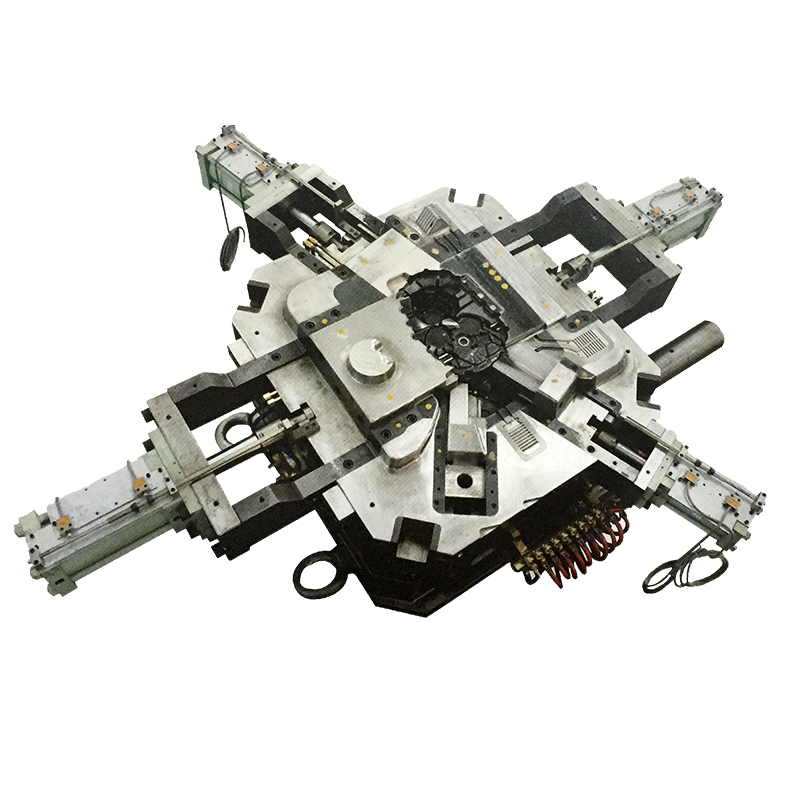
Jieda serves nine core industries through die casting manufacturer capabilities in aluminum and zinc die casting: new energy automobile parts, traditional auto parts, LED street light housings, motor parts, gearbox housing, valves, pistons, industrial pumps and outdoor equipment enclosures. Each application is built around a matched die casting mould, so the tooling and the finished part are engineered together rather than sourced separately.
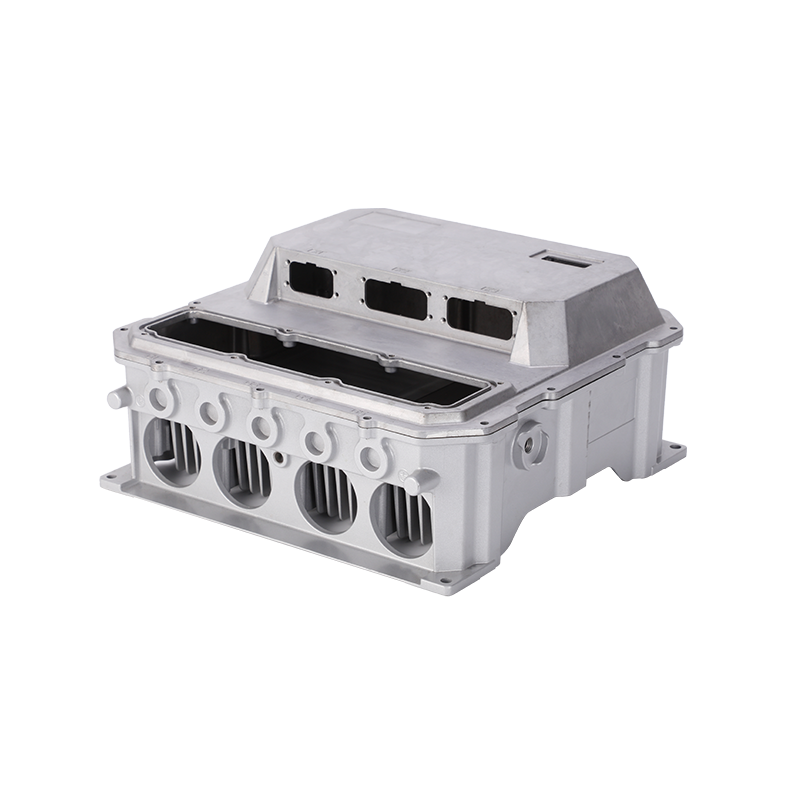
Electric vehicle programs are the fastest-growing segment for any die casting manufacturer right now, and battery enclosures are a good example of why. A cast aluminum battery housing needs to seal against moisture, dissipate heat from the cells, and still come in under a strict weight target, which is why automakers keep replacing stamped steel trays with die cast aluminum ones. Control box housings and motor mounts for electric drivetrains follow the same logic.
On the combustion side, auto parts such as motor housings, oil pans and sump covers still make up a large share of production volume. A typical A380 aluminum oil pan weighs 35 to 45 percent less than a stamped steel equivalent while holding tighter dimensional tolerances for the gasket surface, which cuts down on leak-related warranty claims.
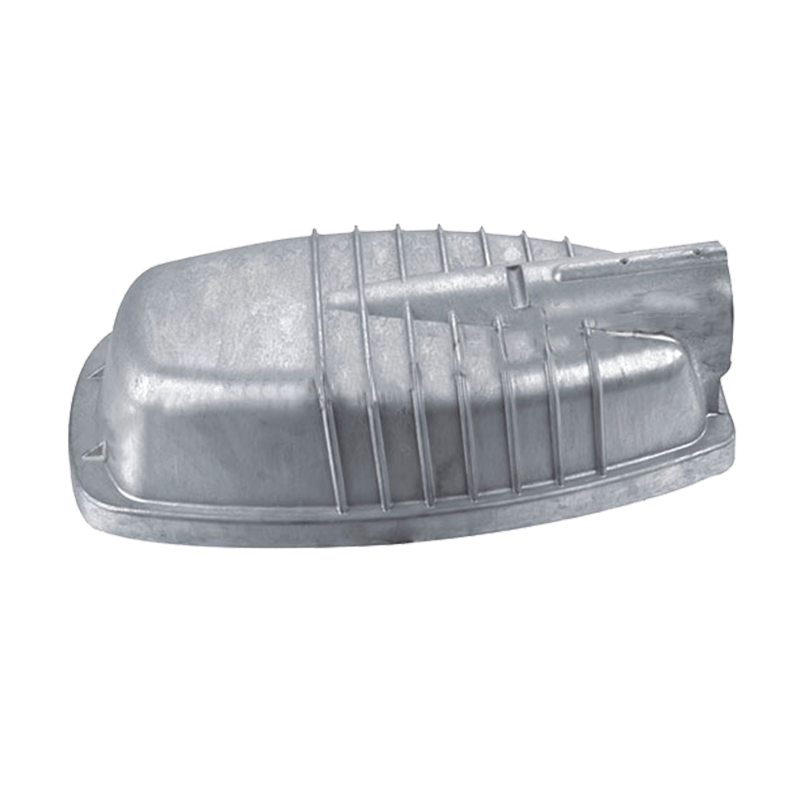
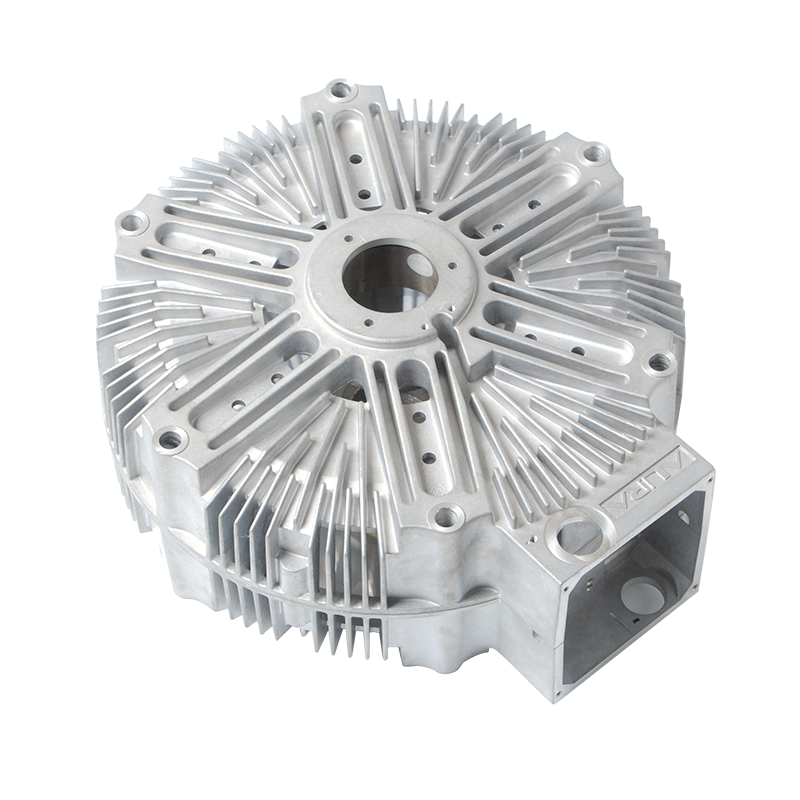
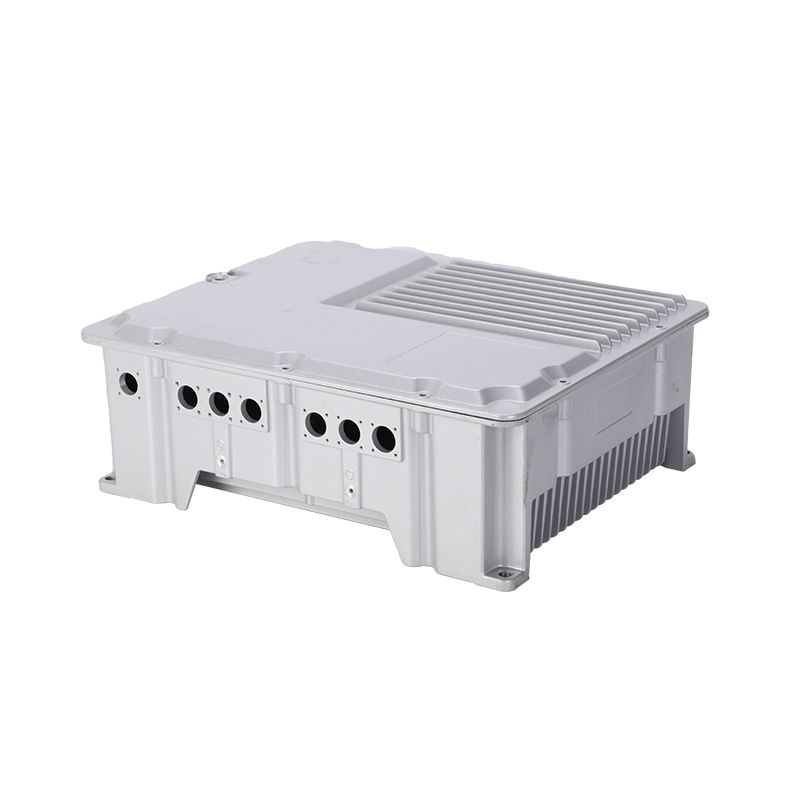
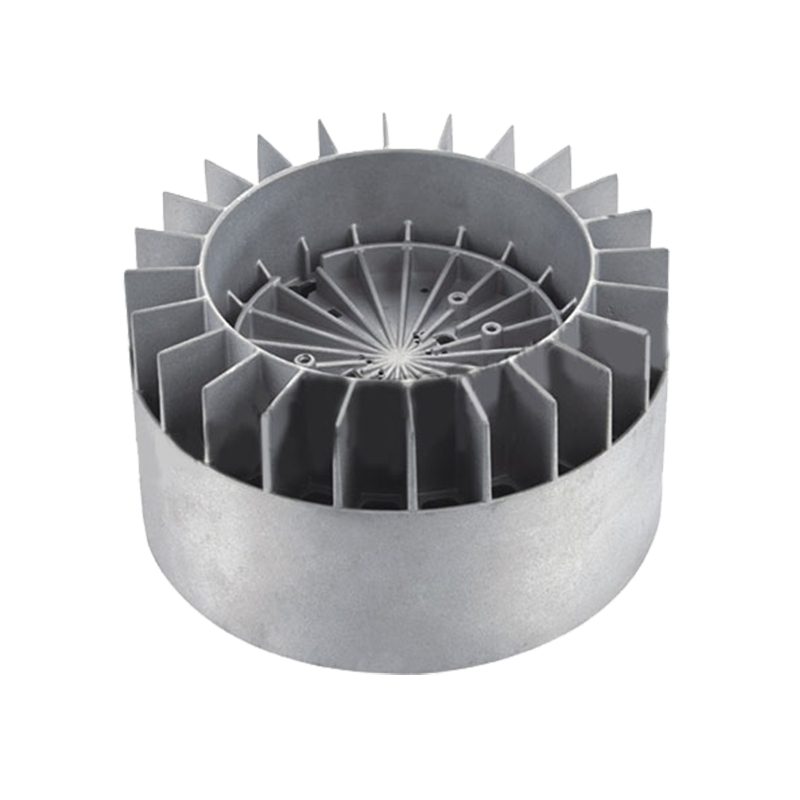
LED street light housings depend almost entirely on how well the mold designer handles heat. An LED driver loses efficiency once its junction temperature climbs past roughly 85 degrees Celsius, so the die casting mould for a street light body is built with finned surfaces and thin, uniform wall sections that pull heat away from the diodes as fast as possible. The same finned-wall approach carries over to heat sinks for outdoor telecom cabinets and industrial control panels, where a compact aluminum casting often replaces a bulkier extruded or fabricated part at a lower assembled cost.
Because these housings sit outside year-round, corrosion resistance matters as much as thermal design. Surface treatments such as powder coating or anodizing are applied after casting to hold up against UV exposure, rain and road salt over a service life that typically runs past ten years.
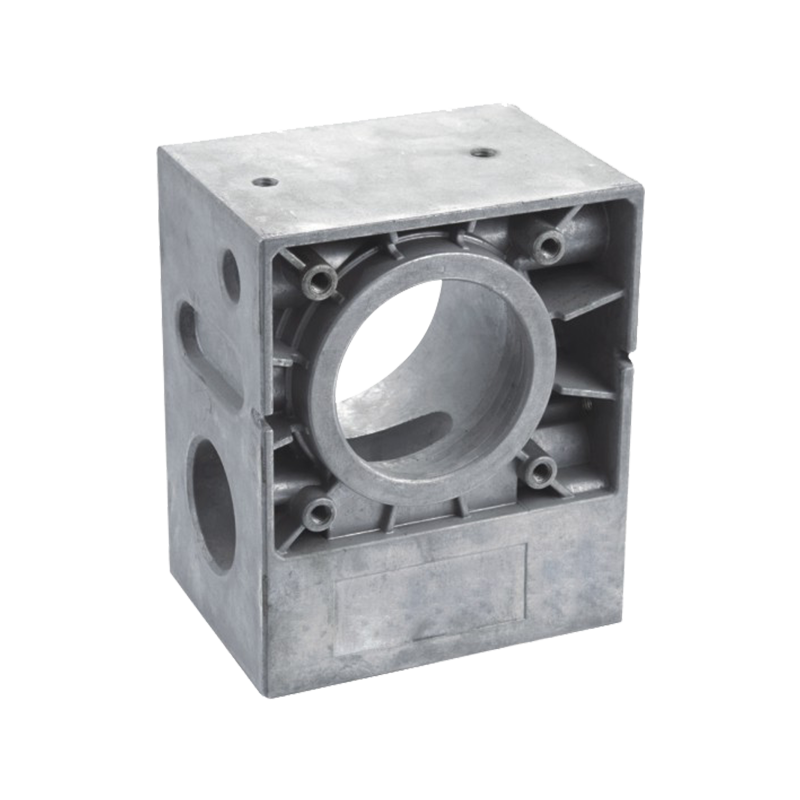
Motor parts and gearbox housing castings show up wherever rotating equipment needs a rigid, precisely bored enclosure. A gearbox housing for a forklift or an industrial door operator has to hold bearing bores concentric to within a few hundredths of a millimeter, since any misalignment shortens gear life and adds vibration. Precision CNC machining after casting brings these bores, mounting faces and thread holes to final tolerance.
Pneumatic components, hoisting drums and reducer housings for factory equipment follow a comparable pattern: a die cast aluminum body keeps the part light enough to handle easily during installation while still carrying the structural load of the gearing or the drum inside it.
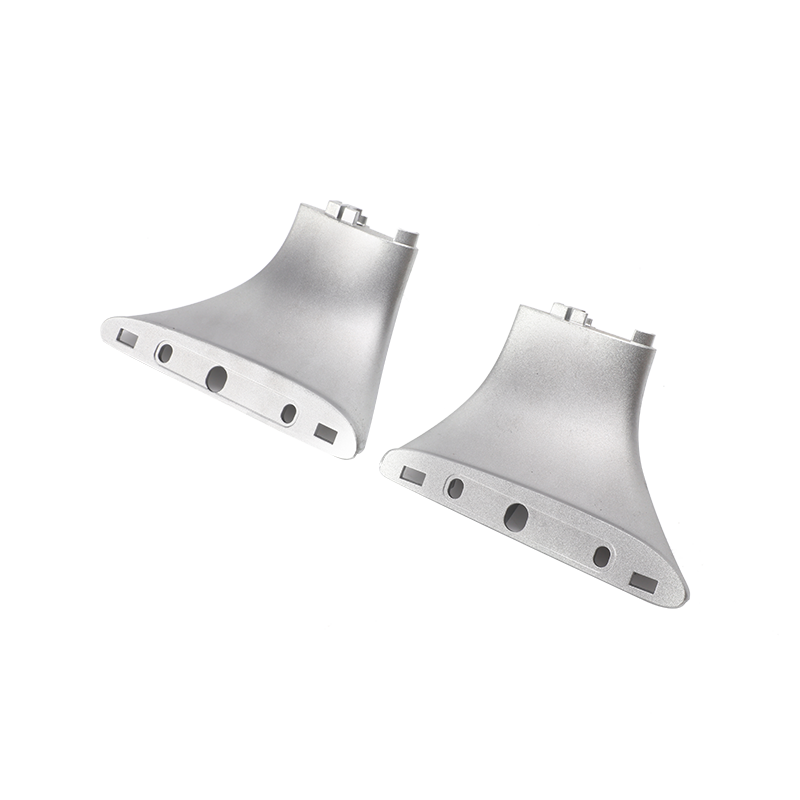
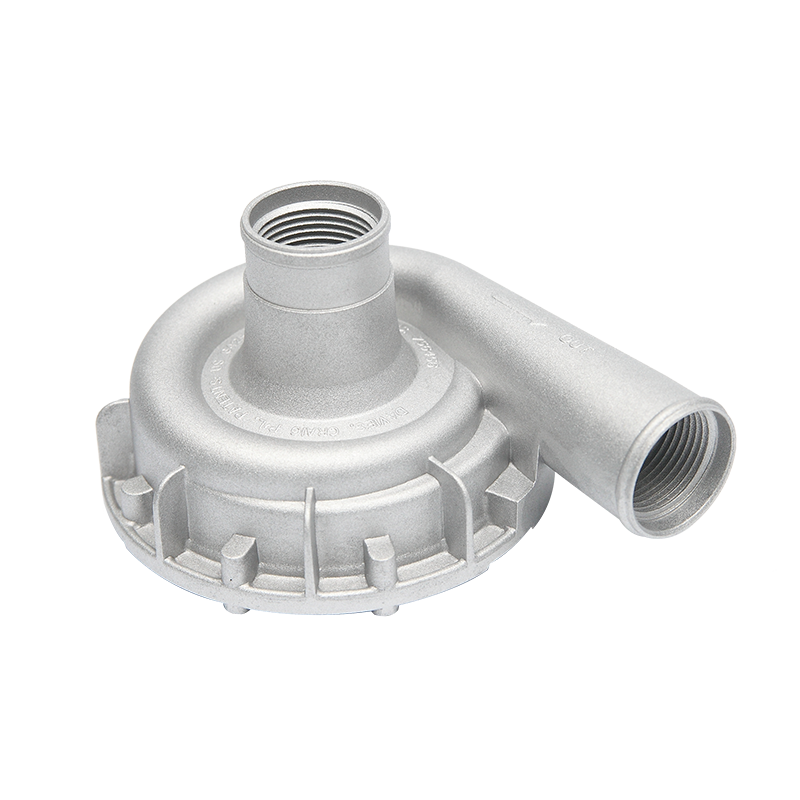
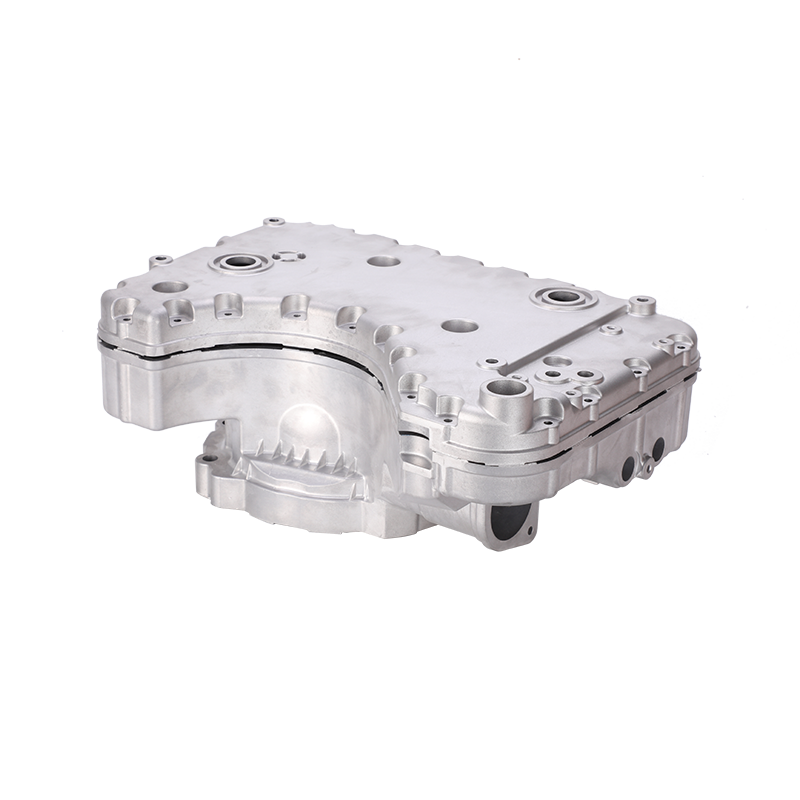
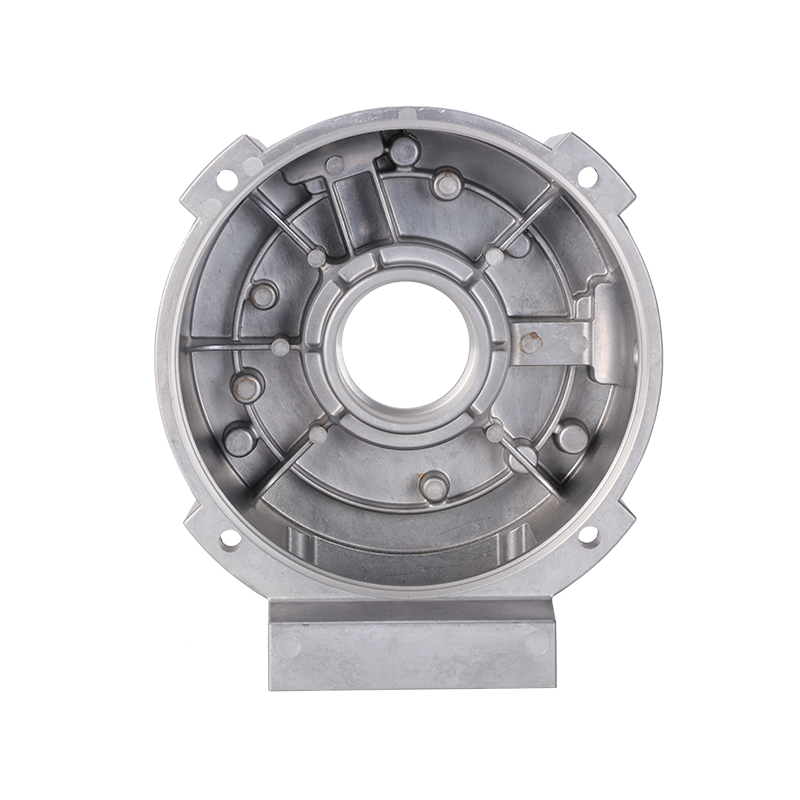
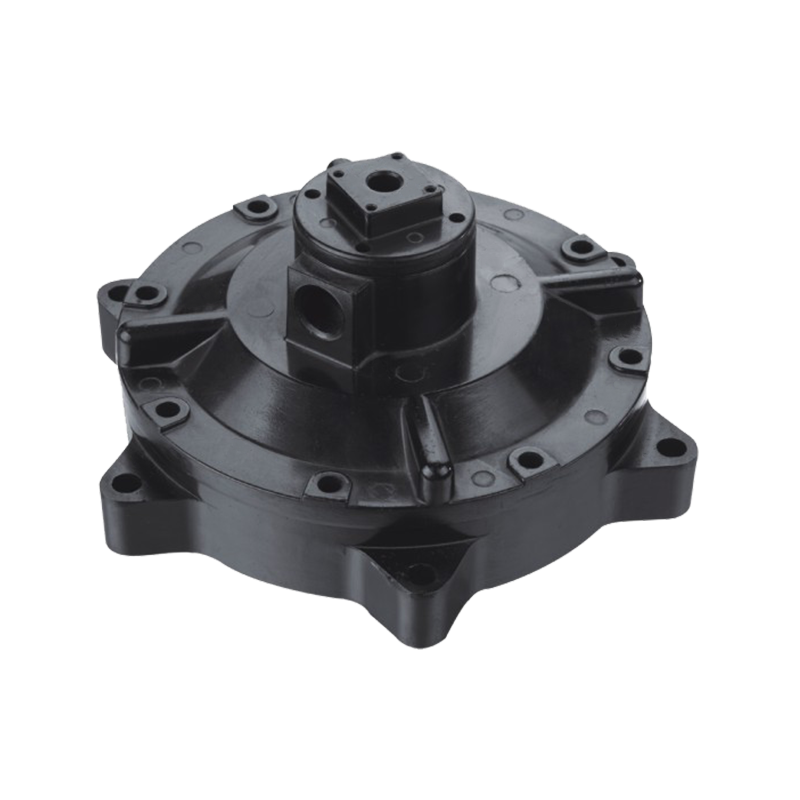
A sample of finished parts that show how one die casting mould platform serves five different industries, from outdoor lighting to electric vehicle components.
Valves and pistons demand a different priority than housings do: pressure tightness. A cast valve body has to hold up against repeated pressure cycles without developing porosity that would let fluid or gas leak past the seal, so the die casting mould for these parts is designed with controlled gate placement and venting to keep the metal dense right at the sealing surfaces. End caps that pair with pistons in cylinders follow the same requirement, since even a small void near a seal groove can cause a field failure.
These components are used across hydraulic systems, pneumatic cylinders, water and gas valves, and fluid handling equipment for both automotive and industrial customers.
The two alloy families are not interchangeable, and the right one depends on the load, the finish and the wall thickness the application needs.
| Factor | Aluminum Die Casting | Zinc Die Casting |
| Typical weight | About one third the weight of an equivalent steel part | Denser than aluminum, better for small load-bearing parts |
| Wall thickness | Generally 2 to 4 millimeters for housings | Can go below 1 millimeter for fine detail |
| Common alloys | A380, ADC12 | Zamak 3, Zamak 5 |
| Best fit | Housings, heat sinks, structural brackets, EV components | Small brackets, decorative trim, precision small parts |
Jieda has operated as a die casting manufacturer since 1987 out of Beilun, Ningbo, an area often described as the hometown of die-casting molds in China. The facility runs CAD, CAM and CAE design software alongside more than 80 pieces of processing equipment, including CNC machining centers, wire cutting machines and automatic die-casting machines ranging from 200 tons to 1600 tons of clamping force. Production is certified to IATF16949, and finished parts are shipped to customers across the United States, Germany, Italy, Britain, France, Poland, Finland, India and Australia.
For a buyer comparing suppliers, the practical question is whether one factory can take a part from mold design through machining and surface finishing without handing it off between vendors. Keeping tooling, casting and finishing under one roof is what shortens lead times and keeps tolerances consistent from the first sample to the ten-thousandth part.
ARE YOU READY TO COOPERATE WITH jieda?
* Your email is safe with us, we don’t spam.

PRODUCTS
CONTACT INFO
nbjd011@126.com
+86-574-86115705
No. 58 Mould Road, Daqi Technology Industrial Zone, Beilun District, Ningbo

 English
 Español
 italiano