Content
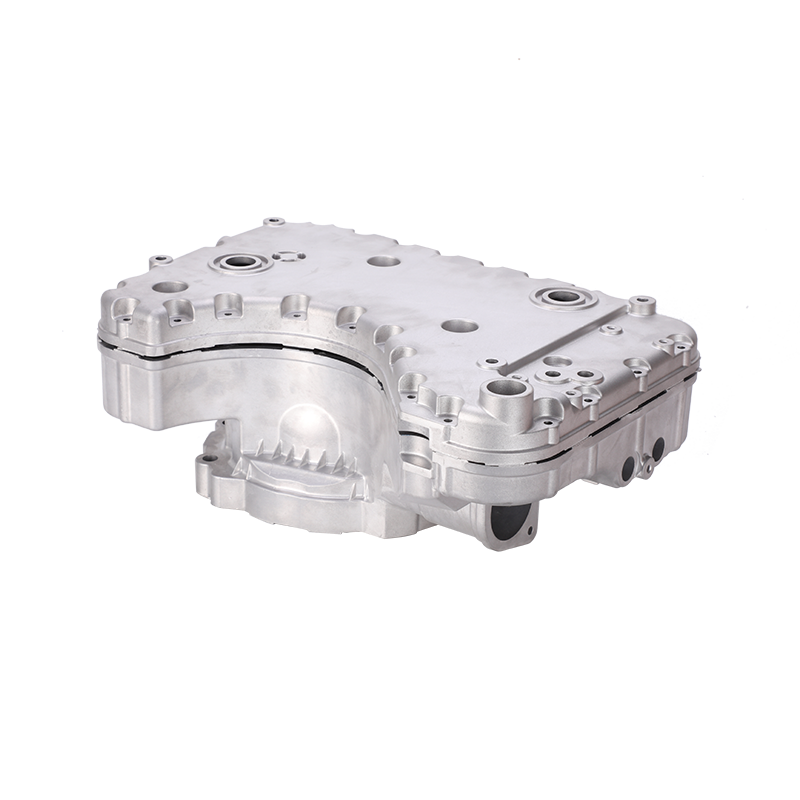
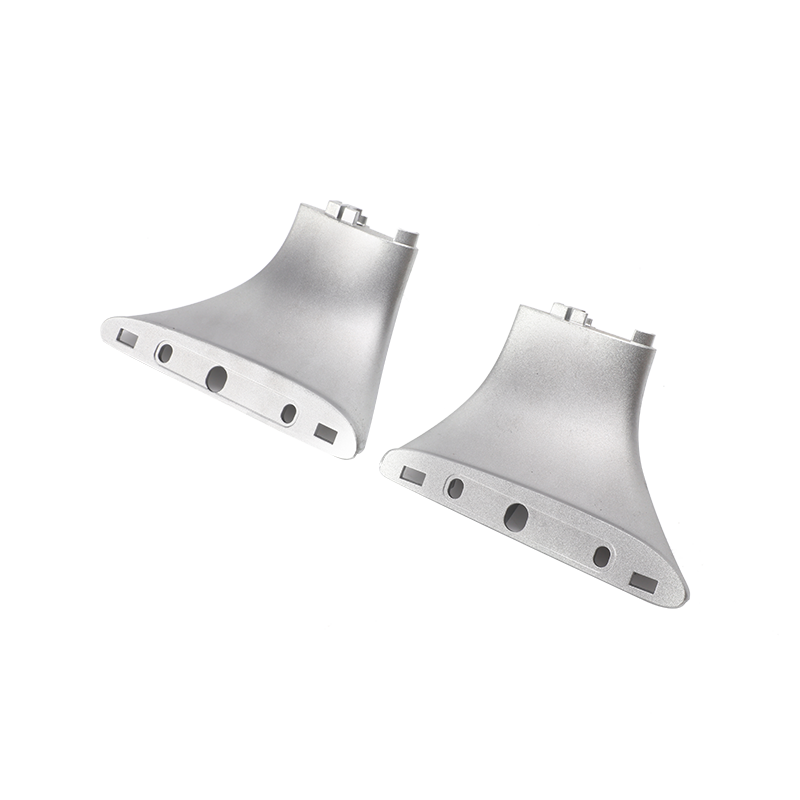
New energy vehicle parts die casting technology is undergoing a fundamental shift from traditional high-pressure die casting to integrated ultra-large-scale die casting. As of 2025, the global automotive die casting market has reached approximately USD 55 to 86.5 billion, and is projected to exceed USD 90 to 144 billion by 2034, with a compound annual growth rate maintained between 5.5% and 7.5%. Aluminum alloys account for approximately 70% of material share, while high-pressure die casting processes hold about 60% of process share. In the new energy vehicle sector, battery housings, motor housings, control box enclosures, and body structural parts have become the four core application scenarios for die casting technology. Notably, an integrated die-cast rear floor can consolidate 72 individual parts into a single component, significantly reducing body weight while enhancing structural rigidity.
The dependence of new energy vehicles on die casting technology stems from their unique engineering requirements. Compared with traditional internal combustion engine vehicles, electric vehicles face more stringent lightweighting demands due to the substantial weight of battery packs. Every 10% reduction in body weight can improve electric vehicle driving range by 6% to 8%. Die casting technology enables the one-shot forming of complex geometric shapes while maintaining structural strength—an advantage that stamping and welding processes struggle to match.
The battery system is the heaviest single component in a new energy vehicle, typically accounting for 20% to 30% of total vehicle weight. To offset the adverse impact of battery weight on driving range, manufacturers must maximize weight reduction in body structures, chassis, and enclosure components. Aluminum die castings have a density only one-third that of steel, combined with excellent thermal conductivity and electromagnetic shielding properties, making them the preferred material for battery housings and motor enclosures. An integrated die-cast rear floor can reduce the rear section structural weight by more than 10%, while simultaneously reducing part count from dozens to one, substantially simplifying supply chains and assembly processes.
Battery systems in new energy vehicles are extremely sensitive to thermal management. Die-cast aluminum alloys exhibit thermal conductivity coefficients of approximately 96 to 200 W/(m·K), significantly higher than ordinary steel, enabling effective heat dissipation from battery packs and preventing thermal runaway. Furthermore, the high dimensional accuracy and density of die castings provide reliable sealing protection for batteries, meeting IP67 or higher waterproof and dustproof ratings. In terms of crash safety, integrated die-cast structural components reduce stress concentration areas by eliminating weld points, thereby improving overall structural impact resistance.
In new energy vehicles, die casting technology applications now cover key areas ranging from the "three electric" systems (battery, motor, controller) to body structures. According to industry analysis, body and chassis applications account for approximately 40% of the die casting market, while new-energy-specific components are growing far faster than traditional powertrain parts.
Battery pack housings represent one of the most emblematic applications of die casting technology in new energy vehicles. Current mainstream solutions employ high-pressure or low-pressure die casting processes to produce aluminum battery lower housings with dimensions exceeding 2180×1500×110 mm. Such large die castings must possess the following characteristics:
Several advanced manufacturers have begun exploring integrated die-cast battery tray technology, replacing complex frame structures originally welded from extruded profiles with monolithic castings, further reducing weld counts and enhancing structural integrity.
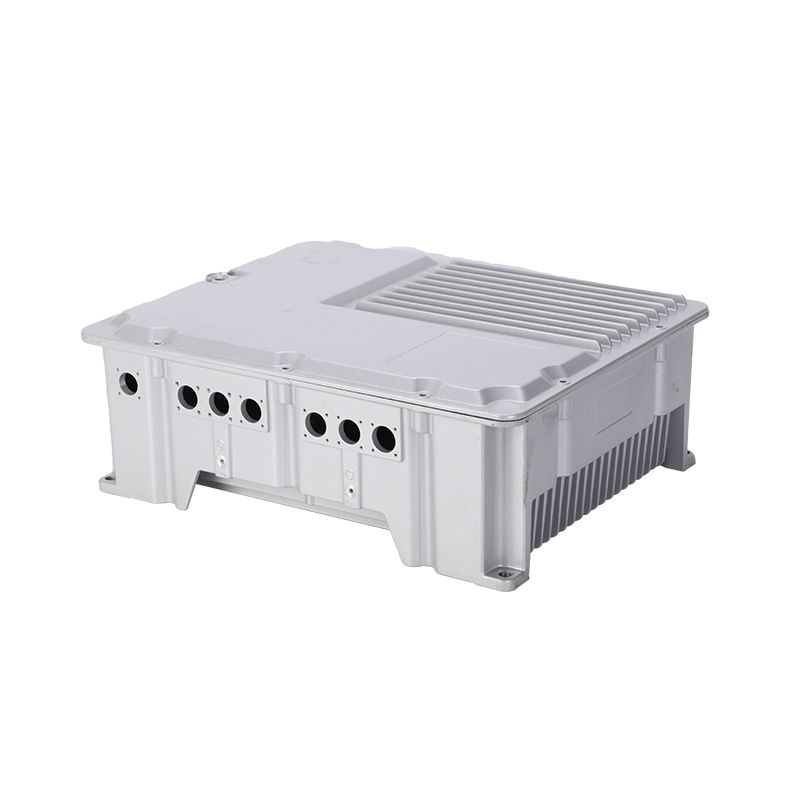
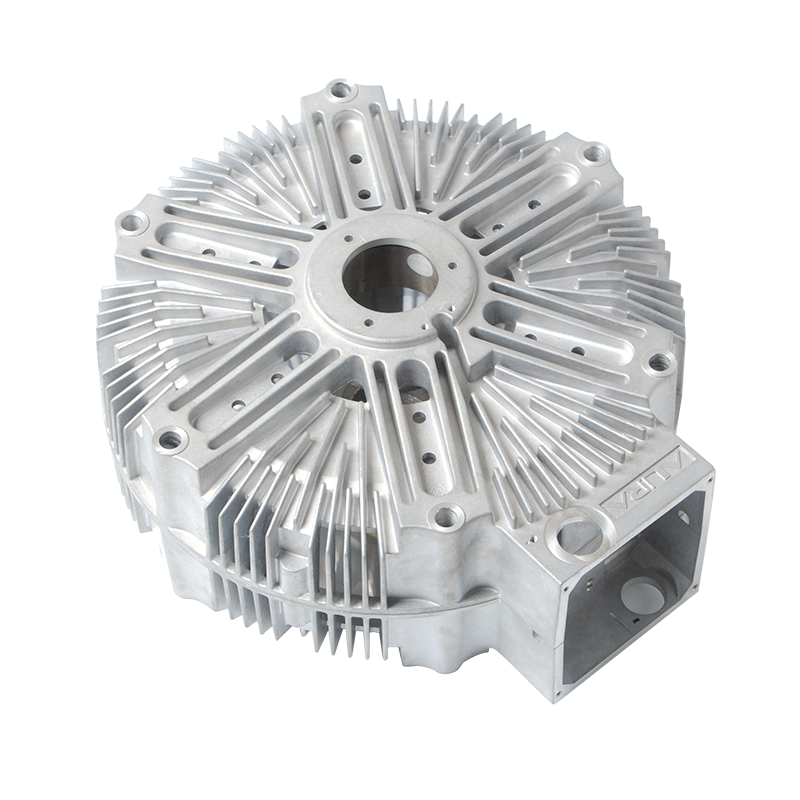
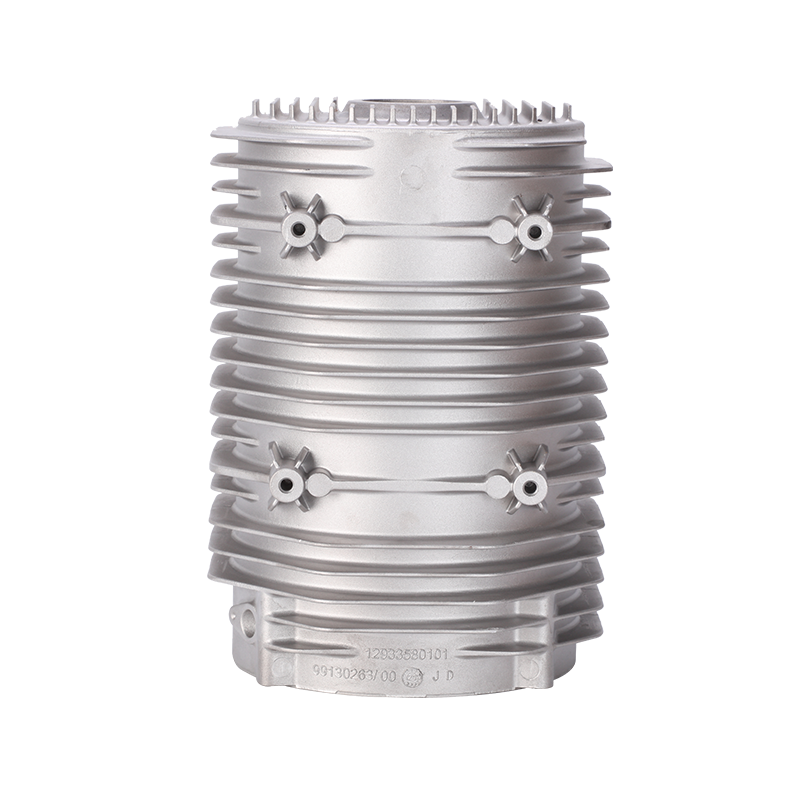
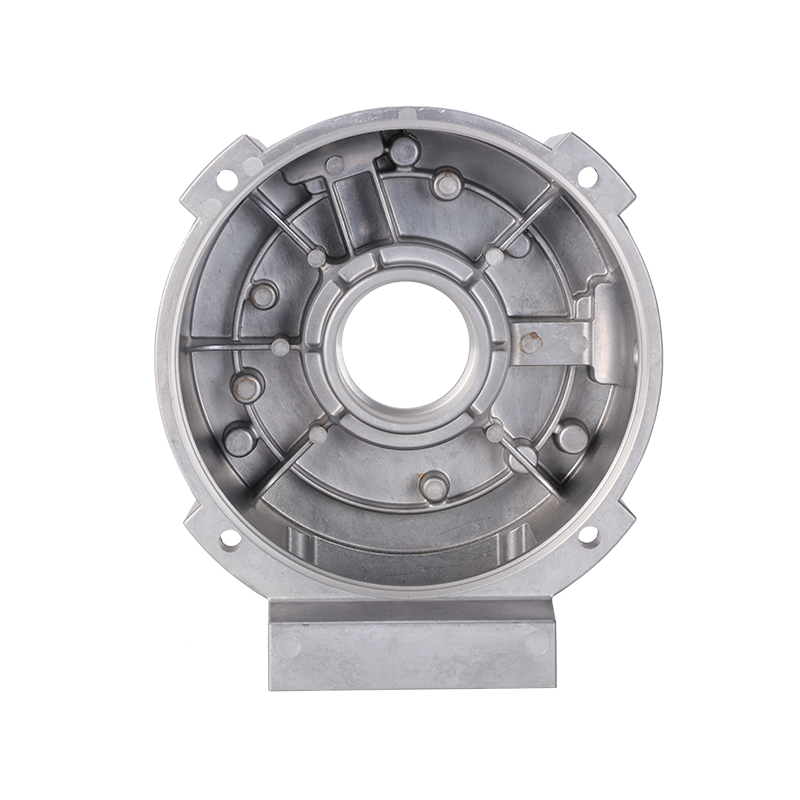
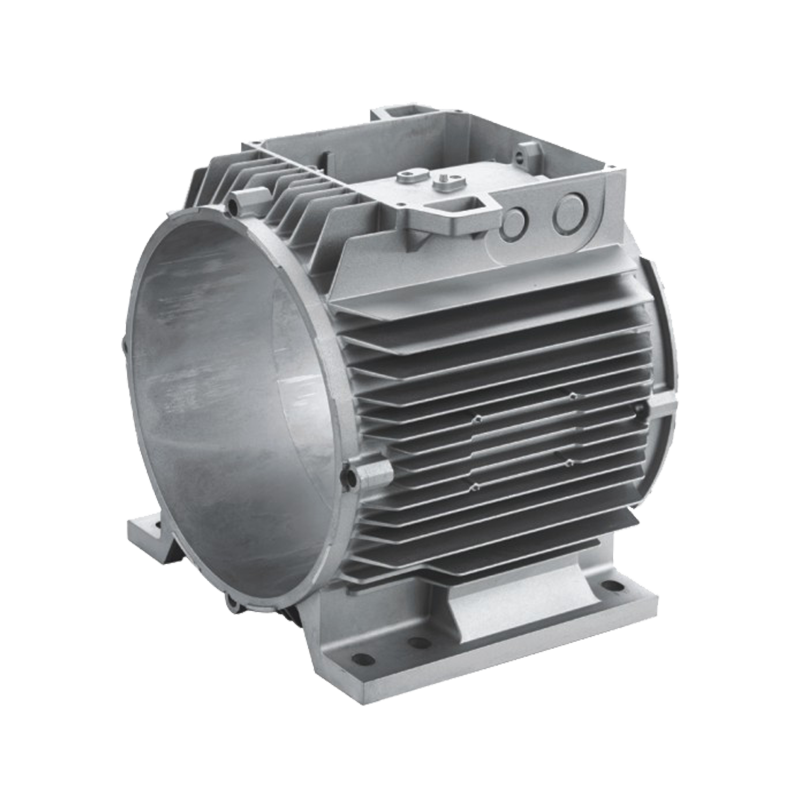
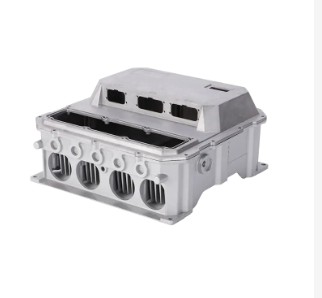
Drive motor housings and electronic control enclosures represent another core application of die casting technology in new energy vehicle powertrains. Motor housings are typically produced via aluminum high-pressure die casting, weighing between 8 and 15 kg, and must simultaneously incorporate complex internal cavity structures for cooling water jackets and bearing seats. The die casting process enables the one-shot forming of multifunctional housings containing cooling water jackets, mounting flanges, and junction box seats. Compared with machining and welding combination processes, production efficiency improves by 3 to 5 times, with material utilization rates increasing to over 85%.
Integrated die casting technology is reshaping body manufacturing methods. Applications already validated in mass production include:
Integrated die casting (Gigacasting) represents the most disruptive process innovation in automotive manufacturing in recent years. This technology utilizes ultra-large die casting machines with clamping forces exceeding 6,000 tons and even reaching 9,000 tons, transforming body modules that originally required hundreds of parts and dozens of welding operations into single-shot injection-molded monolithic structures.
The core of integrated die casting lies in injecting molten aluminum alloy at high speed and high pressure into precision-machined steel molds, completing filling and solidification within extremely short timeframes. Key parameters of ultra-large die casting machines include:
| Parameter Category | Traditional High-Pressure Die Casting | Integrated Ultra-Large Die Casting |
|---|---|---|
| Clamping Force | 500–2,500 tons | 6,000–16,000 tons |
| Single Shot Volume | 5–20 kg | 80–150 kg |
| Part Consolidation Count | 1–5 parts | 30–72 parts |
| Weld Point Reduction | 10–50 points | 500–1,600 points |
| Production Cycle Time | 60–120 seconds/part | 80–180 seconds/part |
Integrated die casting not only changes the forming method of parts but also restructures the supply chain logic of vehicle manufacturing. Traditional rear floor manufacturing involves dozens of suppliers, hundreds of stamped parts, and lengthy welding assembly lines. With integrated die casting, part counts drop dramatically, supplier tiers are simplified, and manufacturing man-hours are reduced by approximately 30% to 40%. Simultaneously, due to reduced welding and adhesive application processes, production floor space can be reduced by over 25%, enabling more compact and efficient factory layouts.
The performance of die casting materials directly determines the safety and durability of new energy vehicle components. The industry is currently evolving from traditional Al-Si alloy systems toward new alloy systems with higher strength and better ductility.
Traditional die castings require extended heat treatment (T6 or T7 processes) to achieve required mechanical properties, but this causes severe distortion in large thin-walled parts. Heat-treatment-free aluminum alloys achieve excellent as-cast performance combinations of 270 to 320 MPa tensile strength and 8% to 12% elongation by optimizing the ratios of silicon, magnesium, manganese, and titanium. Such materials are particularly critical for integrated die castings exceeding 1.5 meters in dimension, avoiding dimensional deviation and cracking risks from subsequent straightening operations.
Under the global carbon neutrality context, the proportion of recycled aluminum used in the die casting industry is rapidly increasing. Recycled aluminum production energy consumption is only about 5% that of primary aluminum, with carbon emissions reduced by over 95%. Currently, multiple automakers require suppliers to use over 50% recycled aluminum raw materials in critical components such as battery housings. The die casting process itself possesses extremely high material recycling value—sprues, runners, and scrapped parts can be directly remelted, with comprehensive material utilization rates reaching over 90%, highly aligned with the full lifecycle low-carbonization goals of new energy vehicles.
As a material lighter than aluminum alloys (density only two-thirds that of aluminum), magnesium alloys are demonstrating application potential in specific components. In motor housing applications, magnesium alloy parts can achieve approximately 33% weight reduction compared with aluminum counterparts. Current magnesium alloy die casting components under validation include electric drive housings, seat skeletons, and door inner panels. With advances in corrosion-resistant coating technologies and vacuum die casting processes, the application proportion of magnesium alloys in new energy vehicles is expected to gradually increase from the current 1% to 2%.
Despite the significant advantages of integrated die casting technology, its industrialization process still faces multiple challenges including equipment investment, process control, and repair costs.
A single ultra-large integrated die casting machine typically requires investment in the millions of dollars range. Combined with molds and peripheral automation equipment, the initial investment for a single production line can reach 2 to 3 times that of traditional stamping and welding lines. Furthermore, large mold manufacturing cycles extend to 6 to 10 months, and mold life is affected by high-temperature, high-pressure cycling, typically requiring major overhaul or replacement after 80,000 to 100,000 shots. To amortize fixed costs, manufacturers must ensure production line annual capacity reaches scales above 100,000 units.
Large thin-walled die castings are highly susceptible to internal porosity caused by air entrainment and shrinkage during forming, affecting the fatigue performance and safety of structural components. Current industry solutions include:
Once damaged in a collision, integrated die-cast structural components typically cannot be repaired or replaced locally like traditional sheet metal parts, instead requiring replacement of the entire large assembly. This poses new challenges for after-sales repair systems and insurance pricing. The industry is exploring two solution pathways: first, optimizing structural designs with crash energy absorption zones to ensure die castings undergo only controlled deformation in accidents; second, developing local cutting and rejoining technologies to allow repairs at specific locations rather than full assembly replacement.
From a regional distribution perspective, the Asia-Pacific region, leveraging its complete automotive industry chain and rapidly expanding new energy vehicle market, accounts for approximately 45% to 46% of the global automotive die casting market, with China being the fastest-growing single-country market. North American and European markets benefit from electrification transformation and local manufacturing reshoring policies, respectively holding approximately 25% and 20% market shares.
Over the next five years, integrated die casting technology applications will extend from current rear floors and front compartments to additional areas:
According to industry forecasts, by 2030, the output value of electric vehicle-exclusive components alone (excluding traditional powertrain systems) in the global die-cast automotive parts market will reach USD 5 to 9 billion, becoming the core engine driving industry growth. With the proliferation of die casting machines above 8,000 tons and the maturation of heat-treatment-free materials, the manufacturing approach for new energy vehicles will continue to evolve toward lighter, stronger, and simpler directions.
ARE YOU READY TO COOPERATE WITH jieda?
* Your email is safe with us, we don’t spam.

PRODUCTS
CONTACT INFO
nbjd011@126.com
+86-574-86115705
No. 58 Mould Road, Daqi Technology Industrial Zone, Beilun District, Ningbo

 English
 Español
 italiano