Content
In modern industrial manufacturing, Motor Parts Die Casting has evolved from traditional casting processes into a high-precision, high-efficiency manufacturing technology. Currently, the global motor parts die casting market is expanding at a compound annual growth rate of 5.8%, with market size projected to exceed USD 42 billion by 2028. Die casting technology not only significantly improves the density and dimensional accuracy of motor parts, but also controls scrap rates below 1.5% through automated production, making it an irreplaceable key link in the motor manufacturing supply chain.
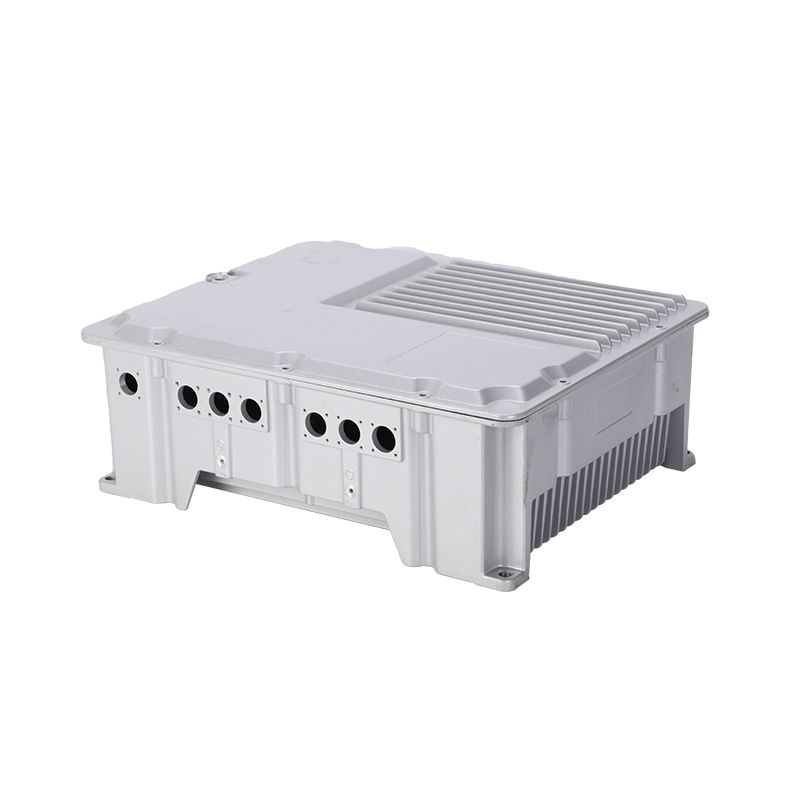
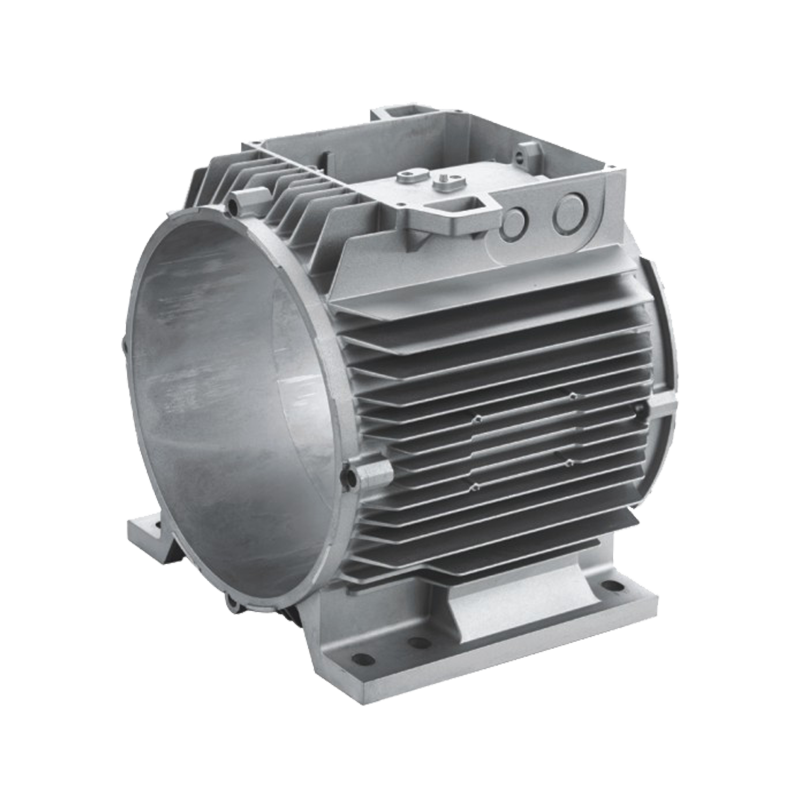
For manufacturers, mastering advanced die casting processes means gaining triple advantages in product quality, production costs, and delivery cycles. Taking aluminum alloy motor housings as an example, after adopting high-pressure die casting, wall thickness can be reduced to below 2.5mm, weight is reduced by more than 30%, and heat dissipation efficiency improves by 20%—these performance indicators directly determine the competitive edge of motors in new energy vehicles and industrial automation applications.
The manufacturing process for motor parts has undergone three key stages. The first stage is gravity casting, which relies on the self-weight of molten metal to fill the mold. It is suitable for parts with simple structures and lower precision requirements, but suffers from high porosity rates and poor surface roughness. The second stage is low-pressure casting, where molten metal is smoothly pushed into the mold by air pressure, reducing porosity to 3%-5%, yet still falling short of precision motor parts requirements.
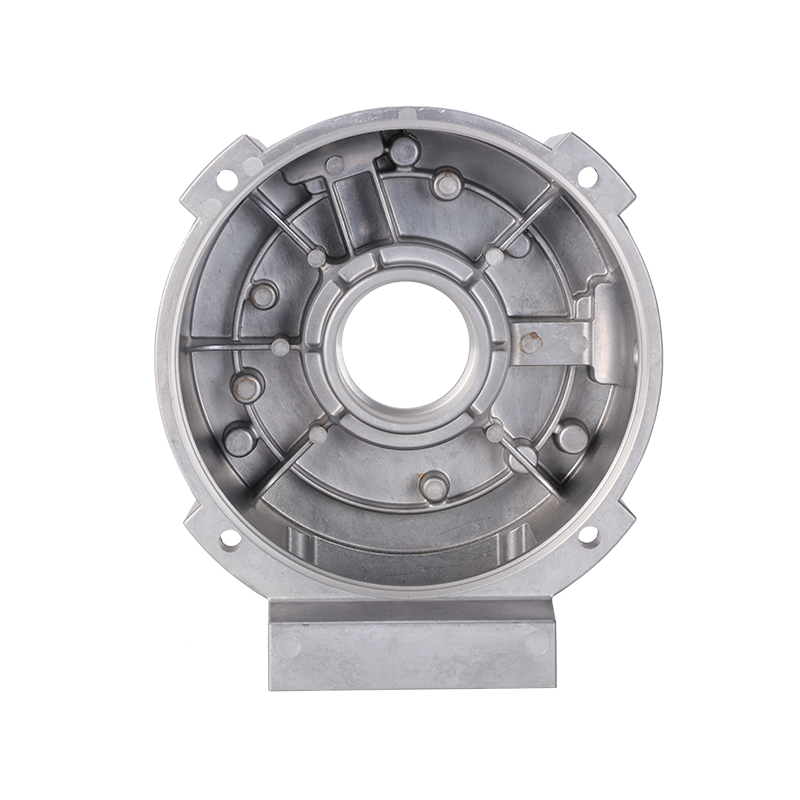
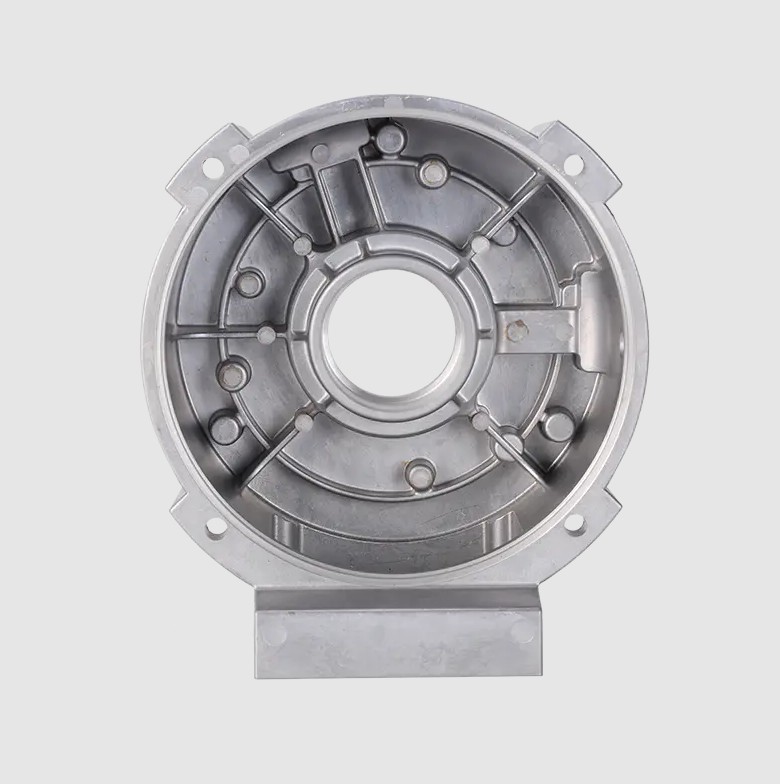
The third stage, which is the current mainstream high-pressure die casting technology, achieves injection pressures of 30-150 MPa. Molten metal rapidly fills the mold cavity under high pressure, with cooling times shortened to 3-8 seconds and production cycles reaching 30-60 seconds per shot. Taking motor end covers as an example, high-pressure die casting products can control dimensional tolerances within ±0.05mm, with surface roughness Ra values below 1.6μm, fully meeting the precision fit requirements for motor assembly.
The industry is currently accelerating its transition toward intelligent die casting cells. A complete intelligent die casting system integrates real-time temperature monitoring, pressure curve analysis, and robotic automatic part extraction. Data shows that after introducing intelligent temperature control systems, aluminum liquid temperature fluctuations have been reduced from ±15°C to ±3°C. The resulting improvement in dimensional stability reduces subsequent machining allowances by 40%, lowering per-part machining costs by 12%-18%.
Quality control in motor parts die casting depends on precise regulation of multiple process parameters. The following table compares how different parameter settings affect typical defects:
| Process Parameter | Recommended Range | Primary Associated Defects | Impact Level |
|---|---|---|---|
| Aluminum Liquid Temperature | 660-720°C | Cold shuts, soldering | High |
| Mold Temperature | 180-260°C | Porosity, hot cracks | High |
| Injection Speed | 2-6 m/s | Air entrapment, oxide inclusions | Medium-High |
| Intensification Pressure | 30-80 MPa | Shrinkage porosity, insufficient density | High |
| Dwell Time | 3-10 seconds | Shrinkage porosity, dimensional deviation | Medium |
As shown in the table, aluminum liquid temperature, mold temperature, and intensification pressure are the three core parameters affecting motor parts die casting quality. Taking motor housing die casting as an example, when mold temperature falls below 180°C, cold shut defect rates rise above 8%; when intensification pressure is insufficient at 30 MPa, internal shrinkage porosity may exceed 5%, seriously affecting the motor's sealing performance and heat dissipation efficiency.
In the motor parts die casting field, aluminum alloys account for over 85% of market share, with ADC12 and A380 being the two most commonly used grades. ADC12 has a silicon content of 9.6%-12.0%, offering excellent fluidity suitable for manufacturing thin-walled, complex motor end covers and junction boxes; A380 has a copper content of 3.0%-4.0%, with tensile strength reaching 320 MPa, making it more suitable for motor brackets and bases subjected to high mechanical loads.
However, traditional aluminum alloys face bottlenecks in thermal conductivity. Pure aluminum has a thermal conductivity of 237 W/(m·K), while ADC12 drops to approximately 96 W/(m·K) due to high silicon content. To address the high heat dissipation demands of new energy vehicle drive motors, the industry is promoting low-silicon, high-thermal-conductivity aluminum alloys, which can increase thermal conductivity to 150-170 W/(m·K) while maintaining sufficient casting fluidity.
Magnesium alloy density is only 64% that of aluminum alloy (1.81 g/cm³ vs 2.71 g/cm³), demonstrating tremendous potential in motor lightweighting. Motor housings die-cast from AZ91D magnesium alloy can be 25%-30% lighter than aluminum versions, while specific strength (strength-to-density ratio) improves by over 15%. Currently, magnesium alloy die-cast motor parts have achieved batch applications in some high-end power tools and drone motors, with annual growth rates exceeding 12%.
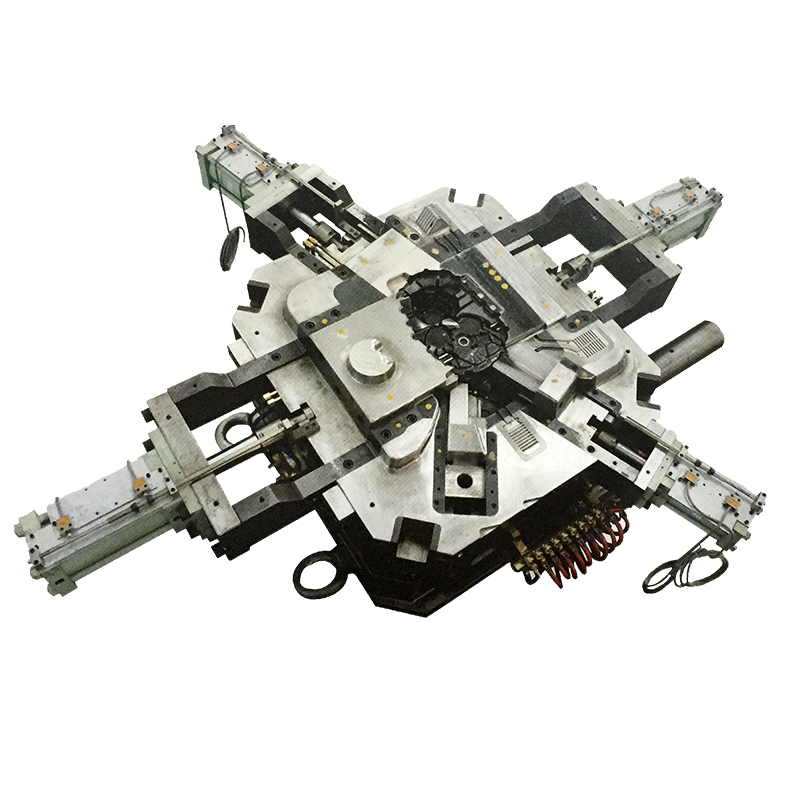
Die casting molds represent the first gateway determining motor parts quality—their design precision and service life directly affect production costs and product consistency. For a motor housing die casting mold, cavity surface roughness must be controlled below Ra 0.4μm, with fitting clearance precision reaching 0.02mm level.
Mold steel selection is equally critical. H13 hot-work tool steel, with its excellent thermal fatigue resistance, has become the mainstream material for motor parts die casting molds, with hardness typically controlled at HRC 44-48. Under normal use and maintenance conditions, an H13 mold can complete 80,000-120,000 die casting cycles. With advanced surface nitriding treatment technology, mold life can be extended to over 150,000 cycles, reducing mold amortization cost per shot by 35%.
Gating design is a core technology in mold engineering. For motor end covers with uneven wall thickness, adopting fan gates combined with local intensification processes enables molten metal to complete cavity filling within 0.3 seconds, effectively avoiding vortex air entrapment. Actual production data shows that optimized gating design can reduce porosity defect rates from 4.2% to below 1.1%.
Internal defect detection for motor parts primarily relies on X-ray inspection and industrial CT technology. For new energy vehicle drive motor housings, the industry-standard quality criteria are: individual pore diameter not exceeding 1.0mm, and total pore area accounting for less than 2% of the cross-sectional area. High-resolution industrial CT (resolution 5μm) enables 100% inline inspection, with inspection cycles synchronized with die casting production cycles, ensuring zero defect escape.
Die-cast motor parts typically require precision machining to achieve final assembly dimensions. Taking motor bearing housings as an example, die-cast blanks reserve 0.8-1.2mm machining allowance, and after CNC processing, roundness tolerance is controlled within 0.01mm, with surface roughness Ra below 0.8μm, meeting the precision requirements for bearing interference fits.
For surface treatment, motor housings generally adopt anodizing or electrophoretic coating processes. Anodized film thickness is controlled at 8-15μm, increasing surface hardness to above HV 300, while providing excellent insulation and corrosion resistance. For outdoor-use motor parts, salt spray testing requirements exceed 500 hours without red rust, posing dual challenges to die casting density and surface treatment processes.
The motor parts die casting industry is facing three significant trends:
For manufacturers, addressing these trends requires synchronized investment in equipment upgrades, material R&D, and digitalization. Enterprises equipped with large die casting machines above 800T, mastering recycled aluminum refining technology, and establishing complete process databases will gain significant market competitive advantages within the next 3-5 years.
ARE YOU READY TO COOPERATE WITH jieda?
* Your email is safe with us, we don’t spam.

PRODUCTS
CONTACT INFO
nbjd011@126.com
+86-574-86115705
No. 58 Mould Road, Daqi Technology Industrial Zone, Beilun District, Ningbo

 English
 Español
 italiano