Content
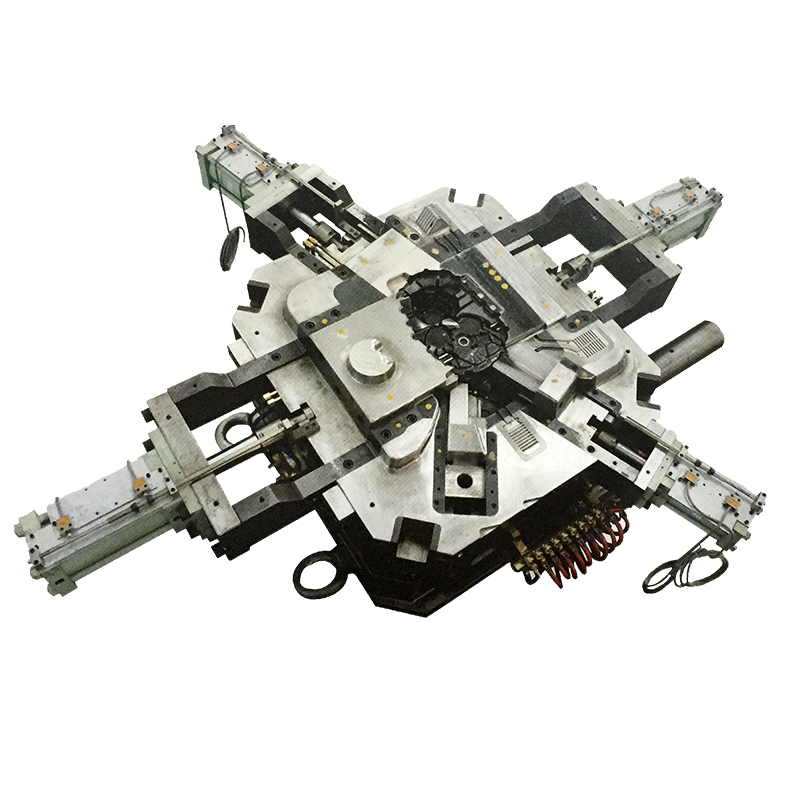
Manufacturing die casting mold is a precise and complex process. Simply put, it involves creating a "metal mold" that can be repeatedly filled with molten metal to produce metal parts.
Before starting work, the mold's appearance must be clearly defined. Designers will plan the molding part of the mold based on the final product's shape.
Parting line selection: Determining where the mold will "open" to allow for easy removal of the part.
Runner system design: Designing the path for the molten metal to enter the mold, like building a road for the molten metal, ensuring it fills every corner quickly and evenly.
Ejection system: Designing ejector pins to ensure the part is smoothly ejected after cooling.
In the entire design process, mold flow analysis is a crucial step. It's like conducting a "virtual rehearsal" on a computer before actual production begins, to see how the molten metal flows within the mold.
Mold Flow Analysis (Computer Simulation)
Before finalizing the design, technicians will import the 3D model of the die casting mold into specialized analysis software for simulation.
Simulating the filling process: This observes whether the molten metal flows smoothly into the mold or gets stuck in certain corners, or where turbulence occurs. This helps us identify in advance whether the part will have defects such as incomplete filling or voids.
Predicting porosity location: As the molten metal flows, it pushes the air out of the mold. Through analysis, we can predict where the air will be squeezed to, allowing us to precisely create vents in those locations to prevent annoying small bubbles inside the part.
Optimizing temperature balance: This analyzes which areas of the mold become particularly hot and which areas are too cold during continuous operation. Based on these results, we can rearrange the cooling water pipes to ensure even heating of the entire die casting mold, preventing shrinkage and deformation of the part after cooling.
Through this step, we can correct potential problems before wasting any steel or molten metal, saving us the trouble of repeated mold modifications later.
Because die casting molds need to withstand high-temperature molten metal (such as aluminum alloys and zinc alloys), special heat-resistant and pressure-resistant steel must be used.
Material selection: High-strength mold steel is usually selected.
Rough machining: Using large machine tools to cut the steel ingot into blocks close to the final shape, removing most of the excess material and leaving an allowance for subsequent precision machining.
The steel after rough machining is not yet hard enough.
Through a process of high-temperature heating and rapid cooling, the internal structure of the steel is changed, making it very hard and wear-resistant, so that it will not deform during thousands of subsequent die casting cycles.
This is the key step in determining the mold's precision.
Precision milling: Using more precise machine tools to finely cut the mold surface.
Electrical Discharge Machining (EDM): For deep holes, right angles, or complex small patterns that cannot be reached by cutting tools, the steel is processed into the predetermined shape using electrode discharge, like "etching." This is an indispensable method for manufacturing complex parts.
The smoother the inner wall of the mold, the better the surface finish of the resulting parts.
Workers use abrasives or polishing tools to polish away the tool marks left by manual or mechanical machining until the mold surface is as bright as a mirror. This also helps the parts to be more easily demolded during production.
Assemble all the processed parts, including the mold core, mold base, guide pins, ejector pins, and cooling water pipes.
Mold closing inspection: Check if the upper and lower mold halves align perfectly.
Water circuit test: Ensure that the water pipes used for cooling inside the mold are unobstructed and there are no leaks.
Completing the mold does not mean the task is finished; it needs to be tested by actually pressing out several parts on the machine.
Sample inspection: Check the parts for air bubbles, incomplete filling, or dimensional deviations.
Fine-tuning: Based on the test samples, return to the mold for final adjustments and optimization until the produced parts are completely qualified.
ARE YOU READY TO COOPERATE WITH jieda?
* Your email is safe with us, we don’t spam.

PRODUCTS
CONTACT INFO
nbjd011@126.com
+86-574-86115705
No. 58 Mould Road, Daqi Technology Industrial Zone, Beilun District, Ningbo

 English
 Español
 italiano