Content
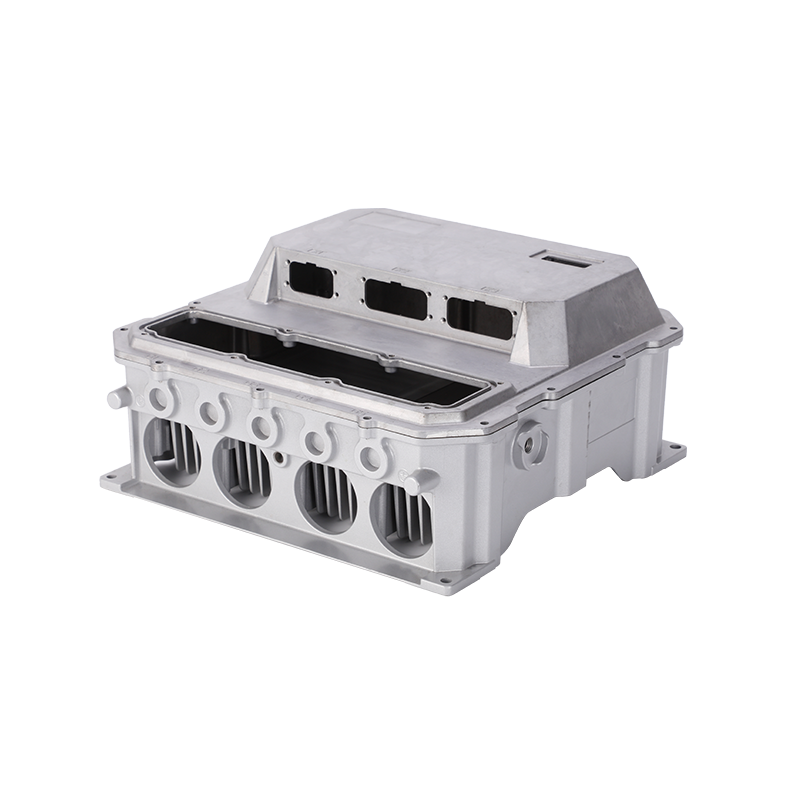
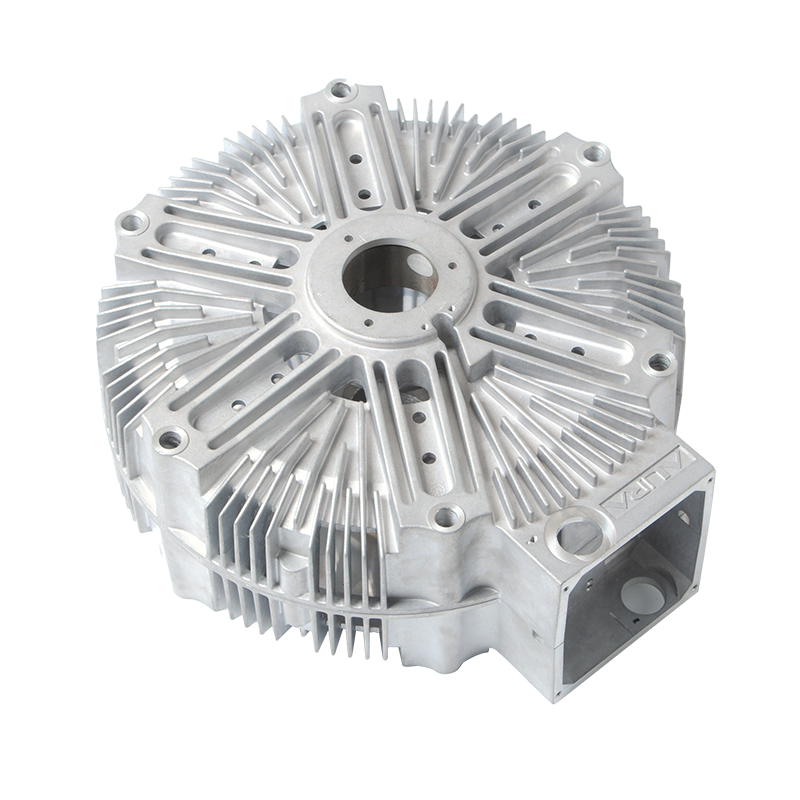
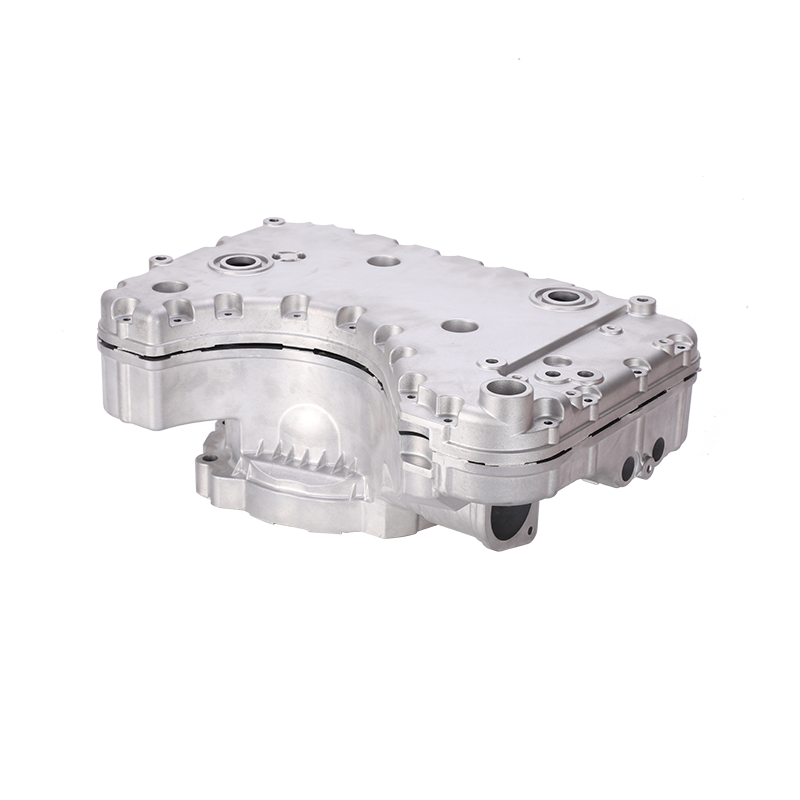
A forklift transmission that weeps oil at 500 hours is rarely a casting failure in the middle of a wall. More often, the leak path starts at a machined seal face, a porous boss around a bearing bore, or a thread that was cut into a shrink-porosity zone. That is why the purchasing decision for an aluminum die casting gearbox housing for forklift use should be built around the leak test, bearing alignment, and mounting rigidity from the first drawing review.
The short answer: high-pressure aluminum die casting is a strong fit for counterbalance forklift gearbox housings when the part is designed with uniform 3–4 mm walls, generous fillets, controlled draft, and machining stock on bearing bores and sealing faces. It gives the program a light, integrated housing with ribs, bosses, oil passages, and mounting ears formed in one tool. The process is less suitable when the design has very thick isolated sections, undercuts that require multiple slides, or a low annual volume that cannot justify die tooling.
Forklift duty combines shock loads, frequent forward-reverse shifts, and continuous hydraulic heat. A cast iron housing can handle that duty, but it adds mass exactly where the counterweight and axle layout are already tight. An aluminum die cast housing reduces weight while keeping the bearing support and mounting stiffness that the drivetrain needs. The key is not the alloy name alone; it is how the ribs connect the bearing bores to the mounting bosses and how the machining plan preserves those relationships.
For a forklift gearbox housing, ADC12 or A380 is common when the priority is castability, thin-wall fill, and dimensional stability. A360 or A383 may be considered when pressure tightness or machining behavior needs more attention. The alloy choice should be tied to the leak specification, not chosen only by price per kilogram. A supplier that changes alloy without updating the process window can create porosity around the bearing bores even though the chemistry certificate looks acceptable.
Wall design deserves the same discipline. A 2.5 mm wall can fill well in a small housing, but a 6 mm isolated boss next to a thin wall cools at a different rate and pulls shrinkage porosity toward the thicker section. Put fillets at internal corners, use gradual transitions, and place ejector pins on non-sealing surfaces. Draft angles of 1–2 degrees on deep walls reduce drag marks and die wear. For the sealing face, leave 0.8–1.5 mm of machining stock and define flatness after machining, not just as-cast.
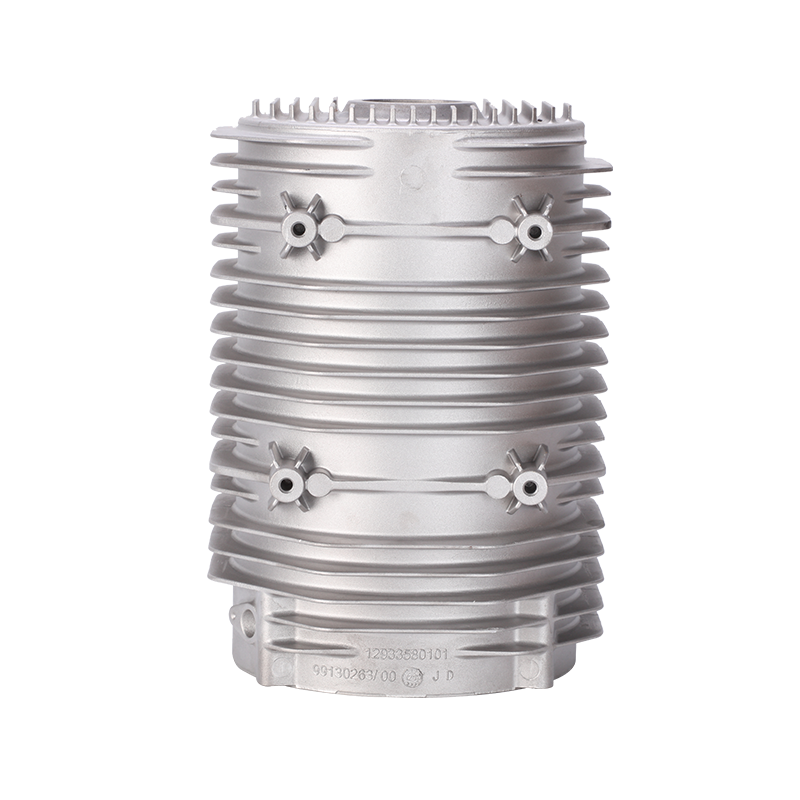
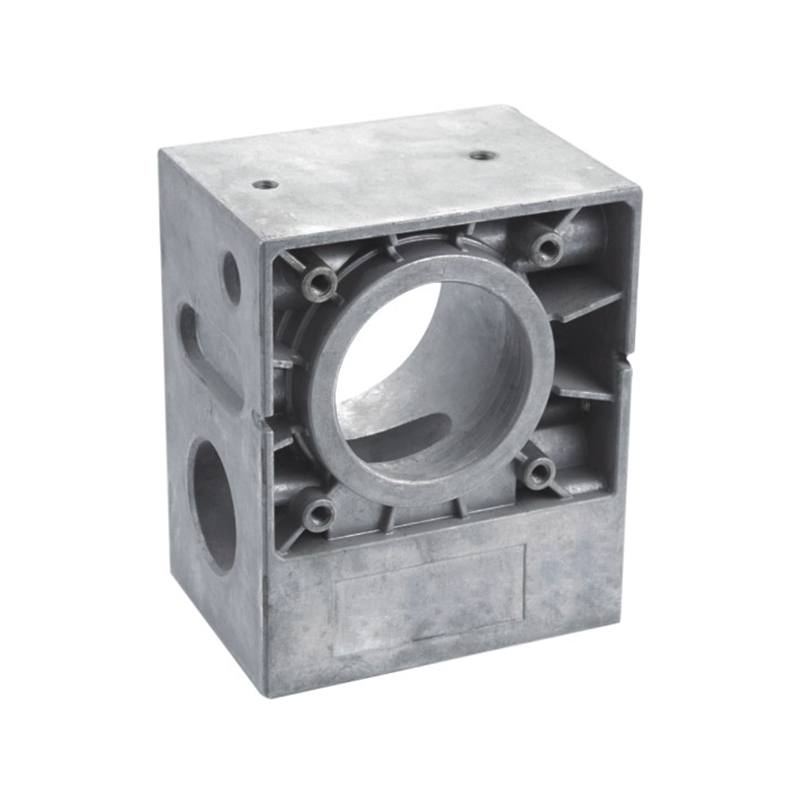 Aluminum Die-Cast Gearbox Housings for Forklifts and Door OperatorsReview this aluminum die-cast gearbox housing for bearing-bore accuracy, sealing-face machining stock, and protection of shafts, bearings, and lubricant.View Product →
Bearing bores are not “just holes.” A typical forklift gearbox housing needs bearing seats machined to H7 or a drawing-specific fit, with coaxiality between opposite bores controlled to about 0.02–0.05 mm depending on shaft length and bearing type. If the casting has uneven stock, the boring bar follows the stock and the shaft alignment moves. A trial assembly with a mandrel or CMM check should confirm bore position before full production.
Seal faces need flatness, surface roughness, and perpendicularity to the shaft. A practical callout is flatness within 0.05 mm and Ra 1.6 on the sealing land, with a machined finish rather than an as-cast skin. Mounting surfaces that sit against the axle frame should be machined in the same setup as the bearing bores when possible; this reduces stack-up and avoids a housing that bolts up but preloads the bearings.
Drilled oil passages should be deburred and checked for connection before assembly. Threaded ports need full thread depth and a controlled chamfer; a thread cut into porosity may pass a visual check and still weep after thermal cycling. Cleanliness matters because die casting residue and machining chips can migrate to the bearings. Specify a cleanliness level, plug all ports before washing, and verify with a flush test.
High-pressure die casting is usually the best match for a forklift gearbox housing at production volume because it holds thin walls and integrated features in one cycle. Sand casting and gravity casting remain useful for prototypes, low volume, or very large housings where tooling cost dominates. The table below gives the practical comparison a buyer should use during supplier selection.
| Process | Best fit | Dimensional and surface notes | Procurement risk |
|---|---|---|---|
| High-pressure die casting | Volume production of 3–4 mm wall housings with integrated ribs and bosses | Good as-cast detail; bearing bores and seal faces still machined; tooling cost higher | Porosity near thick bosses; alloy substitution; tooling lead time |
| Sand casting | Prototypes, low volume, large housings, or repair parts | More machining stock; thicker walls; slower cycle | Higher weight and machining cost; draft and finish less consistent |
| Gravity or low-pressure casting | Medium volume with pressure-tightness needs or thicker walls | Better feeding than HPDC for some sections; lower fill speed | Cycle cost and tooling life; not ideal for thin, complex ribs |
The first quality gate is material verification: alloy grade, chemistry, and heat lot traceability against the drawing. The second is casting integrity around the bearing bores, seal faces, and threaded ports. X-ray or CT can reveal internal porosity, but not every program needs 100% inspection. A practical plan combines first-article CT or X-ray, periodic sectioning, and a leak test on 100% of machined housings.
Leak testing should be defined after machining, because a test on the raw casting can miss a leak path opened by boring or tapping. A common approach is a dry-air decay test at 0.5–1.0 bar with a leak-rate limit agreed to the drawing and the fluid the gearbox will see. For a forklift transmission, also check the housing under a light bolt-up load; a sealing face that is flat on the bench can distort when the cover bolts are torqued.
Procurement risk usually appears in four places: alloy substitution without process validation, machining stock that is too thin to clean up, tooling ownership that is not documented, and a leak test performed before threading. The die casting mold design also matters because gate location, overflow, and thermal balance determine where porosity forms. A supplier working under IATF 16949 and controlling mold design, casting, and machining under one quality system can close those gaps faster than a broker that only sources castings.
ADC12 or A380 is common for thin-wall, high-volume housings. A360 may be preferred when pressure tightness and machining consistency are more important than maximum castability. The final choice should be validated with a leak test and sectioning around the bearing bores.
The casting itself might hold ±0.15 mm on a general feature, but bearing bores should be machined to the drawing fit, often H7, with coaxiality around 0.02–0.05 mm. Do not expect an as-cast bore to serve as a bearing seat.
Use gradual wall transitions, place gates and overflows to feed the sealing area, and avoid isolated thick bosses. Vacuum-assisted die casting and local squeeze pins can help, but they add tooling cost and cycle time. The first step is a design review with the mold engineer, not a downstream impregnation fix.
Sometimes, if the mounting pattern and bearing center distance are shared. A family tool can reduce cost, but the leak test and machining fixture must cover the worst-case variant. Avoid adding adapter plates that change bearing alignment unless the stack-up is recalculated.
Before releasing a forklift gearbox housing for quotation, put these items on the drawing and the request for quotation:
When those points are fixed, an aluminum die casting gearbox housing for forklift service becomes a predictable part: light enough for the counterweight package, stiff enough for shock loads, and sealed well enough to stay dry in daily operation. The supplier conversation should start with the leak path and the bearing bore, not with the price per kilogram.
ARE YOU READY TO COOPERATE WITH jieda?
* Your email is safe with us, we don’t spam.

PRODUCTS
CONTACT INFO
nbjd011@126.com
+86-574-86115705
No. 58 Mould Road, Daqi Technology Industrial Zone, Beilun District, Ningbo

 English
 Español
 italiano